
Released on EurekAlert! On September 16, 2013 http://www.eurekalert.org/pub_releases/2013-09/uoa-ost091613.php
 The way the stomach detects and tells our brains how full we are becomes damaged in obese people but does not return to normal once they lose weight, according to new research from the University of Adelaide.
Researchers believe this could be a key reason why most people who lose weight on a diet eventually put that weight back on.
In laboratory studies, University of Adelaide PhD student Stephen Kentish investigated the impact of a high-fat diet on the gut’s ability to signal fullness, and whether those changes revert back to normal by losing weight.
The results, published in the International Journal of Obesity, show that the nerves in the stomach that signal fullness to the brain appear to be desensitized after long-term consumption of a high-fat diet.
“The stomach’s nerve response does not return to normal upon return to a normal diet. This means you would need to eat more food before you felt the same degree of fullness as a healthy individual,” says study leader Associate Professor Amanda Page from the University’s Nerve-Gut Research Laboratory.
“A hormone in the body, leptin, known to regulate food intake, can also change the sensitivity of the nerves in the stomach that signal fullness. In normal conditions, leptin acts to stop food intake. However, in the stomach in high-fat diet induced obesity, leptin further desensitizes the nerves that detect fullness.
“These two mechanisms combined mean that obese people need to eat more to feel full, which in turn continues their cycle of obesity.”
Associate Professor Page says the results have “very strong implications for obese people, those trying to lose weight, and those who are trying to maintain their weight loss”.
“Unfortunately, our results show that the nerves in the stomach remain desensitized to fullness after weight loss has been achieved,” she says.
Associate Professor Page says they’re not yet sure whether this effect is permanent or just long-lasting.
“We know that only about 5% of people on diets are able to maintain their weight loss, and that most people who’ve been on a diet put all of that weight back on within two years,” she says.
“More research is needed to determine how long the effect lasts, and whether there is any way – chemical or otherwise – to trick the stomach into resetting itself to normal.”
###
Original Article released:
http://www.eurekalert.org/pub_releases/2013-09/uoa-ost091613.php
Link Cited on: LINK de DIET
http://www.nutritio.net/linkdediet/news/FMPro?-db=NEWS.fp5&-Format=detail.htm&kibanID=41569&-lay=lay&-Find
 CORVALLIS, Ore. – In an analysis of 446 compounds for their the ability to boost the innate immune system in humans, researchers in the Linus Pauling Institute at Oregon State University discovered just two that stood out from the crowd – the resveratrol found in red grapes and a compound called pterostilbene from blueberries.
 Stilbenoids are compounds produced by plants to fight infections, and in human biology appear to affect some of the signaling pathways that allow vitamin D to do its job, researchers said. It appears that combining these compounds with vitamin D has considerably more biological impact than any of them would separately.



 In addition, Japan has its own custom to view the moon on September 13th of lunar calendar, called “Jyu san ya,” meaning “the thirteenth night. The moon on the thirteenth night is said to be beautiful second to the harvest moon. And if you view the harvest moon, make sure to view the moon of the thirteenth night at the same spot because it is considered to be less favorable for not viewing both as it’s called “katatsukimi,” single moon-viewing.
 In November 2011, the Nagare received the good design award presented in the name of the director-general of the Small and Medium Enterprise Agency. In December 2011, the furoshiki won a design award in the United States.

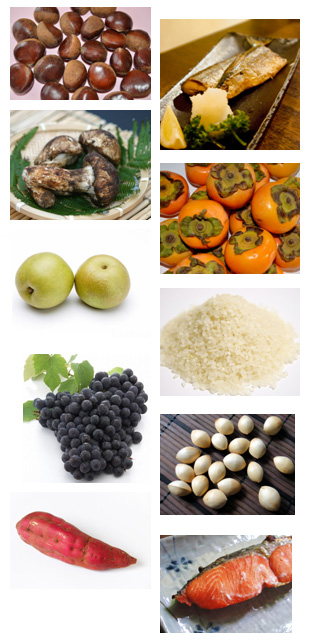 1. Japanese chestnuts
 In the same ranking, new rice is in the 6th place. New rice is surely tasty as eaten in a simple form of steamed white rice, but with a little arrangement, you can enjoy a variety of rice recipes.
 Rice Recipes (English)