
Author Archives: sugahara
New Year Resolution expressed in Calligraphy
As usually seen at the beginning of a New Year, there were New Year Kakizome Contests in various places in Japan.
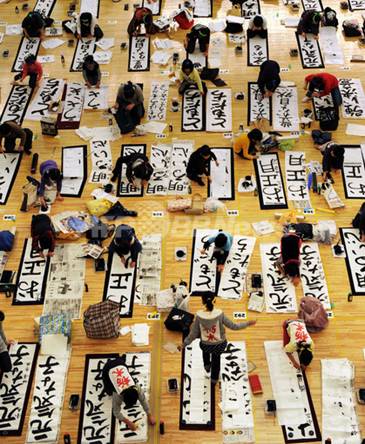
[Photo cited from AFPBB News]
http://www.afpbb.com/articles/-/2781364?pid=6630330
Kakizome means the first calligraphy writing or painting of the year and it is traditionally done on the second of January or during the first week of January. As it’s said “the first,” the term Kakizome refers the very first calligraphy writing done relating to New Year holidays. Calligraphy beyond this specific time frame is called “Shodou.”
Because Kakizome takes place during New Year holidays, it is desirable and preferable to write one’s New Year resolution, goals for the year, mottos, or simply happy words. By literally written down, those words are expected to stay deeply in our minds and lead us to a way as a guidance. Back in old days in Japan, people would start their work on the second of January; the farmers would start preparing for their fields and merchants would ship their first products. According to this old custom, it is regarded to be good luck to start one’s first task of business, academic studies, or cultural lessons on the second of January. It’s the best day to express our determination for the year.
Calligraphy is included in elementary school curriculum, and Kakizome is often assigned as homework for winter break. Dislike the familiar writing tools, writing with a brush and black ink requires special, repeatedly trained techniques such as the way of moving a brush, applying appropriate amount of ink, or adjusting the force of pressing a brush tip on a paper. But in another words, anyone can improve his/her calligraphy techniques just by practicing over and over. The movements for beautiful calligraphy writings are slow but careful. Thus, it is also a good training to gain patient and concentrated mind. Many people continue to practice calligraphy even when they grow up because it enables us to mediate in a way, or some even start lessons in adulthood.
New Year Kakizome Contests takes place in various scales; from a small scale of personal communities such as family, school, or work to a huge scale of thousands of participants such as National Contest held in Nippon Budokan in Tokyo.
Kakizome is a great customary New Year event for men and women of all ages in Japan.
Now, what is your New Year resolution?
Happy New Year!
Happy New Year!
The year of 2014 has started. It is the 26th year of the Heisei era (the era of the Emperor Akihito) in Japan. Chinese astrology for this year is the Horse.
I’d like to send a lot of useful information of health, beauty, Japanese food, Japanese culture and many other interesting topics from the world.
I hope you will enjoy with me.
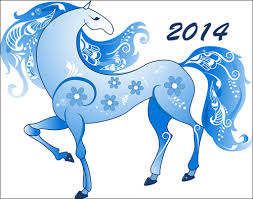
HAPPY NEW YEAR 2014
How does persimmon leaf flavonoid promote brain ischemic tolerance?
Released on EurekAlert! On December 4, 2013 http://www.eurekalert.org/pub_releases/2013-11/nrr-hdp112713.php
Meng Zhao
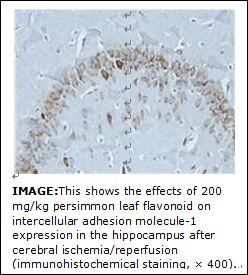 Studies have found that brain ischemic tolerance is associated with endothelial cells, inflammatory factor and intercellular adhesion molecule, but its mechanism of action role in prevention and treatment of cerebral ischemia is still not very clear. Prof. Mingsan Miao and team from Henan University of Traditional Chinese Medicine found that persimmon leaf flavonoid mitigates pathological injury of brain tissue following cerebral ischemia/reperfusion in brain ischemic tolerance rats and elevates brain ischemic tolerance, and high-dose persimmon leaf flavonoid showed an identical effect to ginaton. These findings, published in the Neural Regeneration Research (Vol. 8, No. 28, 2013), provide the basis for the utilization and development of persimmon leaves and for drug development in the prevention and treatment of cerebral ischemia.
###
Article: ” Persimmon leaf flavonoid promotes brain ischemic tolerance ” by Mingsan Miao, Xuexia Zhang, Ming Bai, Linan Wang (Henan University of Traditional Chinese Medicine, Zhengzhou 450008, Henan Province, China)
Miao MS, Zhang XX, Bai M, Wang LN. Persimmon leaf flavonoid promotes brain ischemic tolerance. Neural Regen Res. 2013;8(28):2625-2632.
Full text: http://www.sjzsyj.org/CN/article/downloadArticleFile.do?attachType=PDF&id=736
Original Article released:
http://www.eurekalert.org/pub_releases/2013-11/nrr-hdp112713.php
Link Cited on: LINK de DIET
http://www.nutritio.net/linkdediet/news/FMPro?-db=NEWS.fp5&-Format=detail.htm&kibanID=42574&-lay=lay&-Find
Umami: an ideal sake pairing
Posted on December 12, 2013 On The Japan Times
http://www.japantimes.co.jp/life/2013/12/12/food/umami-an-ideal-sake-pairing/
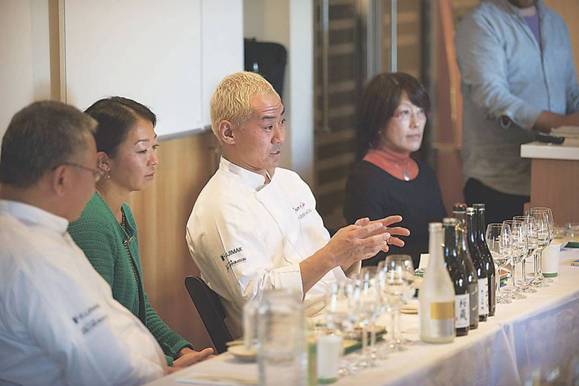
Good combination: Chefs Kunio Tokuoka (left) and Chikara Yamada (center), speak at a sake-pairing seminar in California, along with Kumiko Ninomiya (far right) of the Umami Information Center.
On a recent September morning in Napa Valley, a sake-pairing session at the Culinary Institute of America’s annual Worlds of Flavor conference began with a lesson in organic chemistry. The theme of the seminar was “sake and umami,” a topic tantalizing enough to fill the room with food and beverage professionals who had traveled to the California conference from around the world to explore trends in gastronomy. Pens scratched notes furiously as Kumiko Ninomiya, of the Umami Information Center in Tokyo explained the science behind umami, the fifth taste, discovered by Japanese biochemist Kikunae Ikeda in 1908.
A fascination with umami has pervaded the food world for the past five years. Chefs are obsessed with it, food writers pepper their articles with references to it and the American hamburger chain Umami Burger spikes everything on the menu with umami-boosting seasonings.
But despite the ubiquity of the term, confusion remains as to what, exactly, umami is. The word describes the savory taste that comes from amino acids and nucleotides in foods such as fish, cheese, tomatoes and dried mushrooms. Unlike the other four basic tastes — sweet, sour, bitter and salty — umami is subtle, more of a feeling than a flavor. Imagine eating a piece of wagyū beef; the mouthwatering, tongue-coating sensation that follows chewing it, and the way that the meaty flavor blooms across the palate. Umami is the tool that allows your tongue to taste in three dimensions.
The amino acid glutamate, which is present in vegetables and fermented foods, is the primary substance associated with umami. But when glutamate is combined with the nucleotides inosinate (found in fish and meat) and guanylate (abundant in dried mushrooms), the result is a taste trifecta that can, according to Ninomiya, “magnify the umami taste up to eight times.” Imagine topping that piece of wagyū beef with Parmesan cheese and shaved truffles and you’ll start to get the idea.
Sake, too, is rich in umami: The enzymatic action of kōji (the catalyst that facilitates the conversion of starch into sugar) in sake-making breaks down proteins and releases high levels of glutamate. Sake contains approximately 180 mg of glutamate per liter, compared with 60 mg per liter for wine.
During the tasting session, celebrated chefs Chikara Yamada, of Tokyo’s Yamada Chikara, and Kunio Tokuoka, of Kitcho in Kyoto, demonstrated the synergistic effect of sake with other umami-rich foods. Yamada had prepared a “sake cocktail aperitif” — small cups containing equal amounts of green tea, dried shiitake mushroom broth and konbu (kelp) broth, alongside a dish of raw scallop.
The chef instructed the audience to first take small sips of each liquid individually, before trying them together with a fruity, floral Isojiman Junmai Daiginjo sake from Shizuoka Prefecture. The change in texture and the roundness of the flavors was remarkable. Next, Yamada paired the scallops with a bright and elegant Juyondai Nakadori Daiginjo from Yamagata Prefecture, a match that underscored sake’s natural affinity for fish.
The attendees were clearly impressed with the experiment. “That was the coolest thing I’ve ever done,” remarked Richard Allardyce, a chef from Toronto, Canada. I’ve always told people that sake is at its best with food. Now, I have the science to back up that claim.
Original Article: The Japan Times
http://www.japantimes.co.jp/life/2013/12/12/food/umami-an-ideal-sake-pairing/
Quote of the day

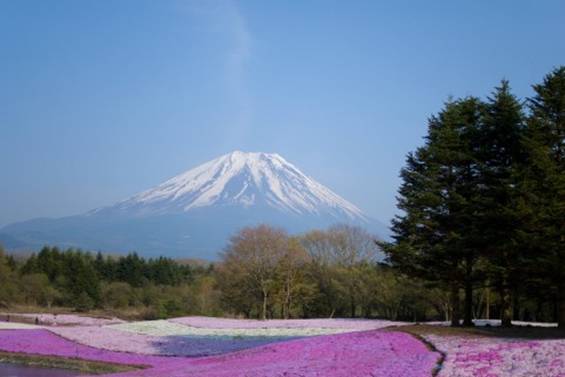
Winter has come. ~ Silver Frost Mt. Miune
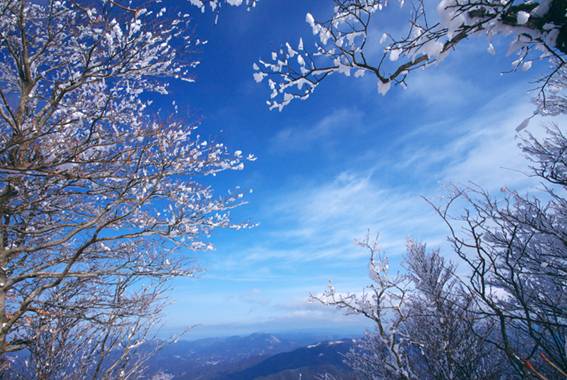
Photo by (c)Nature-Free http://nature-free.com
Quote of the Day

Winter Solstice: Return of spring
Temperature drops down day by day and the winter chill becomes severe. Well, it is not surprising because the winter solstice falls on upcoming Sunday, December 22nd. The sun’s maximum elevation gets the lowest level in the Northern Hemisphere, which gives the shortest daytime and the longest nighttime.
After the winter solstice, the elevation of the sun starts to increase. For that reason, the winter solstice is also called “return of spring,” “reversing yin to yang,” or “favorable turn of fortune.” It is also considered as a timing of rebirth.
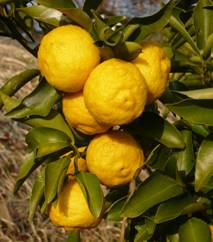 In Japan, many people have still practiced a traditional custom to take a bath with Yuzu citrus fruits floating in the bathtub on the day of winter solstice believing that it will prevent from catching a cold throughout the year. This belief is based on the features of yuzu turee that it is strong against diseases and has a long life. Also, yuzu juice and skins contain abundant of vitamin C. Hot yuzu bath indeed has great effects on moisturizing our skins. Yuzu fruit has such a refreshing and relaxing fragrance. In addition, it is believed that evil spirits avoid strong scent, so taking a yuzu hot bath before a new year arrives is a meaningful ritual.
Besides the yuzu hot bath, we have another custom to eat pumpkin on the day of the winter solstice. Back in old days, there were little vegetables available during winter, so people would store pumpkins harvested in summer because pumpkins are rich in nutrients. Also, when the word a pumpkin is described in kanji, Chinese characters, it ends with a rhyme implying fortune. By eating pumpkins on the winter solstice day, we believe we gain much fortune.
The winter solstice is a day to reset ourselves. Why don’t we take a moment to reflect upon ourselves, detox our mind and body, and be ready to have a new year to arrive.