Why don’t you go out for a weekend trek? ①

Mountain hiking and trekking have been popular in Japan in the recent years. The fad has been widespread over a wide age range due to a rising interest in fitness, improvement of local road maintenance, and product development and PR activities in sports, apparel, and leisure industries.

I’ve been maintaining a certain fitness program mostly indoors for 20 years, but recently, when one of my friends asked me to go on a mountain hike, I thought, “Why not?”

As a city person, I thought going on a mountain hike would be a big deal. However, my friend said, “Let’s take a morning train, and you can be home by evening.” Furthermore, if you travel through areas around Tokyo by JR trains on weekends, public holidays, and during the holiday seasons in summer and winter, you can purchase a holiday pass to travel at discounted fares. This special pass costs 2,600 yen for adults and allows you unlimited rides within a fixed zone in the Kanto area on that day. The farther you travel the more you can save on fares. FYI, for those who are from abroad, JR and other train companies offer many more convenient tickets and passes.
For details on JR tickets and passes, please visit: http://www.jreast.co.jp/e/pass/index.html
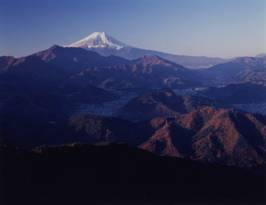
In addition, I was advised that during the hike, we would have opportunities to view Mount Fuji like in the picture above! Looking at “holy” Mount Fuji is always a spiritual experience for the Japanese. Coincidentally, it has been announced recently that Mount Fuji will be registered as a World Cultural Heritage site. Therefore, in the future many more people will try to climb the mountain. I think seeing Fuji is more fantastic than climbing it though.
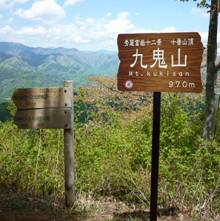
So eventually, I was able to debut as a climber on a sunny holiday. I climbed Mount Kukisan, a small mountain 970m above sea level located in Otsuki City, Yamanashi prefecture. Mount Kukisan is one of the 12 mountain sites the city has designated for its tourism promotion and nature conservation purposes, from which viewing beautiful Mount Fuji is possible. Depending on the day’s weather and if you are lucky, you can see the beautiful figure of Mount Fuji while you are walking on the trail.

We walked for 15 minutes from the local station to the starting point of the climb. From this point, we took 2 hours to get to the mountaintop, where we had a lunch break. Then we went down the mountain on another route. We spent about four hours total on the trek. You may think climbing small mountains is easy for beginners, but it is not. Compared to big mountains, the trails of small mountains are certainly simpler and clearer, but narrower. Since the mountain is compact in size, you have to go up and down the steep slopes. Thanks to my friend’s consistent leadership, I was able to complete the trek. I learned that mountain climbing is confronting nature. I fully enjoyed the hours of trekking and learned that pleasure is the source of pain and pain the source of pleasure.

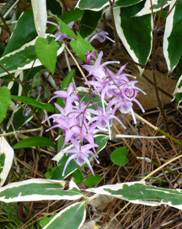
These days we tend to think convenience is a matter of course, but while you are climbing a mountain, you have only yourself to rely on. Using all five senses – hands, feet, eyes, ears and so on – you should walk while controlling your energy. I barely remember how I walked all the way, as I was so desperate to move forward, but I think I was tensed while on steep and rough trails. However, when the road was smooth, I found that I was in the middle of a green world with sunbeams streaming through leaves. There were smells of living trees and grasses. When I looked down at my feet, I saw tiny and pretty wild flowers in bloom.
Since my friend had arranged the trekking schedule so that we could take short breaks from time to time to have water, sugar, and amino acids, amazingly I felt no muscle pain the following day. On the mountaintop, you feel cold after sweating a lot. At lunchtime we boiled water and had instant noodles and hot coffee, which tasted especially good. I guess there must be a knack in having a good time on mountain hikes.

Beyond my mentioned experience, there are many places around Tokyo where you can enjoy one-day mountain hikes. As for myself, my first taste of trekking captured my heart. Walking in nature puts your strength to the test, but I’m sure you will have much to gain, and I recommend you go for a trek.

Next, I will write about the benefits of trekking and equipment for beginners.

Reported by Yukari Aoike, Sugahara Institute
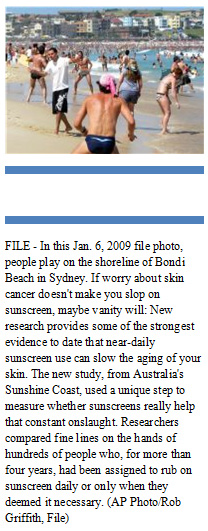
Sunscreen slows skin aging, if used often enough

http://www.japantoday.com/category/health/view/sunscreen-slows-skin-aging-if-used-often-enough
_ _ _ _ _ _ _ _ _ _ _ _ _ _ _ _ _ _ _ _
As summer approaches, I often find many kinds of sunscreen. But is it only summer time that we need to be conscious about sun? This article gives us a warning that we need to take care of our skin all the time.
_ _ _ _ _ _ _ _ _ _ _ _ _ _ _ _ _ _ _ _

By Laura Neergaard

WASHINGTON —
New research from sunny Australia provides some of the strongest evidence to date that near-daily sunscreen use can slow t he aging of skin.
Ultraviolet rays that spur wrinkles and other signs of aging can quietly build up damage pretty much anytime a person is in the sun — a lunchtime stroll, school recess, walking the dog — and they even penetrate car windows.
Researchers used a unique study to measure whether sunscreens really help. Participants had casts made of the top of their hands to measure fine lines and wrinkles that signal sun-caused aging.
The research found that even if a person is already middle-aged, it’s not too late to start rubbing on some sunscreen — and not just at the beach or pool. The New research from sunny Australia provides some of the strongest evidence to date that near-daily sunscreen use can slow the aging of skin.
Ultraviolet rays that spur wrinkles and other signs of aging can quietly build up damage pretty much anytime a person is in the sun — a lunchtime stroll, school recess, walking the dog — and they even penetrate car windows.
Researchers used a unique study to measure whether sunscreens really help. Participants had casts made of the top of their hands to measure fine lines and wrinkles that signal sun-caused aging.
The research found that even if a person is already middle-aged, it’s not too late to start rubbing on some sunscreen — and not just at the beach or pool. The study of 900 people under 55 compared those randomly assigned to use sunscreen daily to those who used it when they deemed it necessary.
Daily sunscreen use was tough — participants did cheat a little. But after 4½ years, those who used sunscreen regularly had younger-looking hands, with 24% less skin aging than those who used sunscreen only some of the time.
Both young adults and the middle-aged experienced skin-saving effects, concluded the study, financed by Australia’s government and published in the journal Annals of Internal Medicine.
“These are meaningful cosmetic benefits,” lead scientist Dr Adele Green of the Queensland Institute of Medical Research said in an email interview. More importantly, she added, less sun-caused aging decreases the risk of skin cancer in the long term.
Dermatologists have long urged year-round sunscreen use — especially for constantly exposed skin on the face, hands and women’s neck and upper chest — but say too few people heed that advice. Women may have better luck, as increasingly the cosmetics industry has added sunscreen to makeup and moisturizers.
Dr. Eric Bernstein lectures patients who insist they’re not in the sunshine enough for it to be causing their wrinkles, brown spots and dilated blood vessels. Even 15 minutes every day adds up over many years, he tells them — and if they’re using one bottle of sunscreen a year, they’re probably not using enough.
“No one thinks they’re in the sun, and they’re in the sun all the time,” said Bernstein, a clinical professor at the University of Pennsylvania. “I say, ‘How did you get here — did you tunnel here?’”
The news comes just as tougher Food and Drug Administration rules for U.S. sunscreens are taking effect. For the first time, they ensure that sunscreens labeled “broad-spectrum” protect against both the ultraviolet-B rays that cause sunburn and those deeper-penetrating ultraviolet-A rays that are linked to premature wrinkles and skin cancers.
Sunburns, especially in childhood, have been linked to a greater risk for melanoma, the deadliest skin cancer. But overall UV exposure plays a role both in melanoma and in other skin cancers that usually are curable but can be disfiguring if not caught early.
Australia has one of the world’s highest rates of skin cancer, and the new research actually stems from a larger cancer-prevention study done in the 1990s. Researchers tracked participants for a decade before concluding that regular sunscreen use indeed lowered their cancer risk.
Green’s team dug back through old study files to examine what’s called photoaging.
Skin stretches and recoils thanks to elastic fibers supporting it. UV rays damage that elasticity, something scientists previously have measured using biopsies of the tissue just under the skin’s top layer. With enough damage, the skin on top starts to sag and wrinkle. Young people have very fine, barely visible lines on their skin. Sun-damaged fibers correlate with increasingly visible lines, in a sort of cross-hatch pattern.
The study also tested whether a dietary supplement, beta carotene, might slow photoaging, and found no evidence that it helped.
Sunscreens aren’t perfect, so dermatologists’ other advice includes limiting exposure during the peak UV hours of 10 a.m. to 4 p.m. and wearing a hat, sunglasses and protective clothing when possible.
Glogau noted that today’s sunscreens are superior to those used two decades ago when the study started — meaning people who regularly use it now might see more benefit.
“I’m fond of telling people that if they start using sunscreen on a regular basis and don’t do anything else, over a period of time they’ll see an improvement in the appearance of their skin,” Glogau said. “It’s never too late.”
_ _ _ _ _ _ _ _ _ _ _ _ _ _ _ _ _
Check the original article on JAPAN TODAY:
“Sunscreen slows skin aging, if used often enough.”
http://www.japantoday.com/category/health/view/sunscreen-slows-skin-aging-if-used-often-enough

Okinawan Vegetable ③ “Na-be-ra” (Sponge Cucumber) Part2

According to the Oriental medicine, vegetables in summer season have anti-inflammatory effects. Vegetable extract relieves inflammation, prevents skin cell DNA from coming apart, and consequently, leads to preventing from developing skin cancers. What is thought to have the anti-inflammatory effect is potassium. I expect there will be some other new substances besides potassium. You many have seen women use cucumber slices for their facial pack for the same reason. Summer vegetables, especially those grown in tropical areas are expected to have stronger effects. For instance, we can find many sunburn relief lotions or gels with aloe vera in shops at the beach because they can cool our sunburnt bodies.

Drinking too much cold aloe vera juice may cool our body so much as to give us stomachaches. Taking advantage of such effects, aloe vera juice can be a solution of constipation. Those who are sensitive to cold and have poor circulation should not take too much tropical vegetable juice, but those who sweat a lot, who have recently gained weight, or who suffer from constipation should take tropical vegetables and aloe vera because those plants have effects to cool down, laxative, relieve constipation; thus, reduce weight.

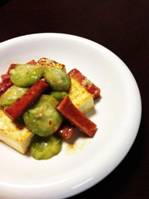
It is always wise to become conscious about eating what’s in season. Following the law of nature will help us make our body healthy. Well, for a closing of this blog entry, I would like to present a typical Okinawan home-cooking recipe of a sponge cucumber. It’s called “Na-be-ra um bushi-,” meaning “na-be-ra” as a sponge cucumber and “um bushi-“ as a shortly-simmered dish with miso, soybeans paste. A sponge cucumber itself has a bland in taste so it matches well with pork and miso.

*  *  *  *  *  *  *  *  *  *

Na-be-ra um bushi

(Ingredients)
One sponge cucumber
Half cotton (firm) tofu
Luncheon meat (or sliced pork)
1tbs miso
3tbs Japanese soup stock
Sugar (to your taste)
Oil, as needed

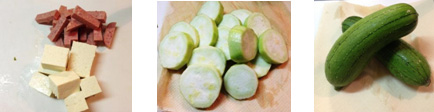
Peel a sponge cucumber and cut into 1cm wide rounds. Remove extra water out of tofu and cut into relatively big chunks. Cut luncheon meat into 1cm wide rectangles.

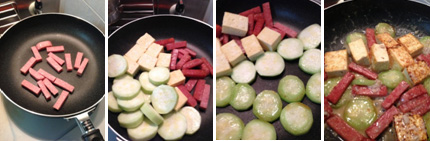
Heat oil in a frying pan and cook luncheon meat over medium heat. Add tofu and stir-fry until browned.
Add sponge cucumber slices and turn the heat to high. Cook until sponge cucumber turn bright light green.

When sponge cucumber becomes tender and juice is extracted, mix miso (and sugar, if needed) into soup stock, and add to the pan. Simmer for a while until soup gets thicken.

*  *  *  *  *  *  *  *  *  *

Luncheon meat can be substituted with sliced pork. Instead of Japanese soup stock, you may use chicken or consommé broth. Increase the amount of soup to make it into curry or stew. Or you can simply add sponge cucumber slices into miso soup. Stir-fry sponge cucumber quickly and season with salt and pepper or coat the slices with tempura flour and deep-fry.

Now you know that a sponge cucumber is a nutritious vegetable, but sadly it is still hard to get on open market outside of Okinawa. But please keep it in your mind and when you luckily come across a sponge cucumber, make sure to try! I’m sure that you will be surprised at the jelly-like texture of sponge cucumber.

Okinawan Vegetable ③“Na-be-ra” (Sponge Cucumber)

The rainy season has gone and summer season has just started here in Okinawa. We realize summer approach by the new lineup of the seasonal vegetables in grocery stores. A typical summer vegetable of Okinawa is go-ya, bitter melon. But now go-ya has become so well-known throughout Japan and we can buy almost anywhere other than Okinawa. I sometimes feel that go-ya is not peculiar to Okinawa anymore.

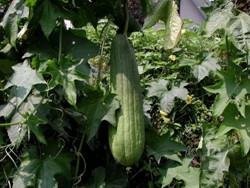
Therefore, I would like to introduce another typical summer vegetable of Okinawa called “Na-be-ra.” It is a sponge cucumber.

What will you imagine when hearing a sponge cucumber? A scrubbing brush? Or a skin lotion? Well, a sponge cucumber is clearly a vegetable plenty of nutrition. When a sponge cucumber comes to fully ripen, its fibrous body becomes so hard that they are generally made into natural scrubbing brushes. In Okinawa, we take young sponge cucumbers, approximately 2 weeks old since flowers in bloom, for eating.

As it is usually common in summer vegetables, 95% of a sponge cucumber constitutes from water. It may be hard for those who have seen sponge cucumber as scrubbing brush only, but a sponge cucumber changes its texture amazingly soft when heated.

Sponge cucumber contains beta-carotene, vitamin C, and potassium, significant nutrition for summer. It also contains “sponge cucumber saponin” which activates cell metabolism and keeps one’s skin healthy and clean. Saponin is also useful to prevent extra calories from transforming into body fat. Above all, sponge cucumber is a low calorie food and preferable food for diet. In addition, sponge cucumbers have been recognized as a medical food for its juice has great effects as cough and expectorant medicine, detoxication, and blood circulation stimulation.

Sponge cucumber is also full of fiber which works well to regulate functions of one’s intestine. Good bacteria in intestine will increase in number, which It’s expected to regulate one’s intestine by activating and multiplying good bacteria in intestine. It stimulates body wastes and cholesterol out of body. It restrains blood pressure from rising up. Prevention of arteriosclerosis, lifestyle disease like diabetes, cancer are expected.

FOODS HIGH IN ENZYMES

http://www.livestrong.com/article/183475-foods-high-in-enzymes/


_ _ _ _ _ _ _ _ _ _ _ _ _ _ _ _ _ _ _ _
Green smoothies are now very popular among people in Japan expecting to benefit from great effects of enzymes. Not only fashion models, actresses, or athletes, but anyone who is concerned about their health seems to be conscious of enzymes.
_ _ _ _ _ _ _ _ _ _ _ _ _ _ _ _ _ _ _ _

Enzymes are proteins that change other substances without being changed themselves, according to Medline Plus. All living things, including food, contain enzymes. Enzymes from food are absorbed in the digestive tract to aid in digestion, prevent inflammation and help the immune system. However, foods cooked to any standard temperature denatures and destroy the enzyme.

Pineapple
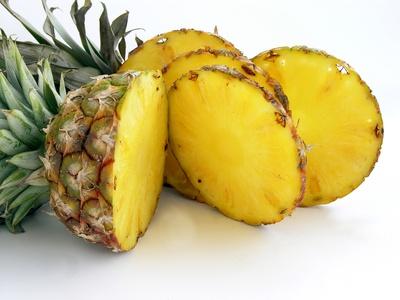
Pineapple contains a protein digesting enzyme called bromelain which has been shown to have anti-inflammatory properties and may reduce knee pain, according to the Memorial Sloan-Kettering Cancer Center. The enzymatic activity of bromelain has also been used to debride burn wounds. The Memorial Sloan-Kettering Cancer Center says animal studies have shown bromelain may have anti-cancer properties. Bromelain also prevents blood clotting and can interfere with anticoagulant therapy, Memorial Sloan-Kettering Cancer Center warns.

Papaya
Papaya contains the protein digestive enzymes papain and chymopapain, according to the World’s Healthiest Foods website. These enzymes also prevent inflammation and promote wound healing from burns. Papain can be found in meat tenderizers, is used in remedies to help with indigestion and is part of the solution used to cleanse contact lenses.

Raw Fruits and Vegetables
Many of the enzymes found in the human body to aid digestion are also found in raw fruits and vegetables. The proteases and peptidases in fruits and vegetables help digest proteins. The lipase enzymes digest fats. Cellulases and saccharidases aid in the digestion of starches and sugars, according to the World’s Healthiest Foods website. Glutathione peroxidase is an enzyme found in leafy vegetables and has antioxidant properties.

Enzymes found in fruits and vegetables help promote health of the immune system. Proteases breakdown the proteins found in bacteria preventing infection. Sprouts contain superoxide dismutase and catalase. Superoxide dismutase is an antioxidant protecting cells from damage by free radicals. Catalase protects cells from damage by peroxides. Ingesting food enzymes also helps preserve the body’s enzyme stores, according to the World’s Healthiest Foods website.

Read more: FOODS HIGH IN ENZYMES | LIVESTRONG.COM
http://www.livestrong.com/article/183475-foods-high-in-enzymes/

Green Tea & Ginger Health Benefits

http://www.ehow.com/facts_4815485_green-tea-ginger-health-benefits.html

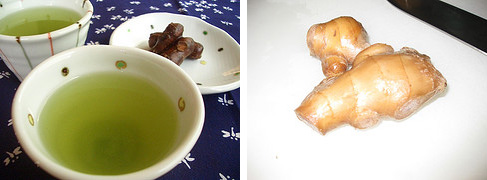
Both green tea and ginger are called “superfoods” because they are bursting with antioxidants. They originate from China and have been used by Chinese medical practitioners for years. Western science also maintains that green tea and ginger may protect the body from many types of chronic disease.

Antioxidant Benefits
Both green tea and ginger contain polyphenols, plant-based chemicals that neutralize free radicals in the body. Free radicals are unstable molecules that damage bodily organs.

Cancer Prevention
Since both green tea and ginger neutralize high amounts of free radicals, they may significantly reduce one’s risk of developing cancer.

Heart Disease Prevention
Due to their antioxidants, both green tea and ginger protect against blood clots. They can remove the free radicals in fattening foods that lead to blood clot formation.

Other Health Benefits of Green Tea
Green tea may help reduce gum disease because one of its polyphenols, catechin, prevents oral bacteria from forming plaque.

Other Health Benefits of Ginger
Several studies show that ginger can alleviate motion sickness. One study recorded that ginger was more effective than medication in reducing motion sickness. See Resources for a link to the study.

How to Add Green Tea and Ginger to Your Diet
It is easy to enjoy the health benefits of green tea and ginger. Drink one cup of green tea and chop up at least one tablespoon of ginger for your salad, stir-fry or pasta each day.
_ _ _ _ _ _ _ _ _ _ _ _ _ _ _ _ _ _ _ _
Both tea and ginger are likely to regard as minor foods but their health benefits should not be neglected. Make it a habit to take them even a small amount every day so that it shall make a significant difference in your body in the long run!!

Read more: Green Tea & Ginger Health Benefits | eHow
http://www.ehow.com/facts_4815485_green-tea-ginger-health-benefits.html

Hydroponic Tomato Experiment 21– In-house Seed Production and Germination

When I started this hydroponic tomato experiment, I was amazed by the effectiveness of the cultivation method. I was able to grow cherry tomatoes from seeds and harvest lots of fruit without much effort. I still harvest tomatoes from the plants, but I would like to take a temporary break from reporting about them.

Each time I pick the cherry tomatoes I check their taste. The number of tomatoes harvested has been increasing recently, and they have made me feel stuffed. Now I’ll show you how I saved the seeds: I chose large and well-formed seeds out of the harvested cherry tomatoes to save for the next season. Since the tomato seeds I used for this experiment were not of a filial generation, using the seeds from those tomatoes for the next cultivation will enable me to harvest a similar quality of cherry tomatoes.

How to save seeds from the fruit:
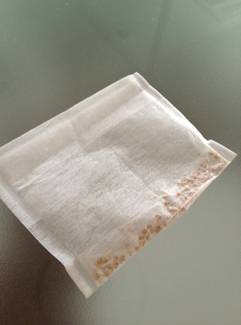
1. Scoop out the seeds from the fruit and put them into a tea filter bag. You can put the seeds together with the gel surrounding them.
2. Wash the tea filter bag with running water. Gently rub the bag so that only seeds will remain in the bag.
3. Drain off the water and dry the bag in an airy place.

Above is the method of saving tomato seeds. You can use the saved seeds to grow cherry tomatoes again. To check whether or not sprouts grow from the seeds, I sowed the seeds.

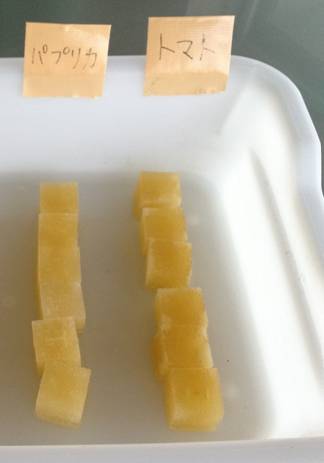
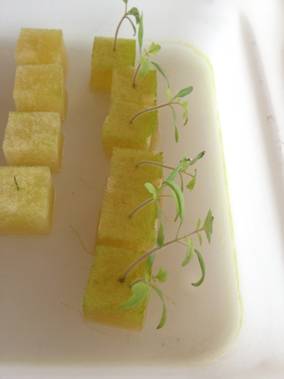
In the picture above, cherry tomato seeds were planted in the right row of sponges, while bell pepper seeds were planted in the left. The pepper seeds were saved from a pepper I bought at a supermarket. I was not sure if the pepper seeds could germinate. For detailed information about seeding, please refer to my first article of this experiment, Hydroponic Tomato Experiment – Seeding.

The picture below is from 20 days after the seeding.

The tomato sprouts came out around 10 days after the seeding. As you can see, roots are growing under the sponges. The picture above was taken 20 days after the seeding. As you can see, the germination rate of the tomatoes was 100 percent.
It seems that bell peppers germinate later than cherry tomatoes. I almost gave up on the peppers but 20 days after the seeding, a sprout of pepper came out of the sponge. I found that other pepper seeds germinated in the sponge as well. I was able to germinate these plants without effort.

Hydroponic Tomato Experiment⑳– The Cherry Tomatoes Grown in The Sun

Cherry tomatoes show varying growth characteristics: thickness of stems, leaf growth directions, strength of color, etc. I guess these characteristics are mainly dependant on cultivation methods. In the previous blog, I wrote about the dying cherry tomato plants – those grown in the heated room during winter. This time, I will write about the tomato plants which had been grown in the sun but not in the heated room.

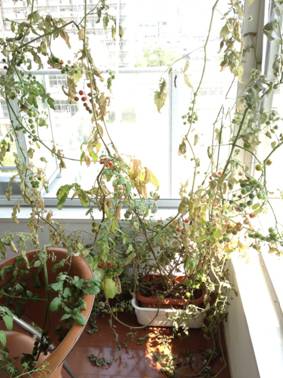
The plants in the picture above are the cherry tomatoes I introduced as the most vigorously growing tomato plants. They have grown steadily with a lot of large and firm fruit. Since the plants grew in the sun, they grew faster than other plants.

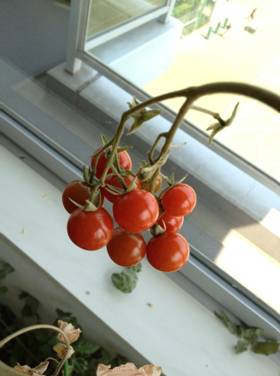
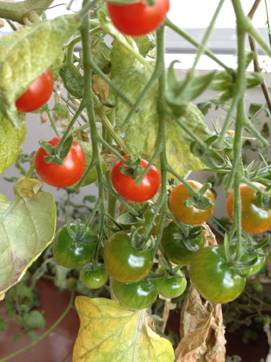
The branches were then turning yellow; they were not lush green any more. However, the plants bore lots of nice fruit as you can see in the picture above.

Some of the fruit turned red. Though the leaves looked dry, the cherry tomatoes themselves look fresh and firm. Thus, the tomato plants have produced firm fruit despite the cessation of growth of the plant as the whole. I think I will be able to continue harvesting cherry tomatoes for a while from these plants.

World’s Healthiest Foods: Soy (Japan)

A typical Japanese person eats soy for breakfast. And lunch. And dinner.
http://www.health.com/health/article/0,,20410303,00.html

A typical Japanese person eats soy for breakfast. And lunch. And dinner. “We eat tofu every day,” says Mamie Nishide, a cooking instructor and recipe developer who’s a native of Nara, Japan. Soybeans, first grown in tropical Asia thousands of years ago, are used in everything in Japan from soy sauce (as ubiquitous as ketchup) to vegetable oil, tofu, and the fermented soybean paste called miso. Japanese eat more soybeans than anyone else, and the long-lived Okinawans top the list at about 60 to 120 grams per person each day, compared with practically zero grams for the average American.

Why to try it: Protein-packed soy is high in isoflavones, estrogen-like substances linked to the prevention of cancer and osteoporosis. But its biggest draw may be the dozens of studies showing soy is good for your heart; the FDA even allows certain soy products (with at least 6.25 grams of soy protein per serving) to have a heart-healthy claim on their labels. Plus, some studies have shown that a diet rich in soy can reduce breast cancer risk. Asian women, for example, have a much lower incidence of the disease compared with their Western counterparts. But other studies suggest that high levels of soy might actually increase breast cancer risk in women who live in the United States, especially among those with a family history of the disease. (If you have a history of breast cancer or a high incidence in your family, talk to your doctor about how much soy is safe.)

What to do with it: Use cooked soybeans instead of garbanzo beans in your next batch of hummus, and add frozen edamame (whole soybeans) to stir-fries. Tofu typically comes in 1-pound blocks for about $1.99 at grocery and health-food stores.

The Original Article: http://www.health.com/health/article/0,,20410303,00.html
_ _ _ _ _ _ _ _ _ _ _ _ _ _ _ _ _ _ _ _
Soybeans have been indispensable for Japanese diet and it’s not too much to say that all the Japanese people take in soybeans somehow at least once a day. Thanks to the nutritional value of soybeans, we have received benefits to live long and healthy!