
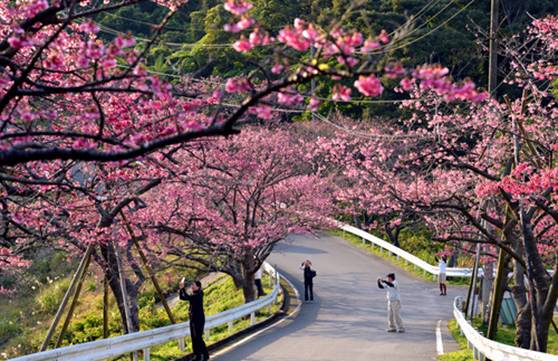
Visitors take photos of ryukyu kanhizakura cherry trees in full bloom on Mount Yaedake in Motobu,
Okinawa Prefecture, on Jan. 20, 2014. (Mainichi)
MOTOBU, Okinawa — About 7,000 cherry trees are in full bloom on a mountain here, adding color to the subtropical forest.
The trees, called ryukyu kanhizakura, on 453-meter-high Mount Yaedake in Motobu are known as the cheery trees that bloom the earliest across the country. Ryukyu kanhizakura, a kind of Taiwan cherry with dark pink flowers, are seen widely in Okinawa and other warm areas.
Unlike someiyoshino, a type of cherry tree commonly seen on mainland Japan, ryukyu kanhizakura trees on higher ground bloom first, and then trees flower on lower ground.
(Photo and article cited in Mainichi Shimbun)
http://mainichi.jp/english/english/newsselect/news/20140128p2a00m0na011000c.html
* * *
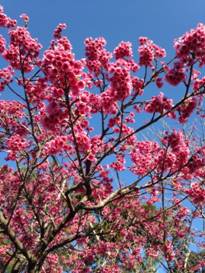 Season of cherry blossom has come around this year. A severe cold wave hit mainland Japan this winter while winter here in Okinawa was as usual, or it may have been milder than usual this year. We’ve had fine days since the middle of January with the expected lowest temperature at 15~16℃ (59~61℉). We’ve already had many days with temperature as high as 23℃ (73℉) during the daytime. As per every year, cherry blossoms in northern part of Okinawa came into full bloom. On weekends, festivals and events related to cherry blossoms were to be held, so I went out with my family.
The mountain, Yae Dake, introduced in the article of Mainich Shinbum, Nakijin Castle Site, and Nago Castle Site are the 3 spots that are selected in 100 spots noted as good places to enjoy cherry blossoms, released by Japan Cherry Blossom Association. http://www.sakuranokai.or.jp/information/
We’ve been to the mountain before so we decided to visit Nago Castle Site this time. Nago Castle Site is located on a hill of 345m. From the observation platform on the hilltop, we could enjoy great scenery of the townscape and the ocean view.
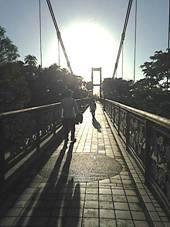 Cherry blossoms around the observation platform were in full bloom. The dark pink flowers were so beautiful with clear, blue sky in the background. Though we took a shuttle bus to the top, we decided to walk down on the way back. As we walked down the hill viewing more cherry blossoms along the walking path, we soon realized it was much longer to reach at the foot of the hill than we thought. But on the way, we walked up and down through a jungle where no cherry blossoms were around. Then we came across to reach at an athletic playground where my children played while my husband and I tool a rest. We even crossed a suspension bridge. It was totally unexpected but we all enjoyed this hiking.
The final approach to the festival held at the foot of a hill, there is a long, steep stairway with more than 100 steps. Because the space was not so wide and we did not want to stagnate the flow of people, we could not stop to view the cherry blossoms along the path. Between the cherry trees were stone lanterns for lighting up.
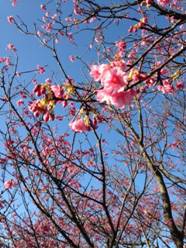 We intended to stay longer so we could view the cherry blossoms under the light at night. But because the hiking took longer time, we were so tired and hungry that we were drawn to the good smells from the many food stands. As it’s said, “bread is better than the songs of birds,” our viewing time was over.
It seems to be a quite impressive experience for my young children. They became aware of the cherry trees here and there in the neighborhood and as they noticed them, they would stop and look up. Spring has come around the corner.
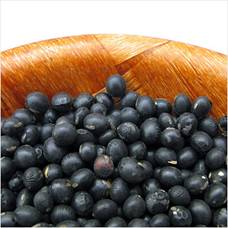 Black beans should be part of every diet. They’re healthy foods that help prevent cancer because they’re filled with phytochemicals that protect your cells from damage — and black beans are thought to be even more packed with antioxidants than other varieties. Beans are also full of fiber, which has been found to lower the risk for colorectal cancer. A recent study at the Harvard School for Public Health even found that eating more beans and less rice can lower diabetes risk by as much as 35 percent.
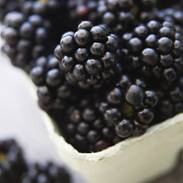 Sprinkle blackberries on your cereal, add them to Greek yogurt, or fold them into whole-wheat waffle batter, and you’ll get a helping of polyphenols, an antioxidant that helps lower inflammation. Because they’re low in calories, blackberries are the perfect diet addition, and they might even boost your brain health. When researchers from the Human Nutrition Research Center on Aging at Tufts University fed older rats a blackberry-supplemented diet for eight weeks, the rats had better balance, coordination, and short-term memory than rats that were not fed blackberries.
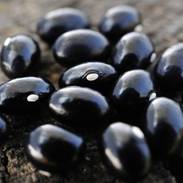 Edamame (green soybeans) may be all the rage, but there are a variety of soybeans that may please your palate, including black soybeans, Allen says. Soybeans offer isoflavones, saponins, phytosterols, and other active ingredients that help fight cancer. Studies have also found that having this healthy food in your diet is good for your heart. In one South Korean study, researchers found that black soybean extract helped improve blood circulation and lowered the risk for cardiovascular problems.
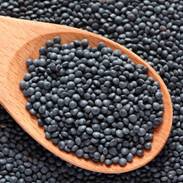 Nutritionally, there’s not much of a difference between black lentils, green lentils, or brown lentils, Allen notes, but they may offer some variety to your diet. Whatever the color, lentils offer plenty of dietary fiber, and studies have found that diets rich in fiber can help lower cholesterol. You can replace ground meat in meatloaf and chili with lentils, eat them over rice with a tomato sauce, or add them cold to salads, Allen suggests.
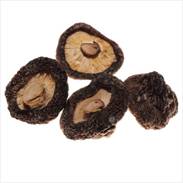
 Most varieties of mushrooms are beneficial and contain cancer-fighting properties. Flavorful shiitake mushrooms, which are sometimes called black mushrooms, will help diversify your diet. In one study of 362 women, researchers concluded that eating mushrooms may lower risk of breast cancer for women after menopause. “Try a variety [of mushrooms] because they all have different flavors and textures,” Allen says. Add them to a salad, put them in a stir-fry, grill, or roast them. Because they have a mild flavor, they’re also great in combination with other foods, such as in chili or soup.
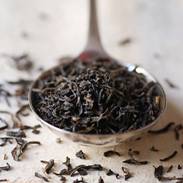
 A study from the Boston University School of Medicine found that people who have heart disease and drink black tea have healthier blood vesselsthan people with heart disease who do not drink tea. Additionally, studies have found that drinking black tea may help lower the risk of a heart attack or stroke. Researchers think that tea’s flavonoids offer protection, and help to prevent the formation of plaques or blockages in artery walls. If you’re looking for ways to drink more tea, swap your morning coffee for black tea, or drink green, white, or black tea in place of sugary sodas.
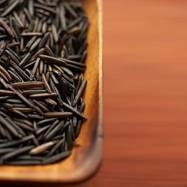 The next time you sit down to a stir-fry, add black rice, a little-known healthy food, instead of brown or white. Why? Adding black rice to your diet may help with allergies and inflammation. In a laboratory study on mice, researchers found that injecting black rice bran into the rats’ skin lowered levels of inflammation. Researchers also found that mice that ate black rice bran had less swelling from skin allergies. Neither effect was found with brown rice bran.
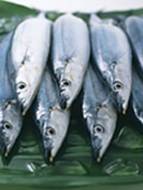 High concentrations of serum long-chain omega-3 fatty acids may help reduce the risk of type 2 diabetes, according to a University of Eastern Finland study published recently in Diabetes Care. The sources of these fatty acids are fish and fish oils.
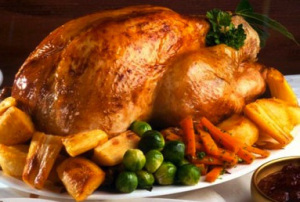 Christmas turkey is a very special food that includes a stuffing. The stuffing is made with herbs (for example : sage, parsley), onions, breadcrumbs, and chestnuts that are cooked inside the stomach of the turkey. It is then cooked in the oven for a long time. The stuffing gives the turkey a very special taste. People also add gravy sauce or cranberry sauce to add further flavour. The turkey becomes a gorgeous Christmas taste. The Christmas dinner is enjoyed after opening the presents.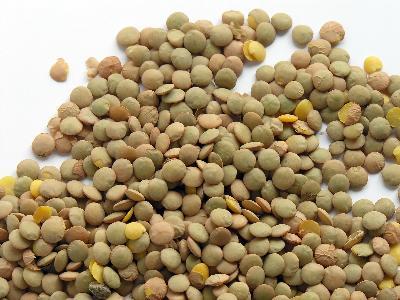
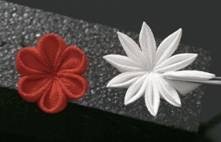
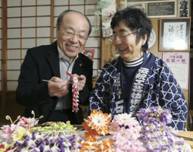 Last December a group of students gathered in the Asakusabashi district of Taito Ward, Tokyo, to learn the traditional Japanese pinching craft known as tsumami zaiku. They gasped in appreciation as designer Sanae Takeyari, 55, made red and white flowers by pinching, folding and arranging thin pieces of cloth with tweezers.
 Their class was held at Tsumami-do, a shop and school dedicated to promoting tsumami zaiku, which originated in the Edo period (1603-1867) as a method for decorating kanzashi hair accessories. Tsumami-do, which sells materials and offers lessons in tsumami zaiku, was opened in March 2012 by Masayuki Takahashi, 69, who also runs a wholesale company of tsumami zaiku products.
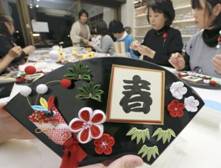 Takahashi joined the wholesale company founded by his father at the age of 24. However, when domestic production of the craft began dropping sharply around 2000 due to competition from China, Takahashi worried that “This Japanese technique and craftsmen will disappear if we don’t do something.” That sense of urgency, he says, prompted him to open Tsumami-do.
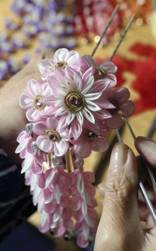 “So many people say, ‘It’s beautiful,’ and take up an interest in the craft. We often get together to talk about ways we can bring new life [to the art],” Ishida said.
 Fruits raised levels of hormone involved in regulating blood sugar, fat