Potassium-rich foods cut stroke, death risks among older women

Released on EurekAlert! On Sep. 4, 2014
http://www.eurekalert.org/pub_releases/2014-09/aha-pfc082914.php

American Heart Association Rapid Access Journal Report

a1Postmenopausal women who eat foods higher in potassium are less likely to have strokes and die than women who eat less potassium-rich foods, according to new research in the American Heart Association’s journal Stroke.

“Previous studies have shown that potassium consumption may lower blood pressure. But whether potassium intake could prevent stroke or death wasn’t clear,” said Sylvia Wassertheil-Smoller, Ph.D., study senior author and distinguished university professor emerita, department of epidemiology and population health at Albert Einstein College of Medicine, Bronx, NY.

“Our findings give women another reason to eat their fruits and vegetables. Fruits and vegetables are good sources of potassium, and potassium not only lowers postmenopausal women’s risk of stroke, but also death.”

Researchers studied 90,137 postmenopausal women, ages 50 to 79, for an average 11 years. They looked at how much potassium the women consumed, as well as if they had strokes, including ischemic and hemorrhagic strokes, or died during the study period. Women in the study were stroke-free at the start and their average dietary potassium intake was 2,611 mg/day. Results of this study are based on potassium from food, not supplements.

The researchers found:

  • Women who ate the most potassium were 12 percent less likely to suffer stroke in general and 16 percent less likely to suffer an ischemic stroke than women who ate the least.
  • Women who ate the most potassium were 10 percent less likely to die than those who ate the least.
  • Among women who did not have hypertension (whose blood pressure was normal and they were not on any medications for high blood pressure), those who ate the most potassium had a 27 percent lower ischemic stroke risk and 21 percent reduced risk for all stroke types, compared to women who ate the least potassium in their daily diets.
  • Among women with hypertension (whose blood pressure was high or they were taking drugs for high blood pressure), those who ate the most potassium had a lower risk of death, but potassium intake did not lower their stroke risk.

Researchers suggested that higher dietary potassium intake may be more beneficial before high blood pressure develops. They also said there was no evidence of any association between potassium intake and hemorrhagic stroke, which could be related to the low number of hemorrhagic strokes in the study.

The U.S. Department of Agriculture recommends that women eat at least 4,700 mg of potassium daily. “Only 2.8 percent of women in our study met or exceeded this level. The World Health Organization’s daily potassium recommendation for women is lower, at 3,510 mg or more. Still, only 16.6 percent of women we studied met or exceeded that,” said Wassertheil-Smoller.

“Our findings suggest that women need to eat more potassium-rich foods. You won’t find high potassium in junk food. Some foods high in potassium include white and sweet potatoes, bananas and white beans.”

While increasing potassium intake is probably a good idea for most older women, there are some people who have too much potassium in their blood, which can be dangerous to the heart. “People should check with their doctor about how much potassium they should eat,” she said.

The study was observational and included only postmenopausal women. Researchers also did not take sodium intake into consideration, so the potential importance of a balance between sodium and potassium is not among the findings. Researchers said more studies are needed to determine whether potassium has the same effects on men and younger people.

# # #

First author is Arjun Seth, B.S. and other co-authors are:Yasmin Mossavar-Rahmani, Ph.D.; Victor Kamensky, M.S.; Brian Silver, M.D.; Kamakshi Lakshminarayan, M.D.; Ross Prentice, Ph.D.; and Linda Van Horn, Ph.D. Author disclosures are on the manuscript.

The National Heart, Lung and Blood Institute funded the study.

Additional Resources:

  • Follow AHA/ASA news on Twitter @HeartNews.
  • For stroke science, follow the Stroke journal at @StrokeAHA_ASA

Statements and conclusions of study authors published in American Heart Association scientific journals are solely those of the study authors and do not necessarily reflect the association’s policy or position. The association makes no representation or guarantee as to their accuracy or reliability. The association receives funding primarily from individuals; foundations and corporations (including pharmaceutical, device manufacturers and other companies) also make donations and fund specific association programs and events. The association has strict policies to prevent these relationships from influencing the science content. Revenues from pharmaceutical and device corporations are available at http://www.heart.org/corporatefunding.

Original Article released:
http://www.eurekalert.org/pub_releases/2014-09/aha-pfc082914.php

Link Cited on: LINK de DIET
http://www.nutritio.net/linkdediet/news/FMPro?-db=NEWS.fp5&-Format=detail.htm&kibanID=45936&-lay=lay&-Find


Acai Berry Juice Benefits

Posted on LIVESTRONG.COM on Mar 01, 2014 by Derek Bryan
http://www.livestrong.com/article/88496-acai-berry-juice-benefits/

Originating in Central and South America, acai berries have been touted as offering health benefits beyond those of typical fruits, including weight loss and anti-aging. In turn, many acai-containing products, such as acai juice and acai extracts, have been developed and promoted for these purposes. While scientific evidence has not substantiated all of the claimed benefits of acai berry juice, several studies suggest it has powerful benefits for the body

a2Cancer Prevention

According to a March 2010 study published in “Pharmaceutical Research,” consumption of acai berries successfully inhibited growth of esophageal cancer in rats. Researchers attribute this result to the high levels of antioxidants in acai berry juice. The study was conducted with seven different types of berries, all of which were shown to be equally effective in cancer prevention, indicating acai berry juice may not be any better at preventing cancer than other berries.

Immune System Benefits

An October 2008 study from Texas A&M University’s “Agricultural Communications” found that antioxidants from both acai berry pulp and juice are successfully absorbed by the human body. Antioxidants, usually in the form of vitamins and minerals, function by protecting immune cells from oxidative damage of compounds known as free radicals in the body. The antioxidant content in acai berry juice therefore provides immune system benefits similar to those of other berries.

Metabolic Disease Prevention

Metabolic diseases, including cardiovascular disease and Type 2 diabetes, are often associated with obesity. In a May 2011 study published in “Nutrition Journal,” twice-daily consumption of acai pulp had a positive effect in reducing fasting glucose and insulin levels as well as reducing total cholesterol, though blood pressure was unaffected. More research is warranted to confirm these effects.

Reduction of Cognitive Decline

According to a January 2009 review from “Clinical Nutrition and Metabolic Care,” berries rich in antioxidants like the acai berry are beneficial in maintaining cognitive function in aged animals. Certain antioxidants are thought to soften stress-related neural signaling and promote the health and capacity of neurons throughout the aging process. This makes regular consumption of acai berry juice, which is rich in antioxidants, potentially useful in staving off age-related cognitive decline.

See the original article where some more useful information about cell turnover.  

Original Article:  LIVESTRONG.COM
http://www.livestrong.com/article/88496-acai-berry-juice-benefits/

Quote of the Day

 a1

お年寄りに敬意を示そう。
君よりも先にその道を歩いてきた人から学ぼう。
彼らを尊敬しよう、なぜなら、
いつか、そして君が想像するよりも
すぐに、君も年老いていくのだから。


Japan Tops Life Expectancy WHO

Posted on WALL STREET JOURNAL on May 16, 2014 by Jun Hongo
http://blogs.wsj.com/japanrealtime/2014/05/16/japan-tops-life-expectancy-who/a3

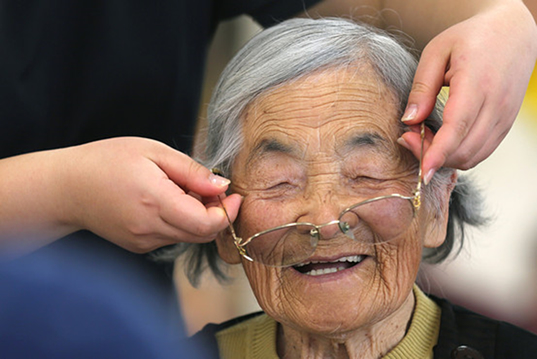
Ayako Wakasu, 94, smiles as her glasses are adjusted by a staff member at a day care facility. Life expectancy for Japanese women is now 87 years. — Bloomberg News

People across the globe are living longer than ever, and Japan is at the top of the list.

That’s according to the World Health Statistics 2014 report, released Thursday by the World Health Organization.

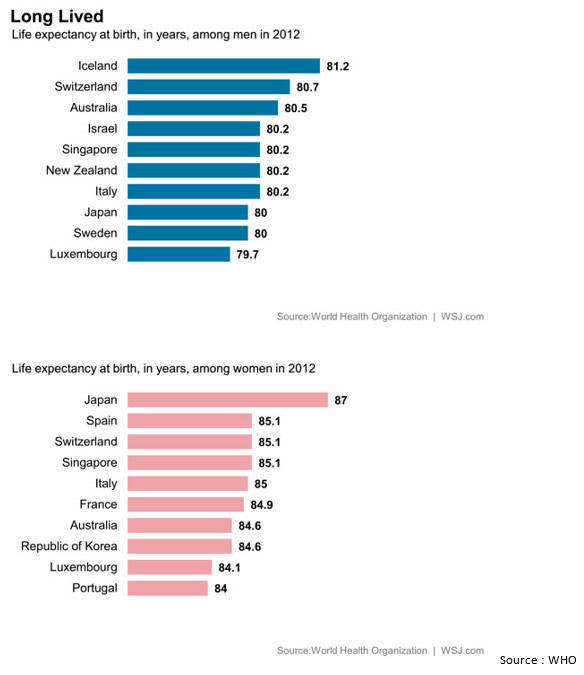
Life expectancy for Japanese women in 2012 was 87 years, longest in the world. Japan also ranked eighth in life expectancy for men with 80 years, and overall life expectancy of Japanese increased from 79 years in 1990 to 84 years in 2012, also first in the world.

The country with the lowest life expectancy was Sierra Leone with 46 years.

Global average life expectancy for 2012 was 73 years for women and 68 years for men, both six years longer than 1990.

WHO attributed the gains to a decrease in the number of children who die before they turn 5.

While a long life expectancy is a cause for celebration, Japan is also suffering from a birth dearth that has made society skew older. Government statistics released last month showed that more than 25% of the population is now over 65 years old.

a4

Original Article:  WALL STREET JOURNAL  Japan Real Time
http://blogs.wsj.com/japanrealtime/2014/05/16/japan-tops-life-expectancy-who/

Early to mid-life obesity linked to heightened risk of dementia in later life

Released on EurekAlert! On Aug. 20, 2014
http://www.eurekalert.org/pub_releases/2014-08/bmj-etm081914.php

a2

Threefold risk for those with severe obesity in their 30s, observational study indicates

But the age at which a person is obese seems to be a key factor, the findings show, with an apparent tripling in risk for people in their 30s.

Estimates suggest that almost 66 million people around the globe will have dementia by 2030, with the numbers predicted to top 115 million by 2050.

There is growing evidence that obesity is linked to dementia, but the research indicates that risk may be heightened or lowered, depending on age. And as yet, no study has looked at the age related effect of obesity on dementia risk across the whole age range in the population of one country.

So the researchers decided to do this, using anonymised data from hospital records for the whole of England for the period 1999-2011. Data in which obesity had been recorded were then searched for any subsequent care for, or death from, dementia.

During the study period, 451 232 of those admitted to hospital in England were diagnosed with obesity, 43% of whom were men.

The analysis revealed an incremental decrease in overall risk of hospital admission for dementia the older a person was when a diagnosis of obesity was first recorded, irrespective of gender.

For those aged 30-39, the relative risk of developing dementia was 3.5 times higher than in those of the same age who were not obese. For those in their 40s, the equivalent heightened risk fell to 70% more; for those in their 50s to 50% more; and for those in their 60s to 40% more.

People in their 70s with obesity were neither at heightened or lowered risk of developing dementia, while those in their 80s were 22% less likely to develop the disease, the findings indicated.

There were some age differences between the risk of developing vascular dementia or Alzheimer’s disease, with those in their 30s at greater risk of both. A diagnosis of obesity in the 40s through to the 60s was associated with an increased risk of vascular dementia, while the risk of Alzheimer’s disease was lower in those diagnosed with obesity from their 60s onwards.

This is an observational study, so no definitive conclusions can be drawn about cause and effect. But the findings confirm smaller published studies from elsewhere which report an increased risk of dementia in young people who are obese, but a reduced risk in older obese people, say the researchers.

They venture that a possible explanation for the particularly high risk found in early to mid-life may lie in the fact that heavier weight is associated with diabetes and cardiovascular risk factors, which are themselves linked to a heightened risk of dementia.

And it would seem that if people can stave off significant weight gain until at least their 60s, or survive long enough with obesity, they may have a lower risk of developing dementia, they suggest.

“While obesity at a younger age is associated with an increased risk of future dementia, obesity in people who have lived to about 60-80 years of age seems to be associated with a reduced risk,” they conclude.

 Original Article released:
http://www.eurekalert.org/pub_releases/2014-08/bmj-etm081914.php

Link Cited on: LINK de DIET
http://www.nutritio.net/linkdediet/news/FMPro?-db=NEWS.fp5&-Format=detail.htm&kibanID=45819&-lay=lay&-Find

Okinawa Vegetable: Moui (Red Gourd)

a2

Unexceptionally, we are spending very hot summer days.  Because of these consecutive hot days and nights, many people tend to lose appetite.  Also, it is so likely that we prefer to choose cold food and drink unintentionally.  However, to avoid suffering from summer fatigue, it is very important to eat nutritious food to keep our stamina.  

Today, I would like to introduce one of the typical Okinawan summer vegetable, red gourds.  The red gourds are said to be brought into Okinawa from China during the 15th century.  Literally, this type of gourd has a reddish brown skin.  In Okinawan dialect, it is called moui pronounced as “Mow We.”   

Moui is generally 30cm long and 10cm wide and costs around 100 yen.  We can find cheaper than 100 yen at the local farmer’s market.  It is very reasonable.

a3

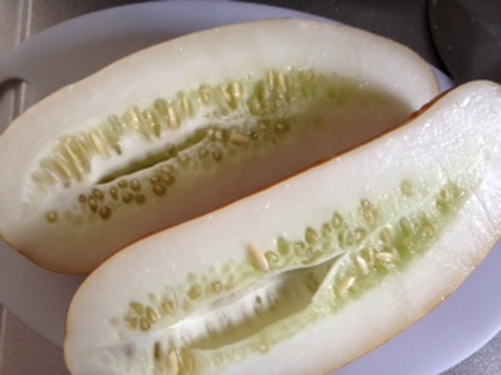
Moui does not look very attractive, to be honest.  But its flesh is so white, fresh, and juicy.  Moui consists mainly of water content, more than 95%.  But it is high in nutritional values.  It is rich in potassium and vitamins, both of which are inevitable during hot summer time.  The health benefits of moui are for preventing high blood pressure, heart attack, stroke, and arteriosclerosis.  

When you cut moui, it smells like cucumbers, but it tastes totally different.  It is more tasteless; in another words, moui can develop into many different dishes depending on the seasonings you choose.  

a4

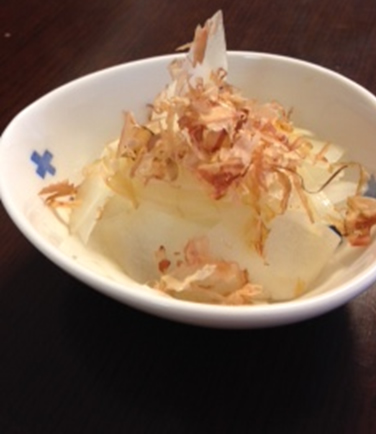
The texture of moui is very fresh.  You can enjoy its last-long crunchy texture.  Slice thinly, toss with your favorite dressing, and you have one simple but healthy salad for your meal.  Many Okinawan people like moui salad with a spoonful tuna flakes and soy sauce based vinegar. 

Besides eaten as a fresh salad, we like to make pickled moui, shimmered with soup stock, or just stir-fried with salt and pepper.


Health benefits of gourds

Posted on healthizen
http://www.healthizen.com/diet-nutrition/Health-Benefits-of-Gourds.aspx

a1

Vegetables belonging to the gourd family are very beneficial from the health point of view. There are different varieties of gourds cultivated throughout the world. In India, the commonly consumed ones are bitter gourds, bottle gourds, ridge gourds, and snake gourds. Ridge gourd is also known as turai or luffa. It is a dark green, ridged vegetable having white pulp with white seeds embedded in its spongy flesh. It is very fibrous to eat.

Ridge gourd is very low in saturated fat and calories. It is rich in dietary fiber, vitamin C, riboflavin, zinc, thiamin, iron, and magnesium. It is known to contain insulin like peptides, alkaloids that help to reduce blood sugar levels. It helps to relieve constipation and prevent piles as it contains cellulose. This vegetable also purifies, rejuvenates, and nourishes the liver and tries to protect it against alcohol intoxication.

Snake gourd is a natural laxative, antibiotic, and expectorant. It has a cooling effect on the body and is useful in treating bilious fever. The heart is most benefitted by this vegetable as it can reduce the pain and palpitations of a stressed heart. It has anti-inflammatory properties and can stimulate the production of body fluids, thereby relieving symptoms caused due to dryness. Snake gourd is considered to be useful in treating diabetes, especially type 2 diabetes. It is also known to keep the calorie count low for weight-watchers.

Bottle gourd, like ash gourd is very low in cholesterol and fat, whilst being high in iron, fiber, vitamin C, and minerals. It has a very important place in Ayurveda and Unani medicine as it is known to soothe the nervous system, besides being very useful for inducing weight loss. It helps the body to fight against gas, indigestion, acidity, and peptic ulcers. It also prevents premature graying of hair.

Although the bitter taste of the bitter gourd makes many of us grimace at the very thought of eating it, the fact still remains that it is one of the most potent vegetables offered by nature to us. It is a natural remedy for diabetes as it can effectively control the blood sugar levels by virtue of its insulin-like enzymes. It is loaded with beta carotene that improves eyesight. It is invaluable in the treatment of stomach disorders, gastrointestinal infections, and piles. Bitter gourd has blood cleansing properties, which can help to ward off a gamut of diseases.

See the original article where some more useful information about cell turnover.  

Original Article:  healthizen
http://www.healthizen.com/diet-nutrition/Health-Benefits-of-Gourds.aspx

Low Estrogen Symptoms in Younger Women

Posted on LIVESTRONG.COM on Aug 16, 2013 | By Kathleen Blanchard, R.N.
http://www.livestrong.com/article/22600-low-estrogen-symptoms-younger-women/

a3
Being underweight may lead to low estrogen levels.
Photo Credit Polka Dot Images/Polka Dot/Getty Images 

Symptoms of low estrogen typically occur in women approaching and experiencing menopause. However, younger women can also experience low estrogen, but their symptoms (and causes) differ from menopausal women.

There are three types of estrogen: estriol, estradiol and estrone. Some women do not naturally produce enough of one or all forms. Abnormal levels could signal the presence of ovarian or adrenal cancer. Young women can experience low estrogen levels from a variety of causes, and the type of testing used to measure levels depends on symptoms, age, family history and physical exam.


Symptoms

The most common symptom of low estrogen in younger women is lack of menstruation and delayed development. Younger women, under age 40, with low estrogen can experience early menopause resulting in hot flashes and night sweats. Fatigue is a common complaint associated the condition. Women report forgetfulness, insomnia, lack of sexual desire and painful intercourse when estrogen levels are low or begin to decline. Irregular menstruation or lack of menstruation occurs. Bladder infections and headaches might occur. Mood changes that lead to crying, feelings of depression and irritability are also symptoms. Bone loss also occurs that leads to osteoporosis. Inability to become pregnant can signal low estrogen levels in younger women.


Function

Estrogen is produced primarily in the ovaries. Some estrogen is produced by the adrenal glands. Signals for estrogen production come from the pituitary gland, and levels vary throughout life depending on the stage of a woman’s menstrual cycle. Estrogen is the hormone that provides female characteristics for women.


Conditions

Genetic disease can result in low estrogen in younger women. Turner syndrome is an inherited disease that leads to short stature and lack of ovulation, normal female development and lack of menstruation. Chemotherapy or radiation can also interfere with estrogen production, along with thyroid disorders.


Other Causes

Other conditions that cause low estrogen levels in younger women include excessive exercise, eating disorders and too little body fat. Extreme exercise, just before and during puberty, such as gymnastics and dancing, can cause estrogen levels to be low, delaying normal female development. A symptom of low estrogen in younger women is delayed development and lack of menstruation (amenorrhea).


How To Know If Estrogen Is Low

Your doctor will determine which type of blood or urine test is needed to determine if you have low estrogen levels. Younger women may be tested for FSH (follicle stimulating hormone), an direct measurement of estrogen production. When estrogen levels are low, FSH levels also decline. Younger women suspected to have Turner syndrome might undergo chromosomal testing. The syndrome is the result of abnormality in X chromosomes.


Treatment

Low estrogen level treatment is based on the underlying cause. Younger women going through menopause are not treated the same as older women with low estrogen levels. In all cases, the underlying cause determines the specific treatment.


Considerations

Because symptoms of low estrogen levels can signal underlying health problems, especially in younger women, it is important to see your physician for testing. Younger women with symptoms of low estrogen levels should be evaluated for cause and treatment.

Original Article:  LIVESTRONG.COM
http://www.livestrong.com/article/22600-low-estrogen-symptoms-younger-women/

Fukushima’s legacy

Released on EurekAlert! On August 14, 2014
http://www.eurekalert.org/pub_releases/2014-08/aga-fl081114.php

Biological effects of Fukushima radiation on plants, insects, and animals

a1

Following the 1986 Chernobyl nuclear power plant meltdown, biological samples were obtained only after extensive delays, limiting the information that could be gained about the impacts of that historic disaster. Determined not to repeat the shortcomings of the Chernobyl studies, scientists began gathering biological information only a few months after the disastrous meltdown of the Fukushima Daiichi power plant in Japan in 2011. Results of these studies are now beginning to reveal serious biological effects of the Fukushima radiation on non-human organisms ranging from plants to butterflies to birds.

A series of articles summarizing these studies has now been published in the Journal of Heredity. These describe widespread impacts, ranging from population declines to genetic damage to responses by the repair mechanisms that help organisms cope with radiation exposure.

“A growing body of empirical results from studies of birds, monkeys, butterflies, and other insects suggests that some species have been significantly impacted by the radioactive releases related to the Fukushima disaster,” stated Dr. Timothy Mousseau of the University of South Carolina, lead author of one of the studies.

Most importantly, these studies supply a baseline for future research on the effects of ionizing radiation exposure to the environment.

Common to all of the published studies is the hypothesis that chronic (low-dose) exposure to ionizing radiation results in genetic damage and increased mutation rates in reproductive and non-reproductive cells.

One of the studies (Hayashi et al. 2014) documented the effects of radiation on rice by exposing healthy seedlings to low-level gamma radiation at a contaminated site in Fukushima Prefecture. After three days, a number of effects were observed, including activation of genes involved in self-defense, ranging from DNA replication and repair to stress responses to cell death.

“The experimental design employed in this work will provide a new way to test how the entire rice plant genome responds to ionizing radiation under field conditions,” explained Dr. Randeep Rakwal of the University of Tsukuba in Japan, one of the authors of the study.

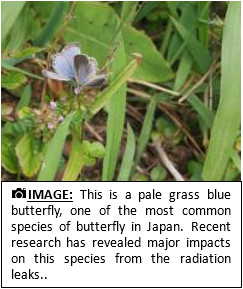
Another team of researchers (Taira et al. 2014) examined the response of the pale grass blue butterfly, one of the most common butterfly species in Japan, to radiation exposure at the Fukushima site. They found size reduction, slowed growth, high mortality and morphological abnormality both at the Fukushima site and among laboratory-bred butterflies with parents collected from the contaminated site.

Multiple sources of exposure were included in the butterfly study. “Non-contaminated larvae fed leaves from contaminated host plants collected near the reactor showed high rates of abnormality and mortality,” explained Dr. Joji Otaki of the University of the Ryukyus in Okinawa, Japan. Some of their results suggested the possible evolution of radiation resistance in Fukushima butterflies as well.

A review of genetic and ecological studies for a range of other species at both Chernobyl and Fukushima (Mousseau 2014) revealed significant consequences of radiation. Population censuses of birds, butterflies, and cicadas at Fukushima showed major declines attributable to radiation exposure. Morphological effects, such as aberrant feathers on barn swallows, were also observed. The authors suggest that long-term studies at Chernobyl could predict likely effects in the future at the Fukushima site.

All of these studies highlight the need for early and ongoing monitoring at sites of accidental radiation release. “Detailed analyses of genetic impacts to natural populations could provide the information needed to predict recovery times for wild communities at Fukushima as well as any sites of future nuclear accidents,” Mousseau said. “There is an urgent need for greater investment in basic scientific research of the wild animals and plants of Fukushima.”

Original Article released:
http://www.eurekalert.org/pub_releases/2014-08/aga-fl081114.php

Link Cited on: LINK de DIET
http://www.nutritio.net/linkdediet/news/FMPro?-db=NEWS.fp5&-Format=detail.htm&kibanID=45639&-lay=lay&-Find