Hydroponic Tomato Experiment 21– In-house Seed Production and Germination

When I started this hydroponic tomato experiment, I was amazed by the effectiveness of the cultivation method. I was able to grow cherry tomatoes from seeds and harvest lots of fruit without much effort. I still harvest tomatoes from the plants, but I would like to take a temporary break from reporting about them.

Each time I pick the cherry tomatoes I check their taste. The number of tomatoes harvested has been increasing recently, and they have made me feel stuffed. Now I’ll show you how I saved the seeds: I chose large and well-formed seeds out of the harvested cherry tomatoes to save for the next season. Since the tomato seeds I used for this experiment were not of a filial generation, using the seeds from those tomatoes for the next cultivation will enable me to harvest a similar quality of cherry tomatoes.

How to save seeds from the fruit:
1. Scoop out the seeds from the fruit and put them into a tea filter bag. You can put the seeds together with the gel surrounding them.
2. Wash the tea filter bag with running water. Gently rub the bag so that only seeds will remain in the bag.
3. Drain off the water and dry the bag in an airy place.
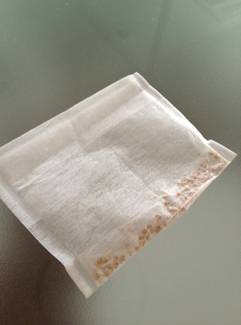
Above is the method of saving tomato seeds. You can use the saved seeds to grow cherry tomatoes again. To check whether or not sprouts grow from the seeds, I sowed the seeds.
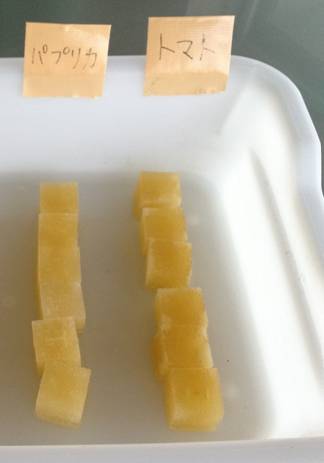
In the picture above, cherry tomato seeds were planted in the right row of sponges, while bell pepper seeds were planted in the left. The pepper seeds were saved from a pepper I bought at a supermarket. I was not sure if the pepper seeds could germinate. For detailed information about seeding, please refer to my first article of this experiment, Hydroponic Tomato Experiment – Seeding.

The picture below is from 20 days after the seeding.
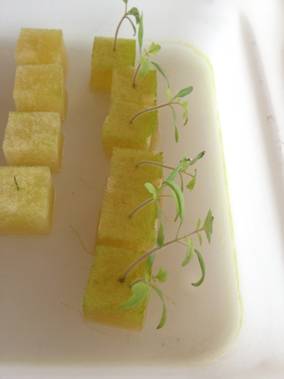
The tomato sprouts came out around 10 days after the seeding. As you can see, roots are growing under the sponges. The picture above was taken 20 days after the seeding. As you can see, the germination rate of the tomatoes was 100 percent.
It seems that bell peppers germinate later than cherry tomatoes. I almost gave up on the peppers but 20 days after the seeding, a sprout of pepper came out of the sponge. I found that other pepper seeds germinated in the sponge as well. I was able to germinate these plants without effort.
Hydroponic Tomato Experiment⑳– The Cherry Tomatoes Grown in The Sun

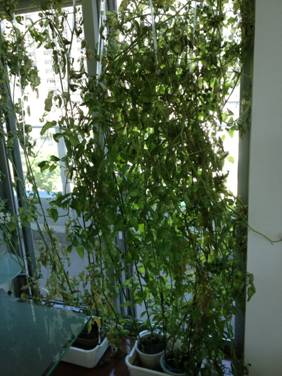
Cherry tomatoes show varying growth characteristics: thickness of stems, leaf growth directions, strength of color, etc. I guess these characteristics are mainly dependant on cultivation methods. In the previous blog, I wrote about the dying cherry tomato plants – those grown in the heated room during winter. This time, I will write about the tomato plants which had been grown in the sun but not in the heated room.

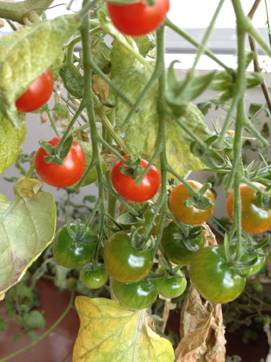
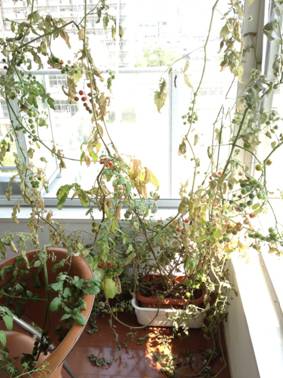
The plants in the picture above are the cherry tomatoes I introduced as the most vigorously growing tomato plants. They have grown steadily with a lot of large and firm fruit. Since the plants grew in the sun, they grew faster than other plants.

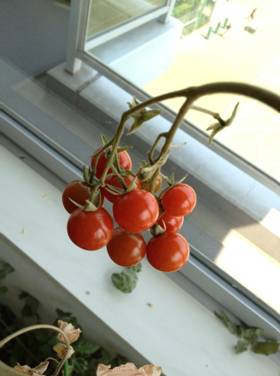
The branches were then turning yellow; they were not lush green any more. However, the plants bore lots of nice fruit as you can see in the picture above.

Some of the fruit turned red. Though the leaves looked dry, the cherry tomatoes themselves look fresh and firm. Thus, the tomato plants have produced firm fruit despite the cessation of growth of the plant as the whole. I think I will be able to continue harvesting cherry tomatoes for a while from these plants.

World’s Healthiest Foods: Soy (Japan)

A typical Japanese person eats soy for breakfast. And lunch. And dinner.
http://www.health.com/health/article/0,,20410303,00.html

A typical Japanese person eats soy for breakfast. And lunch. And dinner. “We eat tofu every day,” says Mamie Nishide, a cooking instructor and recipe developer who’s a native of Nara, Japan. Soybeans, first grown in tropical Asia thousands of years ago, are used in everything in Japan from soy sauce (as ubiquitous as ketchup) to vegetable oil, tofu, and the fermented soybean paste called miso. Japanese eat more soybeans than anyone else, and the long-lived Okinawans top the list at about 60 to 120 grams per person each day, compared with practically zero grams for the average American.

Why to try it: Protein-packed soy is high in isoflavones, estrogen-like substances linked to the prevention of cancer and osteoporosis. But its biggest draw may be the dozens of studies showing soy is good for your heart; the FDA even allows certain soy products (with at least 6.25 grams of soy protein per serving) to have a heart-healthy claim on their labels. Plus, some studies have shown that a diet rich in soy can reduce breast cancer risk. Asian women, for example, have a much lower incidence of the disease compared with their Western counterparts. But other studies suggest that high levels of soy might actually increase breast cancer risk in women who live in the United States, especially among those with a family history of the disease. (If you have a history of breast cancer or a high incidence in your family, talk to your doctor about how much soy is safe.)

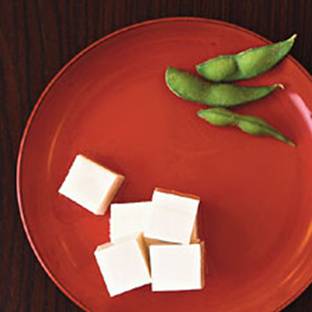
What to do with it: Use cooked soybeans instead of garbanzo beans in your next batch of hummus, and add frozen edamame (whole soybeans) to stir-fries. Tofu typically comes in 1-pound blocks for about $1.99 at grocery and health-food stores.

The Original Article: http://www.health.com/health/article/0,,20410303,00.html
_ _ _ _ _ _ _ _ _ _ _ _ _ _ _ _ _ _ _ _
Soybeans have been indispensable for Japanese diet and it’s not too much to say that all the Japanese people take in soybeans somehow at least once a day. Thanks to the nutritional value of soybeans, we have received benefits to live long and healthy!

Hydroponic Tomato Experiment⑲– The Plants Passed Their Peak of Development

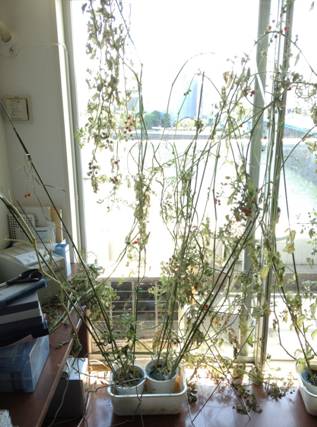
The yield of cherry tomatoes has still been increasing. However, the tomato plants growing in the heated room during winter passed their peak of development.

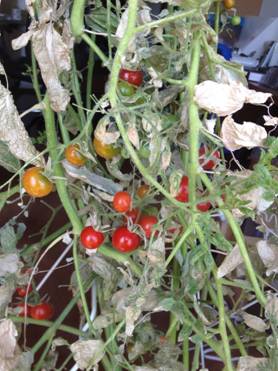
As you see in the picture above, leaves are losing color and dying though the fruits are becoming red. The spider mites have decreased, as the tomato plants still had strength. Almost all of the plants’ leaves have died, but they still had a lot of green fruit, which were turning red. What was different than before was that the color of the tomatoes looked darker. The fruit have been growing.

Overall, it is obvious that the plants got skinnier. They absorbed water slowly. Actually, it looked as if they hadn’t absorbed water at all.

By contrast, the tomato plants in the picture above were still vigorous. They grew over the same period as the plants in the previous picture, but these plants grew in the unheated room during the cold season. They have grown slowly, but looked strong and are colored rich green, as you can see.

Hydroponic Tomato Experiment⑱– Tomato Plants After Consecutive Holidays

The first half of the Golden Week holiday was over. I was concerned about the tomato plants because during that time I hadn’t taken care of them. Take a look at the cherry tomatoes I harvested that day.

The tomatoes in the photo above were harvested on April 30, 2013. Compared to the last harvest, I thought the number of tomatoes had decreased. Actually, I harvested more tomatoes than shown in the picture above and when tallied, I had more tomatoes than in the previous harvest. The reasons I thought I had fewer tomatoes than before are as follows:

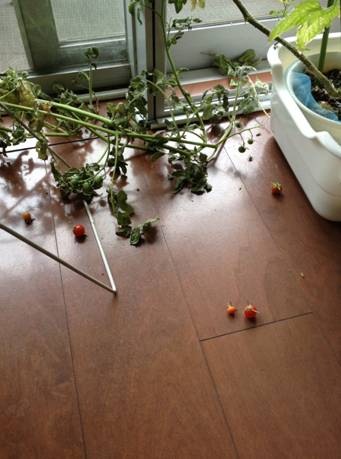
First, parts of the tomato plants fell on the floor during the long weekend. These were grown in the heated room during winter. It is possible that the tomatoes were too heavy for the branches to support because the plants passed the peak of their growth. Though the plants completed their growth cycle they still had lots of green fruit.

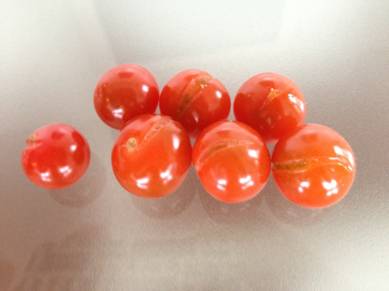
Second, many tomatoes were ruptured; they should have been picked much earlier. The ruptured tomatoes are shown in the picture above.

Third, some tomatoes were damaged by spider mites. Since growing tomatoes with minimal care is the basic idea of this experiment, I have done my best to avoid exterminating the mites. However, due to their robust reproduction, the mites have voraciously eaten at leaves and fruit of the tomato plants. Therefore, I have taken measures to eliminate spider mites such as removing damaged leaves from some tomato plants and watering the leaves and fruit to which the mites were attached.

The cherry tomatoes in the picture above were grown without preventative measure against pests. The tomatoes with visible yellow patterns are the pest-infested ones. I was not able to find a good way to eliminate pests such as spider mites without using pesticides. I didn’t want to use chemicals on plants growing indoors.

For these reasons, the harvest of cherry tomatoes in good shape was small, though the total number of fruit I got was greater than the previous harvest.

Hydroponic Tomato Experiment⑰ – Spring Harvest 2013

When the weather warmed in April, the tomato plants were growing rapidly. The plants bore fruit from one to the next and many tomatoes were harvested at the end of April. Today I will show you how those tomatoes were harvested.

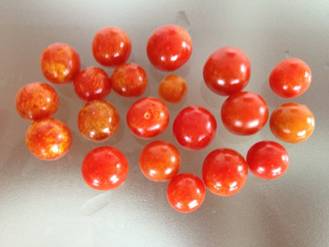
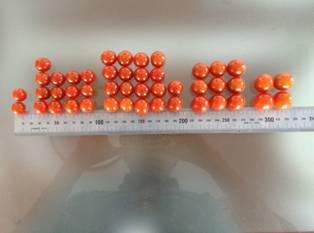
The cherry tomatoes in the photo above were harvested on April 22, 2013. By that time, I had harvested tomatoes almost every day but they were few in number. From this day on, many more tomatoes were harvested so I think it is worth reporting.

Generally speaking, they were a size smaller than those available commercially. Occasionally, I harvested larger ones but not often. It is possible that the plants I grow are simply a smaller variety of tomatoes than those sold in the markets. When I tasted these tomatoes I thought they were less sour than before. They were juicy and good.

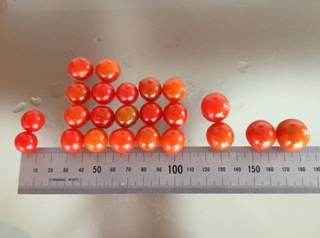
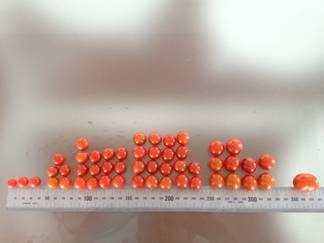
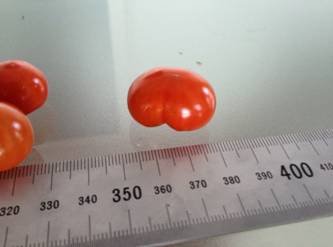
The cherry tomatoes in the above picture were harvested on April 26, 2013. On that day, a total of 50 tomatoes were harvested. When compared to those harvested on April 22, these were slightly larger in general but otherwise, no particular difference was noticeable. The one on the extreme right in the above picture showed an anomaly where two tomatoes were combined into one during development. This was the first time in my experience of growing cherry tomatoes that I got such a unique one.

Apparently, the harvested tomatoes haven’t reached their peak yield yet. I expect more and more tomatoes will be harvested.

Mystery of Better Nourishment by Sunlight – Japanese Dried Foods Part V

So far, we have studied Japanese dried foods from various perspectives including history, associated traditions, and food characteristics. In this blog, let’s study the nutritional differences between fresh and dried forms of some food items.

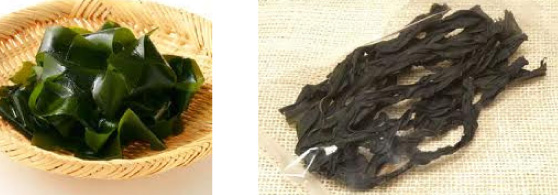
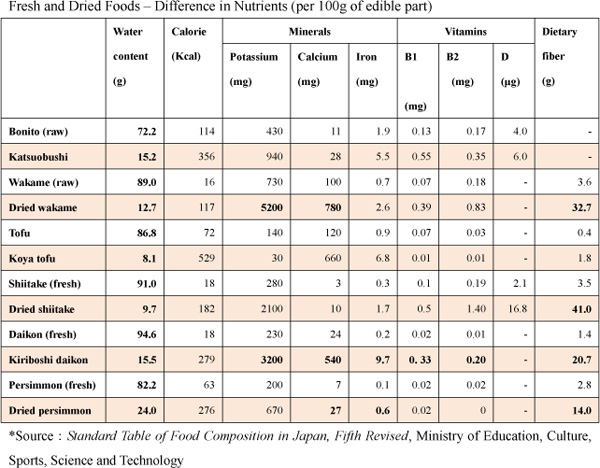
What is the difference between fresh and dried foods? Dried foods are made by exposure to the sun, so obviously they contain less water than fresh foods. Due to the lower water content, nutrients are more highly concentrated; when comparing both, per 100 grams of product weight, dried foods supposedly contain more energy, protein, minerals, etc. than fresh foods. Well, then, is the difference between fresh and dried foods just water content?

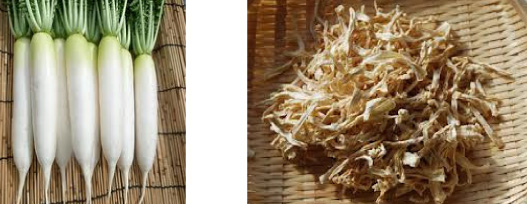
The above table is a nutritional comparison between fresh and dried foods. You can see that each pair of fresh and dried items contains different amounts of water, and there are differences in the nutritional values of dried foods that are not simply because of lower water content. Take a look at the values in bold type. For instance, look at the wakame row. Dried wakame has more potassium and calcium, and far more dietary fiber than raw wakame, whose difference in value is greater than the difference in water content. Further, when comparing fresh and kiriboshi daikon, dried daikon contains far greater amounts of minerals, vitamins, and dietary fiber than the fresh daikon even when taking differences in water content into account. Dried persimmons, which are too astringent to eat in their fresh form, become a sweet, delicious, and healthy food containing lots of minerals and dietary fiber after drying.

Though not shown in the table, dried foods obviously contain more umami elements like amino acids and nucleic acids. For example, Katsuobushi contains lots of inocinic acid, which is known as an umami element but which doesn’t exist in living bonito. When bonito die, inocinic acid is synthesized by the effect of the enzyme in its muscles. Drying and processing bonito at the right time gives katsuobushi its rich inocinic acid content.

In oriental medicine, foods are categorized into “yin” (which decreases body heat) and “yang” (which increases body heat) types and advise maintaining healthy by eating the appropriate yin and yang foods. Dried foods, which have been fully exposed to the sun have mostly “yang” or “medium” properties, which means that they improve your metabolism and help boost the immune system. While it has been said that “colds may lead to all kinds of diseases,” yang foods are said to be effective in preventing colds and cancer.

Long ago, when people didn’t have means of preserving raw foods like today’s freezing and refrigeration technologies, they showed wisdom and used the natural energy of sunlight on dry foods so they were able to preserve foodstuff for sustaining themselves in times of food shortage. And now, these dried foods, a product of our ancestors’ wisdom, provide modern people with something much more valuable than just preserved foods.

As we have seen, dried foods are not simply products from which water has been removed but also products containing lots of nutrients and umami elements. We hope that you will pursue your interest in dried foods – which contain a lot of natural energy, are healthy, safe, and delicious foodstuff – and use them in your everyday diet.

Reported by Yukari Aoike, Sugahara Institute

Local Specialties and Delicacies – Japanese Dried Foods Part IV

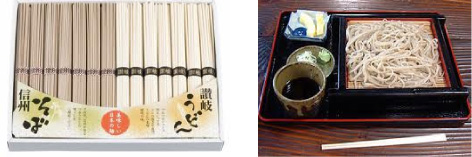
You know that one of the most popular foods in the world is noodles. In the West, there are different kinds of long pasta originating in Italy and in Asia; a variety of noodles from China are consumed. The Japanese are world-class noodle eaters. They like both Italian pasta and Chinese noodles – spaghetti and ramen dishes have been very popular in recent years – and they have loved traditional Japanese noodles like soba (buckwheat noodles) and udon (wheat-flour noodles) since the Edo period. Restaurants do cook and serve fresh soba and udon noodles but most people cook dried noodles at home.

The original forms of soba and udon have existed since the Nara period, but lay people started eating them as noodles after the Edo period. In the city of Edo, soba and udon were available at street stands like today’s fast food. At the street stands, they served boiled noodles with “mentsuyu” consisting of “dashi soup” from katsuobushi and kombu, and “kaeshi” made from soy source, mirin (a kind of rice wine) and sugar.

Now soba and udon are found all over Japan but generally, people in the eastern part of Japan tend to love soba, while those in the western part love udon. Soba is a specialty product of several prefectures including Nagano (Shinshu soba), Iwate (wanko soba), and Niigata (hegi soba) while udon is a specialty of such prefectures as Kagawa (Sanuki udon), Akita (Inaniwa udon), and Aichi (kishimen). The soba and udon in these highly regarded areas are extraordinary good and these specialty noodles are a major attraction for tourism.

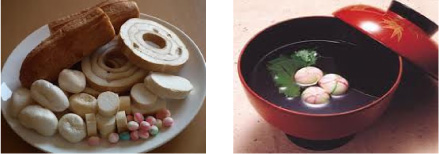
Like soba and udon, fu is also a dried grain product. Fu is made from wheat gluten, flour, and baking power by baking or frying. There is a wide variety of fu from tiny and pretty temari fu, which is often used as garnish for traditional soup, to kuruma fu, which is shaped like wheels, and age fu that looks like fried buns. Fu was introduced from China around the 14th century. Since the product contains lots of gluten, it was adopted for shojin ryori at temples as a source of protein for monks who were prohibited from having meat or fish with meals.

Fu is a specialty product of the following prefectures: Yamagata (ita fu), Niigata (kuruma fu), Miyagi (abura fu), etc., and is used for cooked, fried and soupy dishes. The product itself has no taste but when cooked it tastes good since it absorbs the juices and seasonings of other ingredients; in addition, it is a healthy product high in protein.

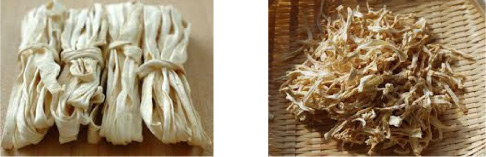
The products in the photos above are both dried vegetables. Shown at left are kanpyo, dried shavings of gourd. Kanpyo is high in dietary fiber and minerals but is low in calories. It used to be a major ingredient of sushi; when you asked for “nori maki” at sushi restaurants it meant you ordered the sushi roll with kanpyo. Now the roll is called “kanpyo maki.” The sweet and crunchy texture of cooked kanpyo goes well with sushi rice and is an essential ingredient in chirashizushi. In the Edo period, a feudal lord who moved from Osaka to Tochigi promoted the cultivation of gourd. Since then, kanpyo has been a specialty of the Tochigi prefecture, which provides 80% of total production in Japan.

The product in the above right picture is kiriboshi daikon. It is made by shredding then sun-drying daikon radishes. After softening the daikon by soaking it in water, it is usually cooked with vegetables and aburaage and served. Kiriboshi daikon is a specialty product of the Miyazaki prefecture, which produces 90% of national production since Miyazaki is a major daikon-producing region and in winter, the cold winds blow from the mountains and effectively dry the shredded daikon.

Through these means, these dried foods contain a lot of sun light, and nutrients concentrated by drying which are, so to speak, natural supplements. Beyond those mentioned in our blogs, Japan has many other dried foods. They are traditional foods processed by methods adhering to ancient wisdom. Although they appear unassuming, they contain lots of umami, dietary fiber, and minerals, yet not many calories. Therefore, if you are concerned about stress, weight gain, or adult diseases we recommend you use these dried products for your diet.

Reported by Yukari Aoike, Sugahara Institute

Foods that brighten your skin

■FOODS FOR SKIN HEALTH
If your skin care routine primarily revolves around expensive skin creams and serums, it’s time you put your money (and lots less of it) towards a healthy diet. The foods you eat have a significant impact on the health and appearance of your skin. Here are a few tasty foods that can brighten your skin and overall complexion.


Posted by Michele Borboa, in Food & Recipes / Healthy Recipes & Nutrition
http://www.sheknows.com/food-and-recipes/articles/818125/Foods-that-brighten-your-skin

【1】Water
Water is essential for the healthy function of all of your body’s cells. Maintaining adequate hydration will keep your cellular metabolism at its peak. Since your energy level is often reflected in the appearance of your skin, drinking enough water (eight 8-ounce glasses) in addition to following a skin-healthy diet can help you feel and look your most vibrant.

【2】BERRIES
Teeming with antioxidants, berries – blueberries, blackberries, cherries, and goji to name a few – offer many complexion-boosting nutrients. In addition to being tasty, low-calorie health-promoting fruits, the pigments in these bright-colored gems contain phytochemicals that have anti-inflammatory properties, which can keep your skin glowing and smooth.

【3】SPINACH
Along with the other lush selection of dark leafy greens, spinach is a powerhouse food that is packed with antioxidants and anti-inflammatory benefits. A diet high in vegetables (and fruits) is a tasty and nutrient-dense way to bolster your skin health. Since vitamins tend to be heat sensitive, aim to eat your spinach raw or lightly cooked.

【4】SALMONA
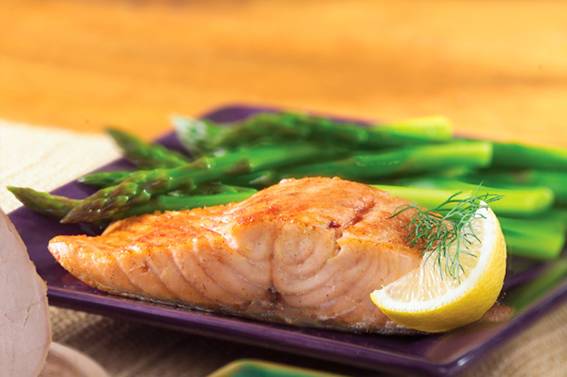
Loaded with omega-3 fatty acids, salmon and other fatty fish are a delicious defense against skin issues. In addition to being an anti-inflammatory food, salmon is a quality source of protein and healthy fats, which can improve the health of all of your cells, including your skin cells. The fat in salmon can also help you better absorb fat-soluble nutrients you consume from other healthy foods.

【5】ALMONDS
Almonds and other nuts and seeds are a crunchy-good way to brighten your skin. Offering an abundance of antioxidants and good-for-you fats, these nuts are a yummy source of skin-healthy essential oils. Because of their anti-inflammatory effects, almonds can help reduce the symptoms of inflammatory-based skin conditions, such as acne, eczema, and psoriasis.

【6】QUINOA
Not specifically linked to radiant skin, quinoa and other whole grains, are instrumental in your skin health because they are tasty sources of complex carbohydrates. While refined white flour carbohydrates can stress skin and lead to premature aging, complex carbohydrates offer a wide range of nutrients, such as fiber, protein, vitamins, and minerals that can nourish the skin and the rest of your body. Quinoa, in particular, is a great source of plant-based protein.

_ _ _ _ _ _ _ _ _ _ _ _ _
Please check the original article here on SHEKNOWS FOOD & RECIPES!!
http://www.sheknows.com/food-and-recipes/articles/818125/Foods-that-brighten-your-skin

Seaweed is Healthy, Delicious and Low-Cal – Japanese Dried Foods Part III

It has been said that at the end of the Edo period, an American who came to Japan by the great Black Ship reported that Japanese “live in houses made of paper and wood and eat black sheets of paper.” You might say, “How rude of him to say that.” However, the American’s expression is not totally wrong. It is true that traditional Japanese houses are made of wood and inside the house, Japanese-style fittings called shoji and fusuma – doors and partitions – are really made of wood and paper. Well then, do the Japanese really eat black sheets of paper?

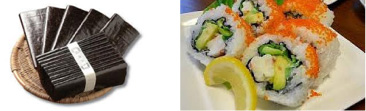
That black sheet of paper is actually nori (dried seaweed). Yes, it is an edible black sheet of paper. Nori is one of the essential foods in the Japanese diet. Now that Japanese sushi is popular all over the world, many people probably know nori is a fine food made of seaweed. However, maybe because many western people are reluctant to eat sushi rolls with black sheets on the outside, California rolls are made inside out; nori is rolled inside the rice.

Nori has been highly valued as a premium food item since around the 7th century. Only a limited number of people knew its delicious taste. It was only after the Edo period that common people were able to acquire nori. Tokugawa Iyeyasu, who established the Edo Shogenate, loved nori very much and promoted the farming of this seaweed. Later, itanori, the nori processed in sheet form, was created incorporating the traditional Japanese paper making method and the nori was later called Asakusa nori. Today this type of sheet nori is used throughout the world.

Nori goes well with rice, our staple food, and onigiri and bento using nori are always popular items for lunch. Why is nori so popular? The seaweed is tasty. Nori contains lots of protein, vitamins, minerals, dietary fiber, taurine, EPA, etc. The amino acids contained in nori enrich the flavor of rice. Just lightly roast some nori and eat it. You will know it smells and tastes good all by itself.

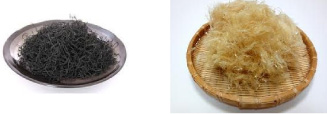
In addition to nori, popular dried seaweeds in Japan are hijiki and tengusa. Hijiki, shown above left, used to be a luxury food item like nori and became popular with people after the Edo period. Hijiki cooked with vegetables and aburaage (fried tofu) is used as a staple dish for otoshi (starters) in Izakaya, bento, and set meals at lunchtime. It contains lots of dietary fiber and minerals including calcium and iron. Tengusa, shown above right, is the material used for tokoroten and kanten (agar).

Tokoroten, shown above left, is made from jelly extracted from tengusa by boiling, then cut like noodles. It is mainly served cold with rice vinegar, soy source, and mustard. Tokoroten contains lots of dietary fiber. It has a jelly-like texture and is refreshing when you eat it cold on a hot summer day.

Kanten or agar is made from tokoroten produced during cold months by allowing it to freeze in the field and then drying it. It has a finer texture than tokoroten and smells less of seaweed. Because of its jelly-like texture it is mostly used for sweet desserts. Mitsumame containing boiled kanten cubes, boiled red peas, gyuhi (soft and sweet mochi), and some fruit served with black sugar syrup is one of the most popular Japanese sweets since the Meiji period. Mamekan, shown above right, is a dessert consisting simply of boiled kanten cubes, boiled red peas, and black sugar syrup. It is popular because it’s sweet but light and healthy.

Seaweed, as a whole, is comprised of dietary fiber, minerals, vitamins, and carbohydrates, and is very low in calories. Due to its dietary fiber content, it provides a sense of fullness and tastes good with little seasoning. While dieting, have some tokoroten or kanten sweets when hungry or craving something sweet and you will feel better and be able to shed weight. Though plain-looking, dried seaweed is full of wonderful ingredients and Japanese make great use of it.

Reported by Yukari Aoike, Sugahara Institute