Source of Umami and Lucky Items – Japanese Dried Foods Part II

These days most Japanese people only go to the supermarket to buy daily necessities like food, including dried foods. Back when every local region had streets lined with specialty stores selling rice, vegetables, fish, etc., grocery stores that specialized in dried foods also did business on the street. I remember going to a grocer’s shop when I was a child. There were many katsuobushi (dried bonito) in the shop and I remember touching and picking some. I also remember the shop smelling very good.

When making a delicious Japanese dish, the key ingredient is soup and cooking stock called dashi. Today, in stores you can buy various types of processed dashi in liquid and granular forms with a long shelf life, so many people probably don’t realize that up until a generation ago, people would make dashi every day.
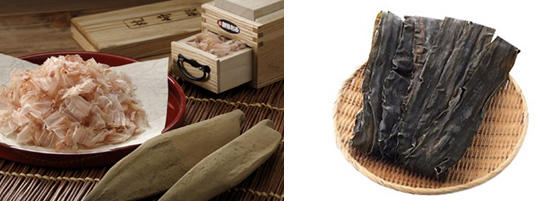
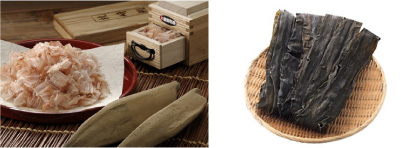
For instance, when Japanese people make miso soup they use dashi from katsuobushi, kombu (kelp) or niboshi (dried infant sardines) depending on where they live in Japan. In the Kanto area, the overwhelming majority of people make miso soup with katsuobushi dashi, while in the Kansai area, they mainly use a mixture of katsuobushi and kombu dashi. In the Kyushu and Shikoku areas where people like fish the large majority of people use niboshi dashi.

It is particularly worth noting that in authentic Japanese restaurants such as ryotei, ichiban dashi, made from katsuobushi and kombu, is regarded as the finest dashi. Amongst all the umami elements in Japanese cuisine, the combination of inosinic acid from katsuobushi and glutamic acid from kombu supposedly has the best flavor.

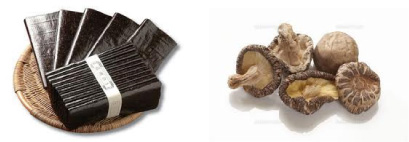
Japan has over 75,000 temples. Japanese Buddhist monks were prohibited from eating meat and fish because of Buddhist precepts not to kill living creatures. In temples, monks made shojin ryori (Buddhist cuisine) themselves without using meat or fish. This custom continues though not universally. Instead of using katsuobushi they use kombu, dried shiitake mushrooms, and dried soy beans to make a special soup stock called shojin dashi. Shojin dashi has a lighter flavor than soup stocks made from fish but its aromas and umami are comparable to other dashi.
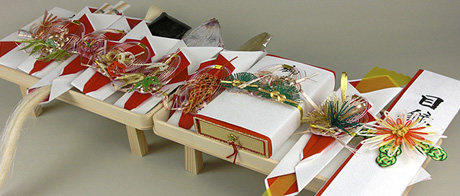
Japanese dried foods like katsuobushi and kombu are indispensable not only as the basis for dashi but also for ceremonial occasions. Take yuinou, the betrothal ceremony, for example. Yuinou is an event in which the couple to be married conduct a ceremony with both families present to confirm their engagement. In recent years, many couples have tended to skip the ceremony and just have a family dinner, but families in areas where the tradition is upheld conduct the ceremony according to proper formalities.

On the day of yuinou, the family of the groom-to-be sends a set of betrothal gifts to the family of the bride-to-be. The formal set of the betrothal gifts consist of nine items including betrothal money, katsuobushi, surume (dried squid), kombu, tomoshiraga (linen yarn), suehiro (folding fan), yagagidaru (money for food and drink), awabi noshi (dried abalone), and mokuroku (catalog). The family of the bride-to-be sends a similar betrothal gift to the family of the groom-to-be so both families exchange gifts to confirm their approaching marriage. Originally the kimono and obi (belt) were exchanged instead of money and the rest of the items had significance as lucky charms. Katsuobushi is a symbol of masculine strength, surume for long-lasting happiness, kombu for prosperity of descendants, white linen yarn for long life and bonds, suehiro for prosperity, and awabi noshi for eternal youth. Dried foods like katsuobushi, surume, kombu and awabi thus play an essential part in people’s special occasions as both lucky charms and precious long-life foods.

As previously mentioned, a stone-like hard mass was actually a magic seasoning that used to be highly valued for ceremonial and trading purposes. Therefore, Japanese dried foods are extraordinarily valuable though unassuming in appearance. More to come in the next blog.

Reported by Yukari Aoike, Sugahara Institute
Blessings of the Sun, the Mountain, and the Sea – Japanese Dried Foods Part I

Since time immemorial, people have racked their brains contemplating how to get adequate nutrition for living. They obtained foods through hunting and agriculture and found ways to preserve the foods for times of shortage. The oldest method of preserving foods was drying. By exposing foods to the sun to remove water, they were able to inhibit the growth of bacteria that causes decomposition, thereby preserving foods for the long-term.

Grains and legumes, including rice, wheat/barley, corn, beans have been preserved throughout the world by drying since early times. Accordingly, dried meat was made in the regions where people mainly ate meat, while dried fish and seafood were made in coastal areas.

In Japan, there are a lot of different varieties of dried foods and many of them are the traditional foods essential to our daily meal. We collectively call these traditional dried foods kanbutsu. Examples of kanbutsu include: seafood such as dried abalones and scallops, katsuobushi (dried bonito) and surume (dried squid), seaweeds such as kombu, hijiki, nori, grains like soba and udon, vegetables such as dried shiitake mushroom, kanpyo (dried gourd strips), kiriboshi daikon (dried radish strips), and many more. They are all blessings of the sun, the mountain, and the sea.

For the Japanese, kanbutsu provide benefits beyond just preserved foods. Firstly, they are premium food items, some of which are essential for special ceremonial occasions. Secondly, they work as magic seasonings that enhance the flavor of your dish. And further, they are considered natural supplements with nutrients that are essential for health and whose value is found to be increasing.

Long ago, Japanese people who believed in countless kami (gods) built shrines all over the country where they conducted Shinto rituals including festivals and misogi and harai purifications. Making an offering to the kami is an essential part of the rituals. In Shinto, the offerings are referred to as shinsen (or mike) and many such items are kanbutsu. Items included in the offering vary by shrine, and usually foods in season in the region and local specialties were chosen. Shinsen, offered to the kami during the ritual, are consumed by all participants with the offered sacred sake during the ceremony called naorai, which means feast. Naturally, since foods that kept well were chosen as shinsen, many of them were kanbutsu dried foods. After the Kofun period (250 to 600 AD), processed dried foods, especially dried bonito and kombu, were highly valued as tributes to the Emperor. As premium foods, many kanbutsu later were developed to be used for trading with foreign countries.

On the other hand, Japanese people hadn’t eaten meats for a long time. Meats contain a lot of inosinic acid, which produces the taste of umami, but the Japanese as non-meat eaters extracted alternative umami tastes mainly from kanbutsu. Kombu, katsuobushi, niboshi, dried shiitake mushrooms are examples and they are also known as dashi stock ingredients. The Japanese word umami is now used worldwide. Because those who found the fifth taste after sweetness, sourness, saltiness and bitterness were Japanese researchers – they found umami constituents such as glutamic acid, inosinic acid, and guanylic acid from kombu, katsuobushi and shiitake mushrooms, respectively. Restaurants in many cities of Japan now receive outstanding evaluation marks from Michelin Guide. Could this be because the Japanese have a sense of mastering umami? I don’t think it’s an exaggeration to say that kanbutsu play a part in such an excellent reputation.

Since kanbutsu fully absorb sunlight and their water is removed, their nutrients are highly concentrated and enriched compared to raw ingredients. For example, seaweeds such as kombu, hijiki and nori contain plenty of minerals including calcium, potassium and iron. Dried shiitake mushrooms contain ten times as much vitamin D as raw ones. Kiriboshi daikon contains rich amounts of dietary fiber as well as vitamins and minerals. For contemporary Japanese whose dietary habits have been largely Westernized and who live a busy life, kanbutsu is the ideal food ingredient for receiving the nutrients they need. Kanbutsu are absolutely natural supplements.

I would like to show you some of the Japanese kanbutsu, each of which has its history and episodes, in the next few blogs.

Reported by Yukari Aoike, Sugahara Institute
Hydroponic Tomato Experiment⑯ – Growing Too High To Hold

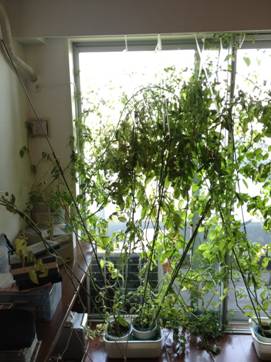
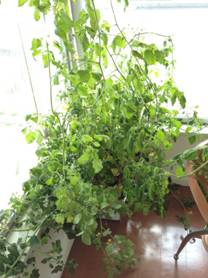
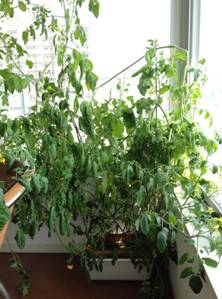
As you see in the photo above, the tomato plants that rapidly grew in a vertical direction later grew downward because they became too tall to support. When I came to check the plants one morning, I found them as shown in the picture. The stems were not broken, but bent down. The bowing of the plants caused their leaves and branches to become entangled, so I had quite a hard time untangling the mess. Afterwards, I suspended strings from the curtain rail to support the branches of the plants. The supporting poles had not been long enough.

To cope with the situation, I lifted the stems until the plants managed to support themselves and let the farthest ends drop down. I wish I could have extended the plants horizontally, but space limitations wouldn’t allow for this. Further, I had to provide space for the top of each plant to develop and avoid getting tangled with other nearby branches and leaves. It requires hard work, but you need to provide support to the plants relative to their development. Since the plants grow more and more every day, you need to keep an eye on them every day.

Applying and Taking-in Essential Oils

In my last blog entry I explained about fragrance of essential oils. This time I would like to focus on the methods of apply and taking-in essential oils.
Applying method is literally to apply essential oils onto our skin. In this way, essential oils work on our mind and bodies. I assume many people have been already aware of it being used in spas or beauty salons. This is a great way to ease our exhausted or tensioned bodies as well as to calm our feelings down.

However, it is very important to know whether our body does not overreact against the essential oil to be used. For that reason, please make sure to conduct a patch test on a soft part of your skin like the inside of the upper arm. Even the same kind of essential oils from different manufacturers may act on differently, so I recommend checking the products of each manufacturer.

Also, in most occasion, so-called “carrier oils” such as coconut oils are used to dilute essential oils because some essential oils stimulate our skin too much for its highly-concentrated components. Diluted by carrier oils enables essential oils to spread more widely and smoothly on the skin; thus, the wide range of our body can receive benefits of essential oils. Besides apply onto our body, another good way is to pour some drops of diluted essential oils into a bathtub. Wouldn’t it be a great way to remove our daily stress?

And lastly, the third way of using essential oils is to take them into our body. Recently, some essential oils are produced for a purpose to aromatize. You can add some drops in your drinks or meals. Please make sure to follow the specific directions of the manufacturers when you take in essential oils.

Fragrance of Essential Oils

I would like to talk about the most common way to use essential oils. Fragrance of essential oils exerts its effects when people smell it. There are several ways to make essential oils fragrant: to use drops directly, to drop in hot water and volatilize the fragrant components by heat of an aroma pot or a candle, or to diffuse aroma using a diffuser. These are the easiest ways so that we can smell essential oils directly.

The volatilized components go into our noses and they transmit signals straight to our brain. Essential oils have great impact on our mind and body enough to brighten up our feelings, moods, so as to make us feel relaxed. Some essential oils have the effect of sterilizing. By diffusing the fragrance throughout the room can refresh the sir. Essential oils will bring us about much different effectiveness.

For example, when essential oils of citrus fruits are used in an office, the workers reported that the levels of unpleasantness and stress had lessened. In addition, pepper mint is effective to stimulate people to concentrate more and better. Well, I would like to expand the details of essential oils in another blog entry. This is indeed an easy way so please make good use of essential oils.


Hydroponic Tomato Experiment⑮ –Steady Growth

As we say in Japanese “san-kan shi-on,” which means to have “three cold days and four warm days” cycle repeatedly in early spring. The weather alternated between cold and warm days. However, now it’s warm enough to dispense with heating. The cherry tomatoes, initially inhibited in development, have increased their growth rate as if they wanted to catch up.

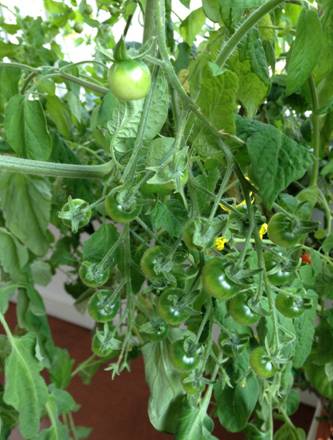
The plants in the above pictures were the most vigorously developed of the cherry tomatoes grown through the winter. Unlike the tomato seedlings that had grown in a vertical direction, these plants had spread in all directions. The leaf color, stem thickness, and vividness of the plants’ flowers were firm and consistent. These plants differed from others because they caught the sunlight slightly better and had supported themselves since supporting poles were unavailable in the early stage of growth.

Still green, yet they bear a lot of fruit. The tomatoes grew steadily and looked shiny. There were many other branches abundant with fruit like this throughout the rest of the plants. Since I assisted the pollination, most flowers were able to bear fruit. I expect that they will continue to grow well.

Hydroponic Tomato Experiment⑭ – Tiny Cherry Tomatoes

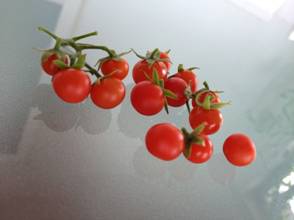
The cherry tomatoes have been harvested regularly. They varied in size but were perfectly formed. Some of them developed color and ripened without attaining full size. The tomatoes in the above picture are very small. You can probably tell even without a reference for size comparison.

The tomatoes in the above picture are extremely small; they are about one centimeter in diameter. They looked like tiny cherry tomatoes, but they were not very shiny and lacked firmness. I wondered how they would taste but upon consumption they tasted like normal cherry tomatoes. Many of those tiny cherry tomatoes were from dense-setting plants. In these, nutrients didn’t spread well throughout the plants, or there were differences in nutrient absorption among the seedlings. Though very small, they tasted good as average-sized tomatoes and could be used nicely as a garnish.
As a byproduct, tiny cherry tomatoes were harvested.

Best Way to Use the Essential Oils

To begin with, what is essential oil? I explained it in the last blog entry that essential oil is 100% natural ingredient extracted from flowers, leaves, and stems of plants. More specifically, it is highly-concentrated, volatile scented liquids extracted from natural plants. The scented liquids exist in petals, leaves, stems, roots, seeds, resins, or fruit skins. Extracted through the most appropriate methods for the kind of plants, they become essential oils. There seem to be many people consider that essential oils are the same as vegetable oils, but they are completely different for essential oils contain resins and fatty acids which vegetable oils do not.

Essential oils have three major practical ways to use. One is to provide fragrance. Fragrance of essential oils acts upon our mind and body. Another is to apply. Applying essential oils on skin will affect directly on inflammation of one’s body. And lastly, essential oils can be used for take-in or drinking purpose. But this is not a common way at all and it is only practiced in medical aromatherapy. Professional knowledge and guidance is required when taking-in essential oils. Some essential oils are drinking-prohibited.

There are the three major ways to use essential oils. Which way to use essential oils depends on the status of one’s mind and body. When you are not feeling well, fragrance of essential oils works the best. When you have fatigue or inflammation on your body, applying essential oils will ease. Some medical professionals may recommend to take-in essential oils for strengthening one’s immune system to keep being healthy. Obviously, the most effective way to use essential oils varies depending on the person in need, thus, I cannot mention what is recommended.

Considering the effectiveness of essential oils, there is not much big difference in how essential oils act on us. I would like to explain in details in the next blog entry.

Aromatherapy

Aromatherapy has been widely well-known these days. It is mostly recognized as a method to relax our mind and bodies using aroma oils. There are two major kinds of oils used in aromatherapy. One is essential oils which are 100% pure natural ingredient extracted from flowers, leaves, or stems of plants. Another one is the synthetic oils. They are so called when the chemically-made oils are mixed with essential oils or when the oils whose natural chemical composition is artificially made. In this blog entry, I refer such synthetic oils to those besides essential oils (100% pure natural oils). Aroma oils sold in novelty (household goods) stores in Japan are mostly categorized in the latter.

As a general knowledge, aromatherapy uses the oils with fragrance. But those who study aromatherapy in a professional manner have a different understanding. They consider that aromatherapy uses only essential oils, the first kind mentioned in the former paragraph. The term, aromatherapy was created by a French scientist. The study on essential oils started when surprising effects of essential oils were witnessed. One day when essential oil of lavender was applied on a burn during an experiment, it healed the burn much quickly. It was only early 1900s when the study about effectiveness of essential oils on human body. But the historical background of using essential oils can trace way back in the past. Recent studies have proved that how essential oils were used in those days were correct.

Now that aromatherapy has become so common but it is used in many different fields. Taking advantage of essential oils with full of precious historical background is definitely beneficial and it is highly recommended to increase knowledge on it.