Japanese Name for July and August

The ancient Japanese name for July is written as 「文月」and it’s called “Fumizuki/Fuzuki.”  The origin of the name is often said that it came along with a famous July event, Star Festival “Tanabata” when people write their wishes on a slip of paper to hang up on bamboo trees.  Back then, people had the same tradition but to write short poems or songs on a slip of paper for the bamboo tree wishing their writings would get better.  The character of 「文」has meanings deeply related to words such as a letter 「文字」 or a literature「文学」.

a1Tanabata is now well known as a summer event, but it was brought into Japan from China during Nara period.  So the history of being named Fumizuki could have been one of the several fairytales like those of other 6 names so far.  Other possible Japanese names for July are 「含み月」”Fukumizuki” and 「穂含み月」”Hofukumizuki” for it is the month when the rice grains start growing.  Considering the cases of other months, nature and farming related origin seem to fit in right for the July’s Japanese name.

a2

August is called “Hazuki” as the ancient Japanese name.  Literally, it is related to leaves.  As I have explained before, the ancient Japanese names for months are based on the lunar calendar and there is a slight time gap, about a month and a half, between the new calendars we use in recent day.  It may be correct to assume the month of Hazuki initially indicated the mid-September, when the leaves are expected to start turning colors and fall on the ground around this time of the early autumn.  That’s why September is called as「葉落ち月」“Haochizuki” or 「葉月」 “Hazuki.”

‘Unsafe’ artificial trans fats in food must go in three years, FDA orders

b1

The U.S. Food and Drug Administration plans to implement a total ban on artificial trans fats — found in all foods — in the next three years, in a bid to reduce coronary heart disease and prevent thousands of heart attacks per year. | AP
Jun 17, 2015 

WASHINGTON – Artificial trans fats found in everything from margarine to cookies and frozen pizzas are not safe to eat and must be removed from food in the next three years, U.S. regulators said Tuesday.

Also often used in frosting and crackers, partially hydrogenated oils (PHOs) contribute to heart disease and fatal heart attacks in thousands of Americans every year, said the U.S. Food and Drug Administration, calling them not “generally recognized as safe.”

“The FDA’s action on this major source of artificial trans fat demonstrates the agency’s commitment to the heart health of all Americans,” said acting FDA commissioner Stephen Ostroff, confirming a 2013 proposal to ban them.

“This action is expected to reduce coronary heart disease and prevent thousands of fatal heart attacks every year.”

Partially hydrogenated oils carry no health benefits and the Institute of Medicine has previously determined that no level is safe for consumption.

Food manufacturers in the United States have been required since 2006 to include trans fat content information on canned and packaged food labels.

The law still allows foods to be labeled as having zero grams of trans fat if they contain less than 0.5 grams of trans fat per serving, but FDA officials said that a separate effort is underway to change that, and that PHOs will no longer be allowed in any foods after three years unless they get a specific exemption from regulators.

The FDA has said the labeling rule and actions taken by the food industry have already led to a 78 percent decrease in trans fat consumption in the past decade.

“While trans fat intake has significantly decreased, the current intake remains a public health concern,” the FDA said.

According to Rebecca Blake, director of clinical nutrition at Mount Sinai Beth Israel in New York, the current labeling laws are misleading consumers.

“If one serving of a product has less than 0.5 gram of trans fat, it can be legally labeled trans-fat free. But are people really eating only one cookie or five fries? The servings often add up and the consumer ends up with far more trans fats in their diet than they realize.”

Food manufacturers have three years to “either reformulate products without PHOs and/or petition the FDA to permit specific uses of PHOs,” the agency said.

By mid-June 2018, no partially hydrogenated oils can be “added to human food unless they are otherwise approved by the FDA.”

The Grocery Manufacturers Association said it was pleased with the three-year time period because it “provides time needed for food manufacturers to complete their transition to suitable alternatives and/or seek food additive approval,” a statement said.

The GMA, which represents some 300 leading food and beverage companies, is planning to file its own food additive petition to the FDA in the coming days, a spokesman told AFP.

“It will show that the presence of trans fat from the proposed low level uses of partially hydrogenated oils (PHOs) is as safe as the naturally occurring trans fat present in the normal diet,” said the GMA statement.

“I think it’s the difference between zero and nearly zero,” said GMA spokesman Roger Lowe, who declined to give specifics about which companies or products still want to be able to use artificial trans fats in processing.

The FDA move bans artificial trans fats, not the trans fats that occur naturally in some dairy, beef and lamb products.

Consumer health groups applauded the FDA decision and said that artificial trans fat harms the body by elevating bad cholesterol and lowering good cholesterol.

“The eventual elimination of artificial trans fat from the food supply will mean a healthier food supply, fewer heart attacks and heart disease deaths, and a major victory for public health,” said Center for Science in the Public Interest executive director Michael Jacobson.

“The final determination made today by the Food and Drug Administration gives companies more than enough time to eliminate the last of the partially hydrogenated oil that is still used in foods like microwave popcorn, biscuits, baked goods, frostings and margarines.”

THE JAPAN TIMES
http://www.japantimes.co.jp/news/2015/06/17/world/science-health-world/unsafe-artificial-trans-fats-food-must-go-three-years-fda-orders/#.Vazq9Plimog


ESC statement on trans fatty acids

The European society of cardiology welcomes FDA decision to ban industrial trans fats

European Society of Cardiology

Released on EurekAlert! on 8 July, 2015
http://www.eurekalert.org/pub_releases/2015-07/esoc-eso070815.php

b1

Sophia Antipolis, 08 July 2015. The American Food and Drug Administration (FDA) considers trans fatty acids (TFA) unsafe for consumption. The FDA is providing a three-year compliance period to allow industry to gradually phase out their use in processed food. This step is expected to reduce cardiovascular disease and prevent thousands of fatal heart attacks every year in the US.

The European Society of Cardiology welcomes the FDA decision “to remove artificial trans fat from the food supply” (1) and calls upon European policy makers to urgently bring forward EU-wide regulation to address this important health issue.

TFAs are widely recognized as the most harmful fat with regard to causing cardiovascular disease (CVD). Partially hydrogenated oils are the major source of artificial transfats in the food supply. They are the most often used source of fat in commercial bakery products. TFAs raise the level of LDL (“bad”) cholesterol in the blood. An elevated LDL cholesterol level in the blood increases the risk of developing heart disease. The detrimental effects of TFAs on heart health and mortality are now beyond dispute (2,3).

Cardiovascular disease (CVD) is the main cause of death in Europe. Each year CVD causes over 4 million deaths in Europe and over 1.9 million deaths in the EU. CVD causes 47% of all deaths in Europe and 40% of deaths in the EU (4). There are very significant differences in mortality rates between countries. The current TFA intake in Eastern and South Eastern Europe is often high, increasing the European CVD burden and widening national and international inequalities.

Based on the effects on cardiovascular health of TFA intake, the positive experiences from different interventions to limit TFA intake and the accumulated knowledge on differential consumption of TFA across Europe, the European Society of Cardiology believes that a regulatory intervention is necessary to ensure that all EU citizens can effectively reduce their TFA intake

For the full European Society of Cardiology position on trans fatty acids, please refer to our 2014 paper on Industrial Trans Fatty Acids (5). The European Chronic Disease Alliance (of which the European Society of Cardiology is part) has also issued a policy document (6).

Original Article released:
http://www.eurekalert.org/pub_releases/2015-07/esoc-eso070815.php

Link Cited on: LINK de DIET
http://www.nutritio.net/linkdediet/news/FMPro?-db=NEWS.fp5&-Format=detail.htm&kibanID=50259&-lay=lay&-Find


Drinking chamomile decreases risk of death in older Mexican American women

University of Texas Medical Branch at Galveston

Released on EurekAlert! on 20 MAy 2015
http://www.eurekalert.org/pub_releases/2015-05/uotm-dcd052015.php

20150614jResearchers from The University of Texas Medical Branch at Galveston have found that drinking chamomile tea was associated with a decreased risk of death from all causes in Mexican-American American women over 65. The findings were recently published online in The Gerontologist.

Chamomile is one of the oldest, most-widely used and well-documented medicinal plants in the world and has been recommended for a variety of healing applications. It is currently widely used as an herbal remedy in Mexico and among Mexican-Americans.

The study examined a seven-year period during which researchers tracked the effects of chamomile and the cause of death in older Mexican- Americans. The researchers analyzed data from 1,677 women and men from the Hispanic Established Populations for Epidemiologic Study of the Elderly, a population-based study of Mexican-Americans aged 65 and older from five Southwestern states, including Texas. Fourteen percent of the people in the study drank chamomile tea.

The data showed that consuming chamomile was associated with a 29 percent decreased risk of death from all causes among women compared with nonusers, even after adjusting for demographics, health conditions and health behaviors. This effect was not present in men.

“The reason for a difference in our reported findings between Hispanic women and men is not clear, although women were shown to be more frequent users of chamomile than men,” said Bret Howrey, assistant professor in the UTMB department of family medicine. “This difference may be due to traditional gender roles whereby women manage the day-to-day activities of the household, including family health, and may also reflect greater reliance on folk remedies such as herbs.”

It is unclear how chamomile use is associated with decreased mortality. Recent studies of chamomile have shown potential benefits in treating hyperglycemia, upset stomach, diabetic complications and anxiety disorder. Chamomile has also been touted for its cholesterol-lowering, antioxidant, antimicrobial, anti-inflammatory and anti-platelet effects. The exact pathway for the reduction in mortality represents an important area for future research.

 Original Article released:
http://www.eurekalert.org/pub_releases/2015-05/uotm-dcd052015.php

 Link Cited on: LINK de DIET
http://www.nutritio.net/linkdediet/news/FMPro?-db=NEWS.fp5&-Format=detail.htm&kibanID=49641&-lay=lay&-Find


Japanese Name for June

June is called Minazuki in lunar calendar and expressed in Chinese characters as 「水無月」. Well, how can it be interpreted?

水無月

If we take each symbol of Chinese characters used in 「水無月」one by one, it means a month with no water. However, a letter 「無」is a postpositional article in an ancient Japanese grammar whose function is to connect a noun to another noun. Therefore, 「水無月」can be interpreted as a month of water.

Then, what makes June to be called as a month of water?20150603

Previously, I explained that a month before June, 水無月, May, 皐月 indicates the time to plant. When planting is done, filling the farm land with water comes next just like June comes after May. The name of June, a month of water is said to have named after the action of filling water. Related to planting, it is also said that planting required tremendous effort and manpower. Since the planting was what people in the community all helped each other, it was called minna-zuki, a month (tsuki or zuki) when all (minna) put their efforts.

Printed letters of minnazuki on a page of June in a solar calendar used in present days may give natural impressions that June be called as a month of water because it is the rainy season in Japan. But in fact, back in ancient times, a month called minnazuki were indicating the time frame between the end of July and the beginning of August. The lunar calendar and the solar calendar have a slight time gap, so the theory of rainy season seems quite farfetched. Moreover, the ancient minnazuki month was about the beginning of summer when literally had little water as the rainy season had just ended. The interpretation of minnazuki may be correct as a month of no water.    

Besides whether is correct or not, interpreting the Japanese names of months reveals how closely the Japanese people had led their lives with nature and how deeply they had felt the nature in their lives so as to create languages out of it. Also, I cannot help being impressed with the Japanese language that can depict ancient situations in so much details with a variety of word choices especially homonyms.

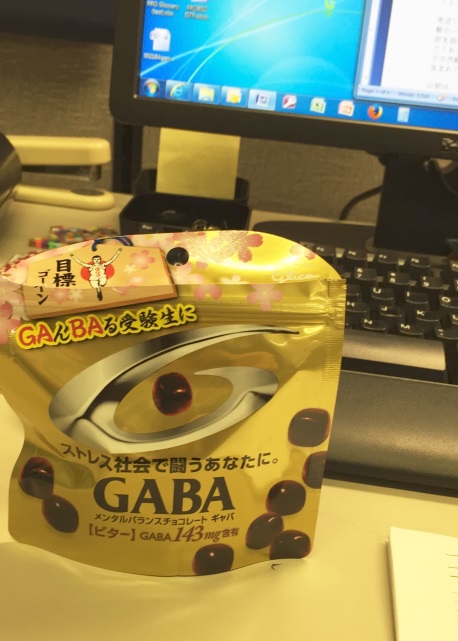
Benefits of GABA

20150527

Recently, I always keep one bag on my desk at work.

I previously posted an entry about germinating brown rice, in which I talked about how enzymes in brown rice become activated during a process of being germinated while being cooked. I also pointed out that brown rice contains lots of GABA and what its health effects as well. By the way, don’t you hear about the term “GABA” quite often? I’ve recognized not only supplementary tablets, but also some soft drinks or chocolates contain “GABA” as it’s printed on their packages. So I did a little research on GABA.

First of all, what is GABA? GABA is one type of natural amino acids that is produced in brains and spines of the mammals and works as a chemical messenger. It affects on our parasympathetic nervous system and calms us down, leads us to a relaxing state, and regulates our autonomic balance. Also, it takes away pains, stress, and fear as well as controls our moods. GABA gets synthesized in the brain when we are asleep at night as it promotes hormone productions and provides us with good sleep.

In other words, if GABA decreases, we are more likely to become irritated, short-tempered, and emotionally unbalanced. All of these traits could result in poor sleep leading to sleep shortage which eventually causes GABA to decrease more.  

GABA is very helpful in preventing high blood pressure, arteriosclerosis, heart diseases, brain strokes and other serious diseases. GABA is also effective in suppressing hyper-tension and behaviors of children and in improving symptoms of those being depressed.

Considering above, GABA is an inevitable element for us to remain healthy mentally and physically. Desirable amount to take depends on individual’s health and mental conditions; but in general, it’s 10mg~20/30mg per day. GABA can be found in various kinds of food. For example, in grains. Especially, germinating brown rice contains 10mg GABA per 100g. This is almost 10 times more than white rice. That means if we eat one serving of brown rice for one meal a day, we can take the minimum amount of GABA per day. In addition to GABA, brown rice should be referred as a superfood that can enrich us with abundant nutrition.

Other foods containing GABA are fermented products such as tsukemono, fermented fresh vegetables, miso, or natto, vegetables like tomatoes and sprouts, and dried small fish. Seeing this food list tells us that the basic Japanese food consisting of rice, soups with three side dishes is such an ideal healthy food.

Now that it is changing seasons when the fiscal year switching, whoever is suffering from nonsense irritation, fatigue, or unclear mind should review their diet. Be conscious to take GABA on a daily basis. It shall develop our night sleep and eventually encourage us to become more active during daytime.

Green Tea Benefits on Metabolism

Last Updated: Aug 16, 2013 | By Michele Turcotte, MS, RD Green Tea Benefits on Metabolism
http://www.livestrong.com/article/23345-green-tea-benefits-metabolism/

20150525

The tea plant is naturally high in a group of antioxidants known as catechins. Green tea offers more catechins than black tea because its production involves less processing and fermentation. The health benefits of green tea are vast and include cancer prevention and a decreased risk of cardiovascular disease. There is another important benefit of green tea. In many research studies, green tea extract has been shown to significantly alter body composition by increasing metabolism.

How can Catechins aid in Weight Loss?

Catechins are powerful antioxidants that may aid weight loss in two ways. They inhibit the breakdown of fats and the production of an inflammatory substance that triggers hunger. Drinking as few as three glasses of green tea daily can contribute to a reduction in body weight and weight circumference (women with a waist of more than 35 inches and men with a waist of more than 40 inches are at a much greater risk of cardiovascular disease than their slim-waisted counterparts) by almost five percent in three months. Catechins are found in green tea (one cup offers 142 milligrams), chocolate (four ounces offers 53 milligrams) and black tea (one cup contains 27 milligrams). However, only green and black tea are calorie-free.

Green Tea Catechins and Fat Oxidation

A study published by the American Journal of Clinical Nutrition investigated whether the green tea extract (containing caffeine and the catechin known as epigallocatechin gallate, or EG), could increase 24-hour energy expenditure (EE) and fat oxidation (burning of fat) in humans. On three separate occasions, 10 healthy men were randomly assigned to receive one of the following at breakfast, lunch, and dinner: green tea extract (50 milligrams of caffeine and 90 milligrams of EG), caffeine (50 milligrams) and placebo. The conclusions of this study were that green tea promotes fat oxidation beyond that which could be explained by its caffeine content.

Physical Activity Increases Effect

A study published by the Journal of Nutrition revealed that consumption of green tea catechins enhances exercise-induced changes in abdominal fat and serum triglyceride (blood fat) levels. One-hundred thirty two (132) participants were randomly assigned to two groups. The first group were given a beverage containing 625 milligrams of catechins and 39 milligrams of caffeine, while the second group were given a control beverage (39 milligrams of caffeine, no catechins) over a 12-week period. Their diets remained constant but they participated in at least 180 minutes per week of moderate-intensity exercise.

Body composition, abdominal fat and serum triglyceride levels were measured at baseline and after 12 weeks. There was significantly greater weight loss, percent change in total abdominal fat, subcutaneous abdominal fat, and fasting serum triglyceride levels in the group that consumed the catechin-rich beverage. While this evidence appears convincing, many more studies are needed to draw conclusions which would lead to specific recommendations.

Women active a few times weekly have lower risk of heart disease, stroke and blood clots

Gallery

This gallery contains 1 photo.

Released on EurekAlert! on 16 FEB 2015 http://www.eurekalert.org/pub_releases/2015-02/aha-waa021115.php American Heart Association Middle-aged women who are physically active a few times per week have lower risks of heart disease, stroke and blood clots than inactive women, according to research in the … Continue reading

Women retain insulin sensitivity better than men

It’s all because of a protein, says study

MCMASTER UNIVERSITY

Released on EurekAlert! on 17 MAR 2015
http://www.eurekalert.org/pub_releases/2015-03/mu-wri031715.php

20150519Hamilton, ON (March 17, 2015) – It’s long been known that obese men are more likely to develop type two diabetes than obese women, but researchers at McMaster University have discovered it may be related to a difference between the sexes in the activity of a protein in the muscle.

As people become overweight, their skeletal muscle develops insulin resistance that can lead to type two diabetes. In a paper published by Scientific Reports today, the research team found the activity of this protein, called PTEN (for Phosphatase and tensin homolog deleted on chromosome 10), is different between men and women.

When PTEN is active, it prevents insulin from signaling properly in muscle, which reduces the amount of sugar a muscle takes. This ‘muscle insulin resistance’ increases the chance of developing type two diabetes.

“In our study, women’s muscle appeared more efficient in neutralizing this protein, and this allows insulin to work better to move sugar from circulation to muscle,” said lead author Dr. M. Constantine Samaan, assistant professor of pediatrics at the Michael G. DeGroote School of Medicine and pediatric endocrinologist at the McMaster Children’s Hospital

“This protein is one explanation of why women are relatively protected from type two diabetes, despite having more body fat content compared to men at a given weight,” said Samaan, adding that this is important as it provides a therapeutic target to improve muscle responses to insulin to treat and prevent diabetes. The team is now working on finding out how PTEN is regulated in different cells.


Original Article released:
http://www.eurekalert.org/pub_releases/2015-03/mu-wri031715.php

 Link Cited on: LINK de DIET
http://www.nutritio.net/linkdediet/news/FMPro?-db=NEWS.fp5&-Format=detail.htm&kibanID=48716&-lay=lay&-Find