
St. Valentine’s Day in Japan ①

Friday was St. Valentine’s Day. For the past one month, every store I went had a special section for Valentine’s Chocolate Gifts with vivid red and pink pop decorations. TV and magazines made features on what the trends of this year’s chocolate gifts were or introduced homemade sweets recipes. Major department stores held Exhibition and Spot Sale Valentine’s Fair of famous, high brand chocolate gathered from all over the world.

Media has paid much attention to Valentine’s Day, from which you can tell that it is a big event in Japan. Though Valentine’s Day is a foreign culture, it is quite different in Japan. Today, I would like to report on such Valentine’s Day in Japan towards those of you who live overseas but are interested in Japanese culture.

Valentine’s Day in Japan is the day girls

What makes Japanese Valentine’s Day so peculiar is that women give chocolate or chocolate sweets to men. The act of giving chocolate gifts infers “I like you.” “Will he receive my chocolate?” “Will she give me a chocolate?” Valentine’s Day is a significant event for them.

In US or Europe where Valentine’s Day originated, people regardless of their gender, give presents to their lovers, spouses, parents, close friends or teachers to show their affections and appreciations. Presents are not specified to chocolates like in Japan. Any kind of sweets, bouquet, jewelries, or even a card is highly appreciated. What is important is to show how much you care about them.

How Valentine’s Day spread throughout the nation…

Valentine’s Day has been established as one of the annual events in Japan due to confectionary company’s manipulative sales promotion.

On Valentine’s Day,
When you, girl gives chocolate gifts to the boy you like,
Your romantic feelings will reach to him.”

By specifying exactly what to do on Valentine’s Day, the companies successfully fixed the image of Valentine’s Day, which soon spread among women sensible to the latest trends. At first, they must have enjoyed giving out chocolates just for a fun. But soon, the event became so inevitable for Japanese people that we cannot neglect it.

Any companies make efforts to increase in sales. Valentine’s Day in Japan was not exceptional. Knowing that chocolate gifts are strongly tied to Valentine’s Day, it is natural that the related companies employ every available means to promote sales of their own products. So they have planned out strategies to deal with how to sell more of their products to more and more consumers.

Love-you-chocolate and Obligated/Courtesy-chocolate

As I mentioned earlier, chocolate gifts play an important role in Japanese Valentine’s Day; there are two major types of chocolate gifts; “Honmei-chocolate,” or “love-you-chocolate” and “Giri-chocolate,” or obligated/courtesy-chocolate.
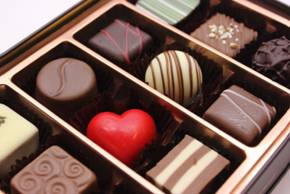
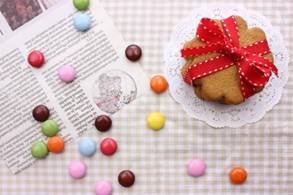
“Love-you-chocolate” is literally what women prepare for men they are in love with. They tend to select chocolate gifts at famous, high-class brand stores. Some even spend time and effort on homemade chocolate sweets. Either way, it is very important to convey their genuine love feelings.

“Obligated or courtesy chocolate” means simply “thank you gifts.” Contrarily to the “love-you-chocolate” given to the specific person, obligated/courtesy chocolate gifts are to distribute to male classmates or co-leagues. This is also one of the sale strategies r
The custom of giving out “thank you chocolate” on Valentine’s Day is commonly seen in office. Some prepare chocolate gifts for all the male workers while others pitch in money and take turns in buying gifts. At first, this custom was appreciated so anybody can enjoy Valentine’s Day casually. Because it was widely spread among people in Japan, however, it gradually became mandatory. That is why I phrase “thank you gift” as “obligated or courtesy.” Depending on the situations, this peculiar custom of Japanese Valentine’s Day could be regarded as positive or negative acts. As a result, some office banned their workers from giving out chocolate gifts on Valentine’s Day.

This actually happened in my husband’s office. He used to bring home decent chocolate gifts properly wrapped. But for the past 10 years, instead of getting individual gifts, some chocolate snacks are ready for break time. Although break time snacks are always available and all the workers pitch in money for them, my husband says he feels happy to see chocolate snacks in Valentine package on Valentine’s Day.

** ** **

In the next blog entry, I would like to focus on other more about
Return Gifts for Valentine’s Day in one month later on White Day.
The budget for the return gifts is approximately 1.5 to 3 times more!?

Top 10 Foods Highest in Calcium

Calcium is necessary for the growth and maintenance of strong teeth and bones, nerve signaling, muscle contraction, and secretion of certain hormones and enzymes. A deficiency in calcium can lead to numbness in fingers and toes, muscle cramps, convulsions, lethargy, loss of appetite, and abnormal heart rhythms. Conversely, excess calcium (particularly from supplements) can lead to kidney stones, calcification of soft tissue, and increased risk of vascular diseases like stroke and heart attack. Most calcium is found in dark leafy greens and dairy. While there is some evidence that oxalates in greens can hinder calcium absorption, they are still a good source of calcium, and the calculated percent daily value (%DV) already takes into account absorption and bio-availability. For more, see the section on calcium absorption. The %DV for calcium is 1000mg. Below is a list of high calcium foods by common serving size, for more, see the extended lists of high calcium foods by nutrient density, and calcium rich foods.


#1: Dark Leafy Greens (Watercress)

Calcium in 100g (Raw)

1 Cup Chopped (34g)

10 Sprigs (25g)

120mg (12% DV)

41mg (8% DV)

30mg (3% DV)

Other Greens High in Calcium (%DV per cup, chopped, raw): Curly Kale (14%), Dandelion Greens (10%), Turnip Greens (10%), Arugula (6%), and Collards (5%).


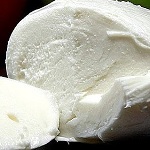
#2: Low Fat Cheese (Mozzarella Nonfat)

Calcium in 100g

1 Cup Shredded (113g)

1 Ounce (28g)

961mg (95% DV)

1086mg (109% DV)

269mg (27% DV)

Other Cheeses High in Calcium (%DV per ounce): Low Fat Swiss (27%), Reduced Fat Parmesan (31%) and Cottage Cheese 2% Fat (2%).


#3: Low Fat Milk & Yogurt (Nonfat Milk)

Calcium in 100g

1 Cup (245g)

Per Fluid Ounce (31g)

125mg (13% DV)

306mg (31% DV)

39mg (4% DV)

Other Dairy High in Calcium (%DV per cup): Nonfat yogurt (49%) and Low Fat Yogurt (45%).


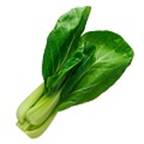
#4: Chinese Cabbage (Pak Choi, Bok Choy)

Calcium in 100g (Raw)

1 Cup Shredded (70g)

1 Head (840g)

105mg (11% DV)

74mg (7% DV)

882mg (88% DV)

Other Cabbage (%DV per cup cooked): Green Cabbage Cooked (4% DV), Red Leaf Cabbage Cooked (3% DV).


#5: Fortified Soy Products (Tofu)

Calcium in 100g (Raw)

1/2 Cup Raw (124g)

1/2 Cup Fried (124g)

350mg (35% DV)

434mg (43% DV)

1192mg (119% DV)

Other Soy Products High in Calcium (%DV per 1/2 cup): Nonfat Soy Milk with added calcium and vitamins A and D (13%) and Unsweetened Soy Milk with added calcium and vitamins (13%).


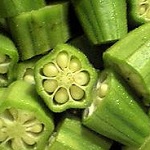
#6: Okra (Cooked)

Calcium in 100g

1 Cup Sliced (160g)

8 Pods (85g)

77mg (8% DV)

124mg (12% DV)

65mg (7% DV)


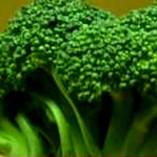
#7: Broccoli

Calcium in 100g

1 Cup Chopped (91g)

1 Cup Cooked (156g)

47mg (5% DV)

43mg (4% DV)

62mg (6% DV)

One cup of cooked broccoli, boiled in water contains just 54 calories.


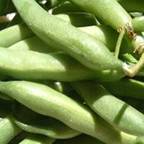
#8: Green Snap Beans

Calcium in 100g (Raw)

1 Cup Raw (110g)

Per Cup Cooked (125g)

37mg (4% DV)

41mg (4% DV)

55mg (6% DV)

One cup of cooked green snap beans, boiled in water contains just 44 calories.


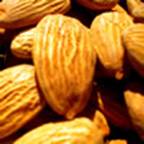
#9: Almonds

Calcium in 100g

1 Cup Whole (143g)

1 Ounce (28g)

264mg (26% DV)

378mg (38% DV)

74mg (7% DV)

A one ounce (28g) serving of almonds, which is about 23 kernels, contains 161 calories.


#10: Fish Canned (Sardines, in Oil, with Bones)

Calcium in 100g

1 Cup Drained (149g)

1 Ounce (28g)

383mg (38% DV)

569mg (57% DV)

107mg (11% DV)

Other Canned Fish High in Calcium (%DV per ounce serving): Pink Salmon (8%), Anchovies (6%) and Shrimp (4%).

Original Article: The Japan Times
http://www.japantimes.co.jp/life/2014/02/03/style/japans-iron-age-continues-in-style/

Malay Style Wedding Party: A Report from Malaysia

Weddings are one of the biggest events in our lives. There are various wedding styles with their related customs around the world.
The other day, I had a chance to attend a Malay wedding party. Although only close relatives and friends are usually invited to a wedding party in Japan, everybody is invited to the Malay style wedding party called a “Kenduri”. You don’t have to stay from the beginning to end, but simply come when you are ready, eat, and leave; how easy going!
Some people attend the party even though they don’t know the bride or groom. The smaller the town, the more guests are invited and served a special dinner.
Traditionally, the hosts prepare the dinner with the help of their neighbors and invite guests to their home, although nowadays many people use catering services or hold the event in a public hall; this is especially true in big cities.


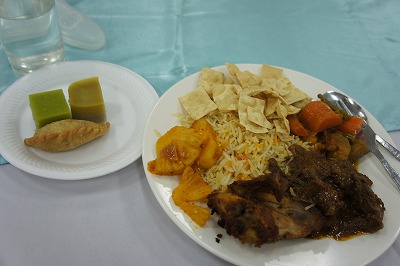
Buffet-style lunch including fried chicken or beef stew. For dessert, curry puff and Nyonya Kuih made of rice and coconut milk.

At the party I attended, guests started eating before the bride and groom appeared, and some left without seeing them. Many parties are held on auspicious dates in the calendar, so it’s not unusual to be invited to three or four parties on the same date. The bride and groom appear about one and a half hours after the party has started.
As a Japanese person, I felt slightly at odds with this custom. However, I discovered that although “Kenduri” originally meant preparing a feast for the poor and orphaned children, it has gradually been expanded to a dinner for one’s relatives, friends and neighbors, so I can understand that eating before the bride and groom and leaving early is not impolite. In spite of this, I stayed at the party until the end.


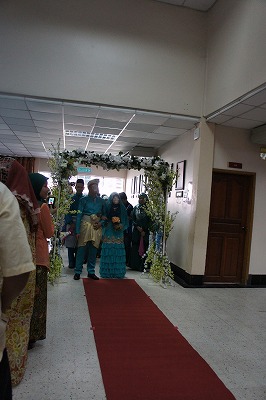
Malay couples wear outfits of matching colors for the ceremony.

At a Japanese wedding party, the important thing is for the hosts to share time with their guests over a dinner, from the first toast to the end of the party. It’s a party style very much with a culture of enjoying alcohol. However, because of their religion, Malay people don’t drink alcohol, so don’t toast during the party; they start eating anytime, finish quickly and then go home and this style must seem very normal for them.
For a traditional Japanese wedding party, alcohol is a must. We can relax, talk a lot, enjoy more the taste of the food, and enjoy sitting with a good drink. Sake, as alcoholic is called in Japan, is a part of Japanese culture and is always connected with food. In the Muslim world, however, there is no culture of drinking alcohol (a quarter of the world’s population is Muslim and increasing, so perhaps in the future, the alcohol-drinking population will get smaller!) For a person like me who loves a good drink, my first experience to attend a Malay wedding made me feel somewhat anxious.


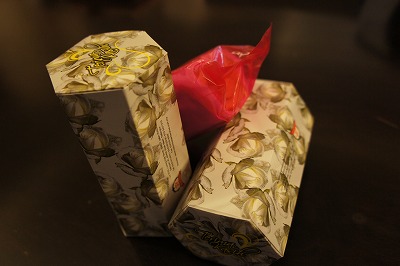
new trend of a small cake as a take-away gift. Traditionally, boiled eggs are prepared which are said to bring someone a lot of children.

Reported by Makiko Wada, Sugawara Institute

Funerals in Japan- Part II

Well, today I’ll show you what funerals in Japan are like these days.

International Comparison of Funeral Costs
As I mentioned in the previous blog, most Japanese hold services for the deceased according to Buddhist rites. There are different kinds of styles of wakes and funerals in Japan, but in general, a family member close to the deceased hosts the funeral, inviting relatives, friends, acquaintances, and neighbors of the departed. The funerals of this kind are one of the biggest events, like weddings. Therefore, they are expensive. The national average funeral cost in Japan is around 2.0 million yen, while a wedding is around 2.5 million yen. According to Wikipedia, the average funeral cost is around 2.31 million yen in Japan, 0.444 million yen in the US and 0.123 million yen in the UK. Most Japanese people are saving money for their post-retirement years, including their own funeral expenses.

In recent years, however, more and more Japanese seem to hold private funerals without following this tradition. My husband and I agree with the idea; we don’t think we need lavish funeral events anymore.

On the other hand, when my father-in-law passed away, my mother-in-law wanted to hold an event-style funeral. Her husband was a person of few words and disliked big parties, but his wife wanted to display a lot of paintings her husband made as a hobby in the funeral venue. She wanted to show the paintings to attendees. It was important for my mother-in-law that people in the neighborhood thought she held a decent funeral. However, my mother-in-law is a person who has a hard time picking from a list or making her own decisions. As the result, we, my husband, her first son, and I were as busy as beavers on behalf of our mother. Lovely.

In Japan, as soon as a member of your family dies you assign a funeral company. The company solely undertakes a string of actions you need to perform as the host of a funeral: treating the body, arranging for the funeral venue and contacting a Buddhist monk, building and decorating an altar, taking care of attendees, preparing catered meals and gift boxes for attendees; and moving to and from the crematorium. I hear funeral business in Japan is about to become a 2-trillion-yen (20-billion-dollar) industry. The bereaved, and especially the host of the funeral, are the ones who had the closest relationship with the deceased, so they are actually too sad and lonely to organize the funeral rites. Therefore, the designated funeral company is absolutely necessary because they do facilitate the funeral rites and take care of the attendees very well. Most funeral companies offer package selections for funeral services they perform for the family from the time of death to the end of cremation. A few days after the funeral, the host gets a large bill.

Even in Heaven, Money Talks. Is It True?
Funeral companies establish good relationships with monks who chant Buddhist sutras, temples and funeral homes, and cemeteries. So you don’t have to find the monk and ask for the Dharma name of the deceased. Your funeral company will do it for you, and they show you a price list of offering (service fee) for the monk and the fee for designating the Dharma name. Dharma names are classified according to rank; the higher rank you want, the more money you are asked to pay. As someone living in modern society, I am wondering why money can buy your postmortem status. And actually, only heaven knows if you are treated nicely in the afterworld…

It seems that there are some people like me who question event-style funerals and a costly designation system of Dharma names. Since more and more people feel funeral costs are too expensive, some funeral companies have offered low-priced services in recent years. The other day I happened to see a funeral company’s advertisement on a building on the street. It showed that the lowest service fee was 98,000 yen. I googled the funeral service and found that the amount was really the minimum price. I mean, if you want other necessary services, you’ll be billed at 300,000 to 500,000 yen eventually.

How do you want to be treated at the very last moment of your life? Recently in Japan, preparing for your ending including your own funeral and burial has become known as shukatsu, and it is a new trend that we try to plan for our ending while we still have a sharp mind and body. After I experienced my family funeral, I reaffirmed that I had to work on my shukatsu before it was too late. I believe that thinking about my ending, being consistent with my own principles and leaving my written will, are necessary for myself and for my family. I also wish members of my family would leave their will either in writing or oral message so that the rest of the family won’t feel troubled about what they should do.

Reported by Yukari Aoike, Sugahara Institute

Funerals in Japan- Part I

My father-in-law passed away in the middle of last month. It was sad to lose a family member, but since I experienced a train of events concerning funerals of the deceased, I think I had an opportunity to think about some Japanese customs.

One of the strange things about Japanese customs is related to funerals. I guess Japanese funeral customs and practices must be so mysterious in the eyes of foreign people because I, who have always been Japanese, think so. Of course there are different cultures in the world, but when compared to Western funeral customs, I think funerals in Japan are unique.

Celebrate in Shrines, Mourn in Temples
In Japan, when a baby is born the family members visit their local Shinto shrine to celebrate. Until recently, most Japanese couples have exchanged their wedding vows in front of shrine. Merchants, businessmen, and their staff visit shrines to pray for their success in business. However, when someone dies, a Buddhist monk comes to chant sutras for the funeral. The deceased receives kaimyo, a Dharma name for becoming a Buddha, and is buried in the family tomb. When I was a child, I was not quite sure which was a shrine and which was a temple. I just knew that you were allowed to clap hands at shrines, but not in temples. However, why do people celebrate in shrines but mourn in temples? I have been wondering that for a long time.

I tried to unravel the mystery and found an explanation about the different traditions. In the first place, the Japanese worshiped multitudinous gods, i.e. forces of nature. Their faith led to Shinto. In the Shinto concept, death, disease, and unhealthy surroundings were what they called kegare, which means pollution and defilement, something to be avoided. Kegare also means loss of life force and when someone fell into the state of kegare, s/he was thought to have committed a crime. Therefore, those who were deemed to be in the state of kegare were segregated from others for oharai or a ritual of purification. On the other hand, when Buddhism was introduced, it revolutionized their view of death. In Buddhism, it is believed that every person is continuously reincarnated as someone or something; one death is just a part of the cycle and is not deemed to be kegare. What’s more, according to the Buddhism Japan embraced as a religion to worship, anyone can become Buddha and go to heaven.

Strangely enough, those Shinto and Buddhist views, though incompatible with each other, are somewhat mixed and have been coexisting to this day. However, since the concept of kegare become established in Japanese culture and customs, people allegedly came to celebrate in Shinto ways, but mourn for the dead, which is related to kegare, according to Buddhist rites. Of course, this is a common belief and those Japanese who are pious Shintoists, Buddhists, and Christians hold special events according to the institution of their own religion.

Tolerant National Character
Most Japanese people thus hold funeral ceremonies in Buddhist styles. According to Buddhism, those who are in mourning (generally for about 50 days) should not join in auspicious occasions or eat shojin ryori without meat and fish. However, these days, feasts such as sushi and tempura dishes are served after the wake of the deceased. According to the recent thinking, high-quality meals should be served to funeral attendees. When the attendees leave the venue, they receive salt for purification so they throw it at their own bodies before they enter their homes. The salt, however, is used for purification according to Shinto tradition, not Buddhist. Some say we don’t have to throw salt after the funeral because death is not considered to be kegare in Buddhism.

The Japanese have such a unique concept; we go to shrines for auspicious occasions but to temples for funerals and memorial services. There are some rites and rituals at funerals whose origins are unclear whether they are from Shinto or Buddhism. Despite being in mourning, deceased family members do eat meat and fish and never eat shojin ryori. There has always been a convenient interpretation of funerals on a moment-to-moment basis, and all of us accept it without any feeling of strangeness. Though Japanese people seem strict about rules, we have a loose mind, I guess. Maybe we have a tolerant national character. Or, from another point of view, I think the Japanese value celebrating and mourning in a balanced manner.

Reported by Yukari Aoike, Sugahara Institute

Pain ‘dimmer switch’ discovered by UK scientists

By Helen Briggs BBC News 5 February 2014 Last updated at 01:42

About one in five people suffer from acute or chronic pain

Pain sensitivity is controlled by a genetic “dimmer switch”, which can be re-set, UK scientists have said.
Twins sharing 100% of genes have different pain thresholds, which can potentially be altered by lifestyle or medication, say researchers at King’s College, London.
The study could lead to new painkillers or lifestyle interventions, they report in Nature Communications.
One in five of the population suffers from acute or chronic pain.

“Start Quote
“Using drugs or changes in lifestyle we could be able to reset that [pain] thermostat allowing that person in the future to feel less pain”
End Quote Tim Spector Professor of Genetic Epidemiology at King’s College London
Lead researcher Dr Jordana Bell said the potential to regulate genes involved in pain sensitivity “is very exciting and could lead to a more effective pain relief treatment for patients suffering with chronic pain”.
Sensitivity to pain is complex, with wide individual variation. Previous studies have suggested about half of the influence is explained by genes.
To identify levels of sensitivity to pain, scientists tested 25 pairs of identical twins using a heat probe placed on the arm.
Identical twins share 100% of their genes; therefore any difference between identical twins must be due to their environment or changes affecting the function of their genes.
Study participants were asked to press a button when the heat became painful for them, which allowed the researchers to determine their pain thresholds.
Using DNA sequencing, the researchers examined the whole genetic codes (genomes) of the twins and compared them with 50 unrelated individuals.
The research team found chemical changes within nine genes involved in pain sensitivity that were different in one twin but not in her identical sister.
These were most significant within a known pain sensitivity gene, which is already a target for the development of new painkillers.
Research into the switching on and off of genes, a process known as epigenetic regulation, is a big growth area for the development of new medicines.

‘Landmark’ study
Tim Spector, professor of genetic epidemiology at King’s College London, said epigenetic switching is “like a dimmer switch for gene expression”.
“This landmark study shows how identical twins, when combined with the latest technology to look at millions of epigenetic signals, can be used to find the small chemical switches in our genes that make us all unique – and in this case respond to pain differently.”
The chemical changes act like a “thermostat” or “dimmer switch” to set an individual’s pain sensitivity, Prof Spector added.
“Using drugs or changes in lifestyle, we might be able to reset that thermostat, allowing that person in the future to feel less pain,” he told BBC News.
“The epigenetic changes are potentially reversible.”

Original Article: NNC News
http://www.bbc.co.uk/news/health-26034185

Japan’s iron age continues in style

by C.B. Liddell
Special To The Japan Times  Feb 3, 2014


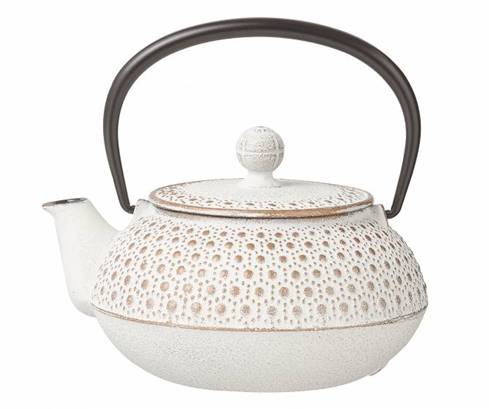
Nambu iron ‘Camomille’ teapot (No. 5, 2009). | COURTESY OF SHIODOME MUSEUM

Nowadays we seldom think about how the weather impacts on our working patterns, but in the past it was obviously a much more important factor. This was especially true in those areas that experienced bitterly cold winters with heavy snow, like the northern Tohoku region, where people spent long hours indoors and developed habits of slow, steady work to keep themselves occupied (and warm).

In 2012, the “Tema Hima” (Effort/Time) exhibition at Tokyo’s 21_21 Design Sight focused on the unique working culture of the region, drawing attention to a wide range of handicrafts, from basket weaving and lacquerware to the preservation of various foodstuffs. These were all activities that, besides producing items of value, also helped to stave off the “cabin fever” that can descend when people are cooped up for too long in the winter months.

These handicrafts even included the casting and finishing of ironware, with one of the region’s most famous products being Nambu Tekki, iron goods from the area around Morioka in Iwate Prefecture. In the Edo Period (1603-1868), this was known as Nambu. The “Tema Hima” exhibition included a few examples, but now “Made in Japan: 400 Years of Nambu Tekki Ironware” at the Shiodome Museum presents a more in-depth look at the ironware, which is famous throughout Japan for its quality and handcrafted excellence.

The industry started up in the early 17th century when the Nambu feudal clan invited Kyoto kettle craftsmen to Morioka. But “industry” — with its connotations of large smelting works and great factories — is perhaps the wrong word. The video that accompanies the exhibition shows that Nambu Tekki is very much part of the Tema Hima culture, with production being a small-scale, craft-sized endeavor, with a multitude of processes that take time and attention, long before the actual casting is done; after which there are a large number of finishing processes.

The show is dominated by tetsubin, kettles that are often used in the tea ceremony. One of the most characteristic designs has a dimpled surface. Of these there are several examples. As the video shows, this design is created by coating the molds with a smooth surface of soft clay, and then adding the dimples manually by gently tapping them in. This is then baked hard, after which an inner mold is inserted and the intervening space filled with molten iron and left to set. The slightest mistake will, of course, ruin the entire time-consuming process, so great diligence is exhibited throughout.

Because of its connection with the tea ceremony, Nambu Tekki has developed a great many other aesthetically pleasing designs. Some kettles are shaped like bells; others have patterns from nature — running horses, a fish leaping through the waves, a squirrel nibbling grapes or various flowers. You can imagine the craftsmen working through the long winter months thinking about these summery motifs with the snow heaped up around their doors.

One of the advantages that small craft-based industries have over mass-production industries is flexibility. They can easily respond to changes in taste without the need for massive retooling and reorganization, and they can also easily experiment in new product lines. Despite their comparative isolation from the metropolitan centers of fashion, the makers of Nambu Tekki have not been slow in this regard. The exhibition also includes some very minimalist designs, as well as a variety of other utensils, such as grills and cooking ware. The natural iron released during the cooking of meat is supposed to enhance nutrition.

The exhibition also features a teahouse by the designer Shigeru Uchida and a table setting using items designed by Sori Yanagi, showing off some of the more contemporary pieces. But, perhaps the most interesting variation on the traditional tea kettles are the teapots produced for the French market.

Unlike the products for the Japanese market, which often have an element of wabi-sabi about them, these are brightly colored in shocking pinks or bright white with gold detailing.

The fact that these items have also found a market overseas also gives them a kudos and an appeal to Japanese audiences, creating the interesting spectacle of a provincial craft industry re-importing the aesthetic it used to export to the sophisticated French market.

Original Article: The Japan Times
http://www.japantimes.co.jp/life/2014/02/03/style/japans-iron-age-continues-in-style/

Snow on the First Day of Spring

Tuesday, February 4th was “Rishun,” the first day of spring in the lunar calendar. It is supposed to start spring from this day.

Actually, temperature rose high throughout Japan as if to feel it were the beginning of summer over the past weekend.

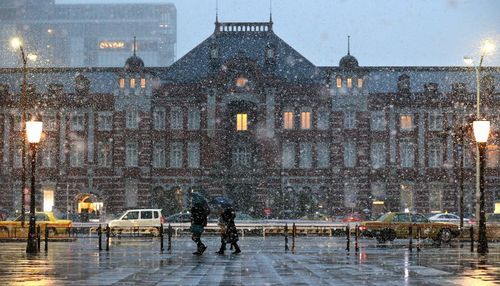
However, it turned round that a big cold wave covered the nation and it snowed in many places.

The real spring is still quite far away.


Pedestrians walking quickly in the snow at Tokyo Station
=Photo by Naotsugu Umemura at 17:05 on Feb. 4, 2014 Chiyoda-District Tokyo


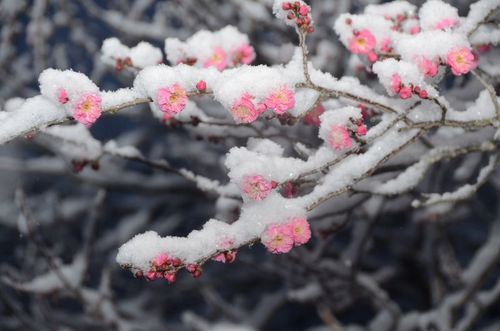
Snows on ume blossoms, as if the season went back
=Photo by Hironori Tsuchie at 17:16 on Feb. 4, 2014 Kairakuen, Mito-city

Sources: Mainichi Shinbum
http://mainichi.jp/graph/2014/02/04/20140204k0000e040240000c/001.html