Hydroponic Tomato Experiment ⑨– Relocation of Cultivation Sites

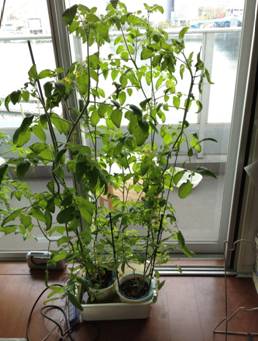
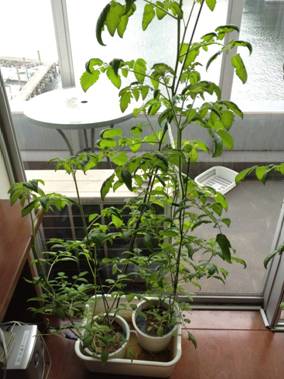
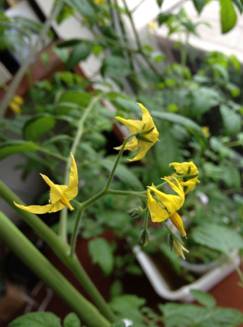
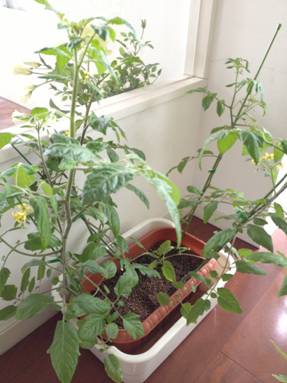
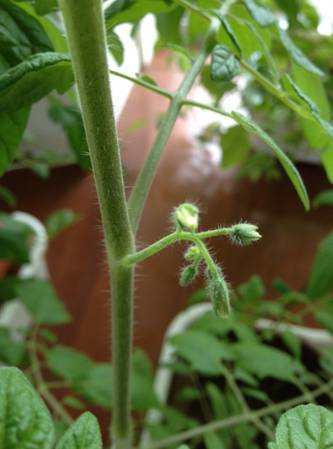
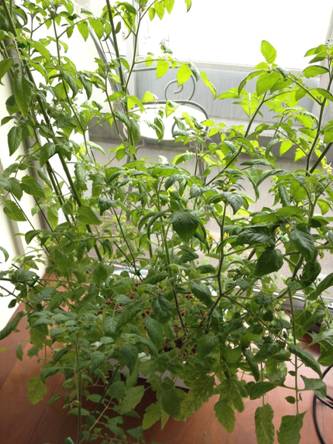
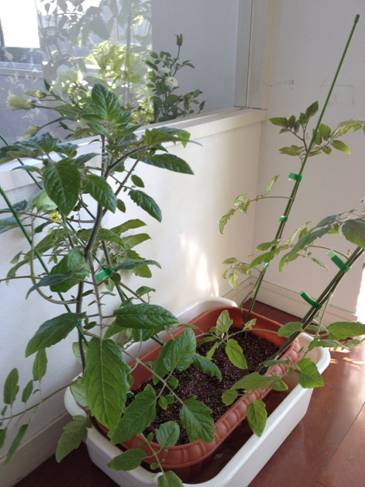
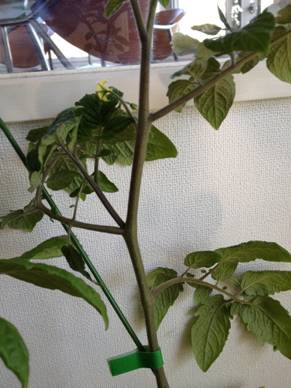
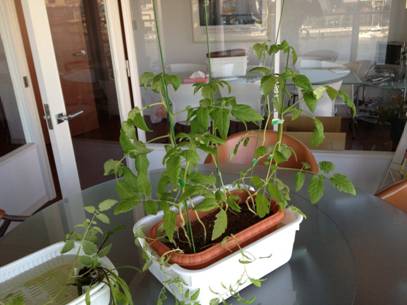
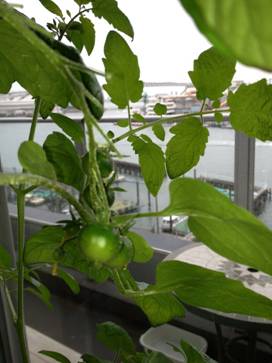
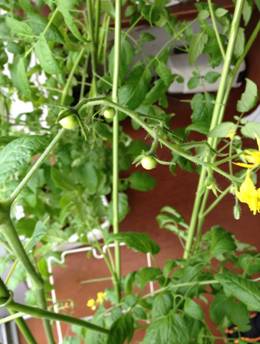
The above photo was taken March 1, 2013. The fruits were growing steadily though the color was still green.
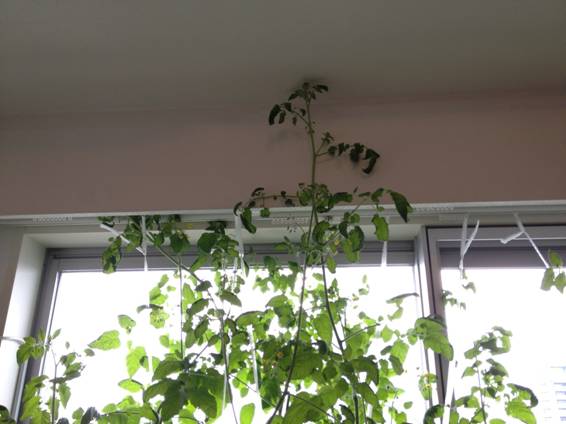
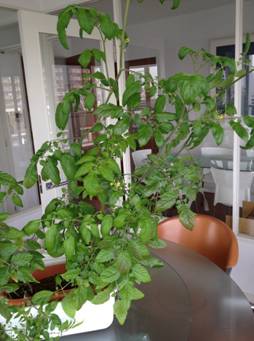
These plants have grown so high they reach the ceiling. There was no way for me to install supports for them so I just let them grow. I never thought they would grow this big. I suppose the tallest one was about 2.2 meters high. The plants you see in the above picture were grown in the heated room. How well did the plants grow in the unheated room?
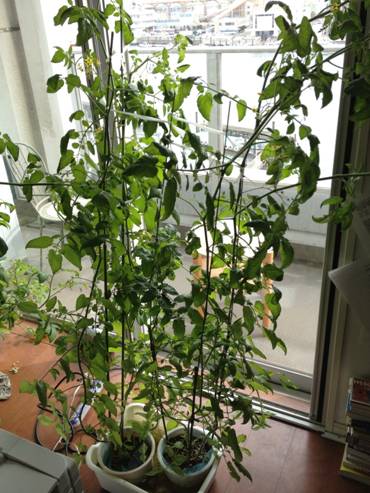
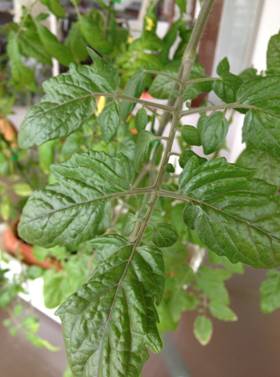
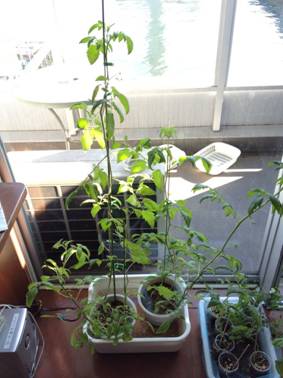
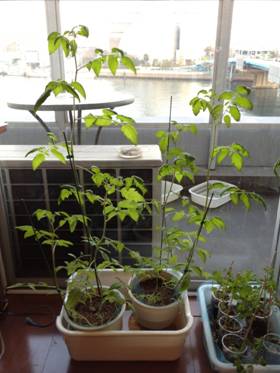
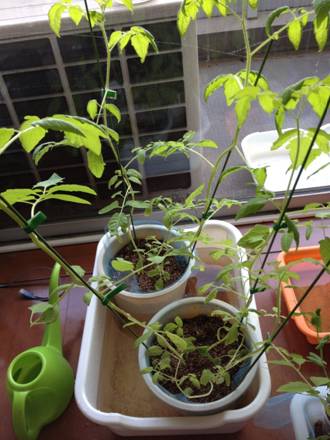
Of the plants in the unheated room, these are the taller ones. I’d guess they are about 1.7 meters high.
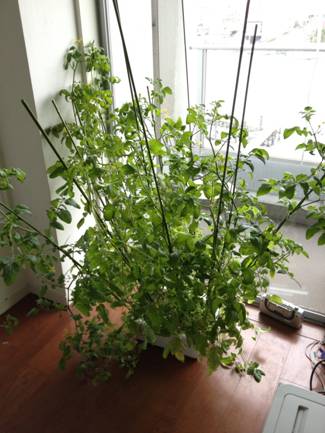
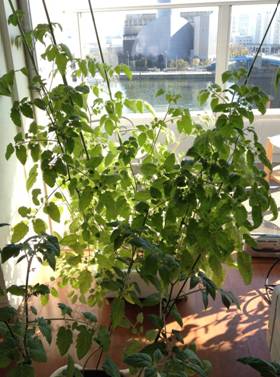
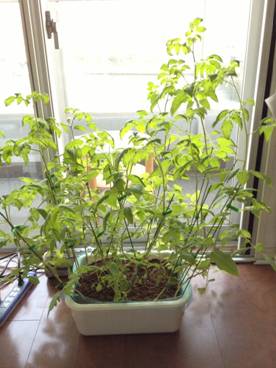
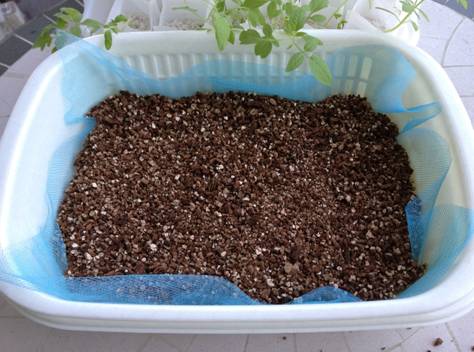
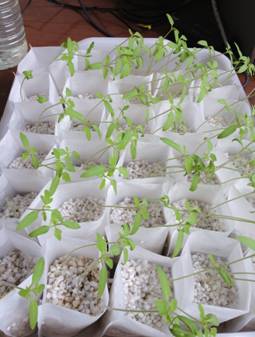
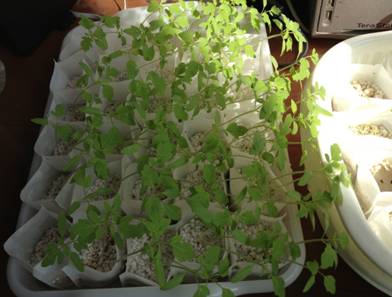
The dense plants grew without wilting. For this experiment, I cared for the plants as little as possible so they were naturally dense with many leaves and branches. Looking back on the experiment, good results growing the plants in the dense setting required adequate care. Some of the dense plants seem to have been damaged, as their branches and leaves were entwined and hurting others. Although the hydroponic method provides plants with good quality nutrients, I think each plant in the dense setting had difficulty receiving adequate nutrition. In this setting, if the plants had had more water circulation and more frequent fertilization, the problem of slow development may have been solved. Even so, the problem of entangled branches remains. Therefore, I think you should trim extra branches as you usually do during watering. The seedlings in the following photo are planted at two-finger intervals from each other.
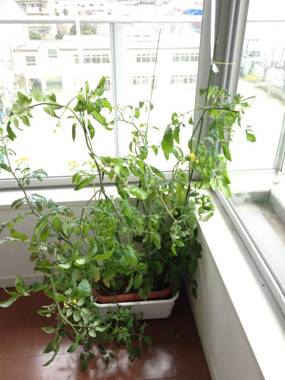
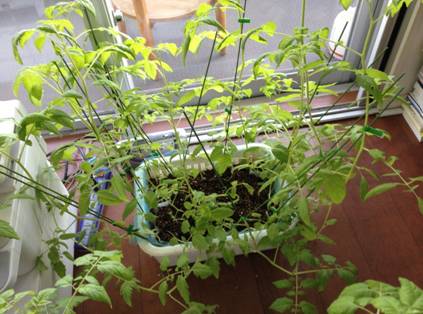
These are the plants with the firm branches and leaves. I moved the base of these plants to the window. I hoped they would grow tall. Since the poles were not long enough, I used strings suspended from the curtain rail to support the growing seedlings.

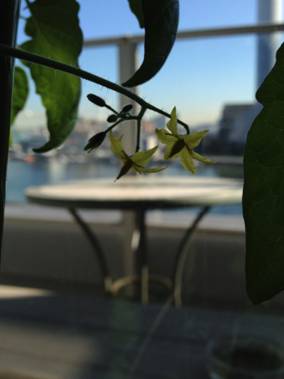
The plants in different settings have been blooming and developing. Every seedling has been growing well. I’ve just been watering (with liquid fertilizer) lately. It’s very easy and I think this method is fully practical for home use. I hope the future reports will provide you with useful information.
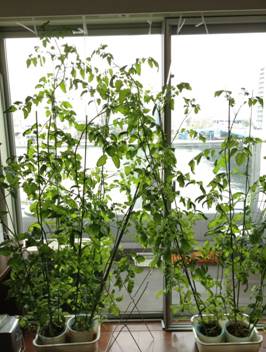
Hydroponic Tomato Experiment ⑧ – Small Cherry Tomatoes

The above photo was taken at the end of February. The plants have grown rapidly over the past month. The window is about 185 centimeters high, so you can see how large they have grown. Since the room was heated in the daytime, these plants grew faster than those in the other room. The poles were then too short, so I suspended the tops of the plants from strings that I attached to the ceiling.

As you see in the picture above, the plant in the heated room bore small fruits. I had been concerned about the method of pollinating tomato flowers, but those fruits proved that the flowers were successfully pollinated. Those fruits were still small but I hoped they would grow larger.

The above plants are the tomatoes in the unheated room. They were not as tall as the previous ones, but obviously they had been growing day by day.

The plants in the above picture are also grown in the unheated room. This tomato plant has thicker stalks compared to the other tomato plants. There was no particular difference between this plant and the others, but this one has strong leaves and stalks.

The leaves are shiny, firm and lush. I look forward to its further growth.

At last, the plants have borne fruit. Five months have passed since I seeded. Possibly, since they grew through the winter, growth was slow. It seemed they needed more time to be ready for the harvest.

However, signs of blooming were seen gradually here and there; the plants have grown taller and taller. I noted a big difference in growth rate between the heated setting and unheated one. As was expected, growth was delayed in the colder environment. There were three different settings in the unheated room: 1) plants housed in flower pots, 2) those housed in a big planter, and 3) lots of plants densely grown in a large sieve basket. Initially, the growth rates of those plants looked the same, but when you looked more closely at the dense ones, every single seedling in the basket looked frail. Many of the dense plants had thinner stalks with leaves more lightly colored than others. However, they all grew well and none died. I hoped to harvest all settings.

50 Foods To Make You Look Younger

Posted by Jenn Selby on EASY LIVING
http://www.easyliving.co.uk/beauty/anti-ageing-foods

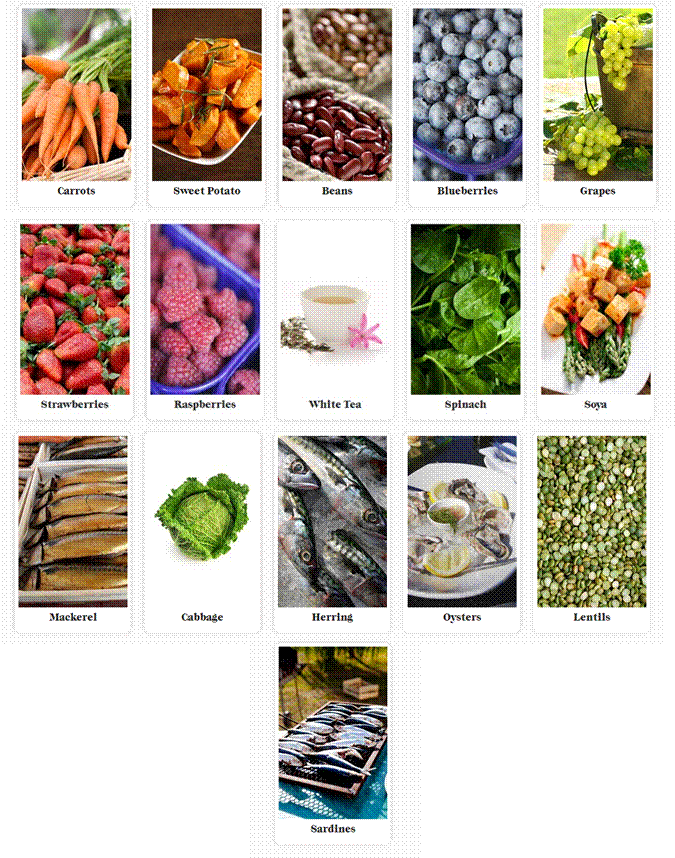
Want firmer, smoother skin and a brighter complexion? Try our Top 50 anti-ageing Foods and stop wrinkles in their tracks. Our diets have a huge effect on the rate at which we age, so it makes sense to keep them as varied, and antioxidant-rich as possible to prolong and preserve our youth. Team these foods with regular exercise, plenty of sleep and quality down time, and you could turn back the clock.


If you go to the original web site, you can get more detailed information of each food item by clicking the photo!!!
http://www.easyliving.co.uk/beauty/anti-ageing-foods

Hydroponic Tomato Experiment ⑦ – Growth during Winter 3

February had come. We still had cold winter days. During the day we felt warmth where we could catch the sunlight, but as soon as the sun was gone we felt really cold. I think the cherry tomatoes also endure severe temperature changes throughout the day. How will the changes affect the plant’s growth? The plant’s survival was what concerned me most but I haven’t yet seen anything to worry about. All the tomato plants in different settings were growing well.

Please compare this picture with the previous one. You can see they are growing. I see growth every day.

The flowers are blooming vigorously, too. I hoped they would bear fruit. Here, I was concerned with pollination. Unlike plants in the wild, these were grown indoors with no insect to pollinate them. Also, there was no wind to assist in pollination. What could I do to help?

To pollinate cherry tomatoes, you need to shake them. Please take a look at the picture of the flowers. In the center of the petals there is a cylinder including a stamen and pistil. Pollination can be achieved just by shaking the flowers. Since there is little wind in an indoor environment, you have to shake the flowers artificially. I had a strong feeling for the flowers that bloomed for the first time, so I lightly patted the flowers each time I watered them. In the future, when the plants have a lot of flowers, I plan to study the pollination results between shaken flowers and unshaken ones.

Other tomato plants have had flowers and buds.

The plants of the above picture are the “dense” ones. I haven’t seen any flowers or buds in this setting, but the plants were growing steadily. However, here I noticed differences in growing rates among the plants. Some seemed to absorb nutrients well, others didn’t. “Will the slow-growing tomato plants wilt and die?” I wondered. Their growth was too thick to be captured in a picture. They also absorbed a greater amount of water.

It’s only February and we still had a lot of cold winter days. The time of bloom and fruition of these tomatoes was in the middle of the cold winter. What worried me most was whether they were pollinated safely. It is amazing that the plants have grown to that big from seeds, and I was deeply impressed to see little yellow flowers bloom. I hadn’t put extra effort into cultivating these plants. Hydroponic culture allowed me to grow them conveniently. Please join me in watching the future growth of these cherry tomatoes.

Hydroponic Tomato Experiment ⑥ – Growth during Winter 2

The cherry tomatoes were growing slowly but steadily during winter. The poles I used when transplanting were no longer tall enough so I replaced them with longer ones. The plants in the above photo are the tomatoes grown in the heated room. Since this room was warmer, these plants grew faster than the others.

The blossoms starting to bloom. They were the first ones.

The plants in the above photo are the cherry tomatoes grown in the unheated room. This is the one in which I put a lot of seedlings in a large sieve basket during the transplanting stage. Though the room temperature was relatively low, it caught the sun pretty well so the plants were growing well, comparably to those in the heated room. Since I didn’t remove extra branches and leaves, you can see the plants are denser than those in the previous picture. I wondered how those dense branches and leaves would affect future growth. The larger they grew, the more water they absorbed. You need to track how much water the plants absorb in a day and adjust your watering.

Please take a look at those tomato plants. They were grown in the unheated room and didn’t catch the sun very well. Here I noticed a distinguishing characteristic not seen in the other plants.

These tomato plants had firmer stalks and leaves compared to ones in the other settings. The stalks were thicker and its leaves were colored a strong dark green. The cherry tomatoes planted in this experiment were of the same variety. The only thing in this setting different from the others was that they were grown in a large planter. I look forward to their further growth.

The cherry tomatoes steadily grew through the winter. Some had blossoms bloom; others had buds that were about to bloom. None died. I adjusted the pole length according to the plants’ growth. I thought about using nets but decided not to due to lack of space. At this stage, I didn’t even consider how tall the plants would grow. I was amazed at their growth every day.

Hydroponic Tomato Experiment ⑤ – Growth during Winter

Please take a look at the pictures.

These pictures were taken in January 2013, about one month after the previous transplant stage. Due to the different picture angles, it’s hard to see the growth from the previous month. However, there was no big change from the past month. Since the room temperature was low, there was a decrease in growth rate. Also, there was no big difference in the amount of sunlight, but the tomato plants receiving a lot of sunshine seemed grow faster than the other ones. Overall, the plants had thin, frail-looking stems. They did grow upward guided by poles but I was concerned about further growth with such a thin foundation. I had hoped the stems would have been stronger.

From this stage, more and more branches and leaves sprouted. It is important in growing cherry tomatoes to remove extra branches and leaves. By doing this, you provide nutrients to the whole plant and will have fine fruit. In this hydroponic experiment, however, I refrained from removing extra branches and leaves as much as possible to make sure this was a convenient growing method and to see how the tomato plants would grow under such conditions. When compared with growing plants in soil, hydroponic culture can provide plants with nutrients more efficiently because hydroponic settings provide plants with water and liquid fertilizer at all times. Therefore, I expected to be able to harvest fine cherry tomatoes without removing extra branches and leaves. I haven’t removed any extra branches or leaves so far. However, you will need to perform some work on the plants at later stage; details to come in future articles.

I planted seeds in autumn and had them sprout in early winter. Since their high growth period was in the middle of winter, I noticed that their growth had slowed down. I remember wondering how many of them would survive the coming winter.

Hydroponic Tomato Experiment ④ – Transplant 2

I don’t think you will have any problems if you skip the last procedure. At this stage you need seedling pots, trays to house the pots, mesh net, Vermiculite, and liquid fertilizer.

For seedling pots, I recommend those with small holes in the bottom and good water penetration. For the liquid fertilizer, I used Hyponica.

I spread the mesh net inside the seedling pot. I filled the pot with Vermiculite one to two centimeters high. I then put some seedlings with tea filter bags into the pot and covered the pot with Vermiculite. When the pot was filled with Vermiculite, I poured in some water to even out the contents of the pot. At this point, if the pot is not filled, add Vermiculite.

This time, I put four or five seedlings in a pot. However, if you grow the plant at home, I recommend you put one to two seedlings in each pot. Four or five seedlings in one pot can grow well, but as they grow their leaves and branches get tangled, growing so many seedlings under such limited conditions as an indoor setting seems inadequate. It’s also hard to put so many poles in one pot.

As you see in the above picture, some seedlings are put into pots, which are housed in a tray. I used a large tray to house two pots. Then I poured in water with an appropriate amount of liquid fertilizer. I used enough water to keep the bottom part of the roots soaked. At this stage the seedlings absorb the water much more than before so adjust the amount of water according to the growth.

When I transplanted the seedlings, I used a commonly-used planter instead of seedling pots.
Like using plastic pots, I spread mesh net in the planter, then put Vermiculite one to two centimeters high, on which I placed seedlings, and I filled the planter with Vermiculite.

The part of the experiment is an aggressive transplanting setting. I put as many seedlings as possible into a large sieve basket to observe how well they would grow. Nourishment conditions were the same as the other two settings – exposure to the sunlight and watering with liquid fertilizer.

From here on, you don’t need to exert any particular effort beyond maintaining appropriate water levels and substituting longer poles as needed to guide the growth of your cherry tomatoes. When winter arrived, I was concerned whether the tomatoes would be able to survive the cold. Although all were grown indoors, there were differences in growth between those in the well-heated room and those in the unheated one. I will show the differences between these cherry tomatoes grown during winter in the next article.

Hydroponic Tomato Experiment ③ – Transplant 1

When the tomato sprouts develop firm leaves, it’s time to move on to the next step. At this stage you need a new tray and its matching sieve basket, Vermiculite, mesh net, and liquid fertilizer. For the liquid fertilizer, I used Hyponica.

For the tray and sieve basket, I got a dish drainer basket and tray from a 100-yen shop. I put mesh net on the bottom of the dish drainer basket and covered it with Vermiculite, about one centimeter high.

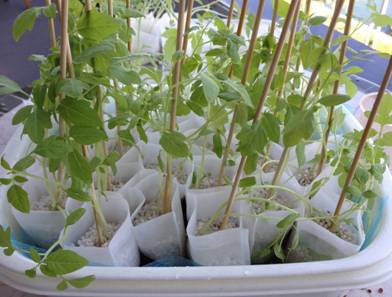
Then I put the tea filter bags with seedlings on top of the Vermiculite base. I used bamboo skewers as poles and put them into each filter bag. The bamboo skewers were used temporarily: the seedlings grew fast, the bamboo skewers were soon too short.

So far, the plants are like the picture above. Since this was my first experiment, I didn’t know how many filter bags I should put into the base. You just need to watch the seedlings grow, and then it’s a wait-and-see situation. The plants grew so fast that I soon found the setting with the dense seedlings to be inadequate as seedbeds. The result of this experiment, though I demonstrating how to make the base, shows that skipping this process may help the tomatoes grow more efficiently.

Hydroponic Tomato Experiment ② – Germination

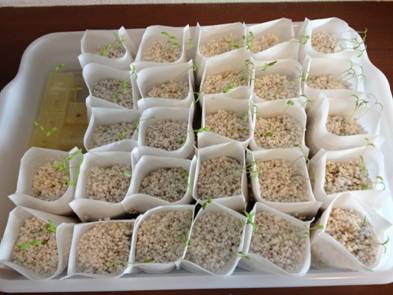
In the previous article I wrote about how I planted cherry tomato seeds. Once you plant seeds, you have only to evenly refill the water daily if the water level has decreased. We had some hot days with daytime high of almost 30 degrees C at the end of last September as well as in early October. I remember that the water level dropped very quickly. The cherry tomato seeds sprouted a week after the seeding.

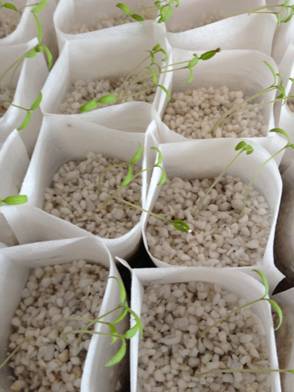
Slender sprouts resembling kaiware-daikon came out all at once. Since this was my first time growing tomatoes, I was concerned whether such frail shoots would grow well.

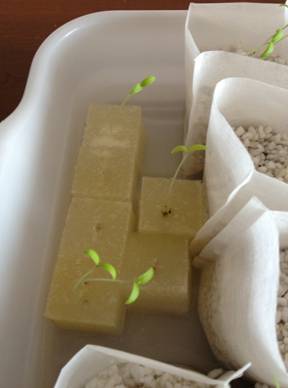
As you can see, both the sprouts from the tea filter bags and the sponges look good. You still have to refill the water when needed. After the germination, the sprouts grew amazingly well. At this point, you should place the plants in direct sunlight. The sprouts firmly grow seeking sunlight. They grow towards the sun. Take a look at the following pictures.


Eight days after germination


13 days after germination

Leaves got stronger. They are ready to be transplanted. You can transplant the seedlings before they have grown to what you see in the picture as 13 days after germination. I recommend that you transplant the seedlings as you see in the above picture as 8 days after germination.

You will need to transplant the seedlings from the tray to a new housing. From this stage, more effort is required and I bought some necessary tools for the transplanting work at a 100-yen shop.