Japanese Name for May

May皐月

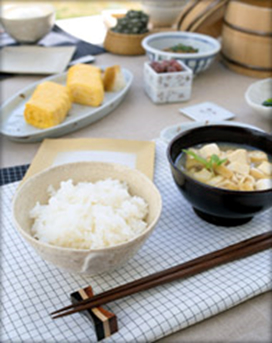
Fresh green has started to appear here and there and the sunlight is becoming brighter. Same for people who started new fiscal year or school year a month ago, May is when they start to feel accustomed to their new routine and become active and enthusiastic. The month of May is called “Satsuki” in Japan.

May is in the middle of a season when buds are seen in the ground after a long, cold winter season. This is the time rice planting begins all over Japan. The Japanese name for May, “Satsuki,” a letter of “Sa” means farming and a Chinese character for the letter “Sa” is “,” which solely indicates “rice plant” for god. The ancient Japanese are said to have named May as “Satsuki” for “a month to plant rice to offer to god” wishing for the rich harvest for the upcoming year.

Just like the other ancient names for months, in ancient times, months are not just to count by Arabic numbers. In fact, months are richly expressed by the concepts of nature and seasons that our ancestors had fostered in their daily lives.

A breakfast of champions for diabetics

Tel Aviv University researcher says high-energy breakfast and modest dinner can control dangerous blood sugar spikes all day

American Friends of Tel Aviv University

Released on EurekAlert! on 16 MAR 2015
http://www.eurekalert.org/pub_releases/2015-03/afot-abo031615.php

Our modern epidemic of obesity has led to an alarming rise in the incidence of diabetes. More than 382 million people on the planet suffer from diabetes, predominantly type-2 diabetes. For these people, blood sugar surges — glucose spikes after meals — can be life threatening, leading to cardiovascular complications. 

a1

A new Tel Aviv University study published in Diabetologia proposes a new way to suppress deadly glucose surges throughout the day — eating a high-caloric breakfast and a more modest dinner. According to TAU’s Prof. Daniela Jakubowicz and Dr. Julio Wainstein of the Wolfson Medical Center’s Diabetes Unit, Prof. Oren Froy of the Hebrew University of Jerusalem, and Prof. Bo Ahrén of Lund University in Sweden, the combined consumption of a high-energy breakfast and a low-energy dinner decreases overall daily hyperglycaemia in type-2 diabetics.

“We found that by eating more calories at breakfast, when the glucose response to food is lowest, and consuming fewer calories at dinner, glucose peaks after meals and glucose levels throughout the day were significantly reduced,” said Prof. Jakubowicz.

All in the timing

The new study was conducted on eight men and 10 women aged 30-70 with type-2 diabetes. Patients were randomized and assigned either a “B diet” or “D diet” for one week. The B diet featured a 2946 kilojoule (kj) breakfast, 2523 kj lunch, and 858kj dinner, and the D diet featured a 858 kj breakfast, 2523 kj lunch, and 2946 kj dinner. Both diets contained the same total energy measured in kilojoules, a food energy measurement similar to a calorie, but were consumed at different times through the day, with the larger meal taking place during breakfast in the B diet. The larger meal included two slices of bread, milk, tuna, a granola bar, scrambled egg, yoghurt and cereal; the smaller meal contained sliced turkey breast, mozzarella, salad and coffee.

Patients consumed their diets at home for six days before the day of testing. On the seventh day, each group consumed their assigned meal plan at the clinic, and blood samples were collected just before breakfast and at regular intervals after the meal. Blood sampling was repeated at the same intervals after lunch and dinner. Post-meal glucose levels were measured in each participant, as well as levels of insulin, c-peptide (a component of insulin), and glucagon-like-peptide 1 hormone (GLP-1, also known as incretin: an indicator of glucose metabolism that stimulates insulin release). Two weeks later, patients switched to the alternate diet plan, and the tests were repeated.

The results of the study showed that post-meal glucose elevations were 20% lower and levels of insulin, C-peptide, and GLP-1 were 20% higher in participants on the B diet compared with those on the D diet.

What — and when — to eat

Despite the fact that both diets contained the same calories, blood glucose levels rose 23 percent less after the lunch preceded by a large breakfast.

“By demonstrating that a diet of high-energy breakfasts and more modest dinners is more effective in lowering overall daily post-meal glucose surges, we suggest that such a regimen is a powerful therapeutic approach for improving glycemic control and may potentially reduce cardiovascular complications in type- 2 diabetics,” said Prof. Jakubowicz. “It is not enough to tell the diabetic patient what he or she should or should not eat. It is more important to emphasize that a more advantageous meal schedule should be followed.”

The researchers are currently engaged in an extended study of the benefits of high-energy breakfast and reduced-calorie dinners over time.

Original Article released:
http://www.eurekalert.org/pub_releases/2015-03/afot-abo031615.php

Link Cited on: LINK de DIET
http://www.nutritio.net/linkdediet/news/FMPro?-db=NEWS.fp5&-Format=detail.htm&kibanID=48658&-lay=lay&-Find

Japanese Name for April

bandicam 2015-04-07 21-20-41-450April is called “uzuki’ in Japanese.  It is mostly well-known that it was named such because it is the month when flowers of deutzia is usually in full bloom.  There are also other stories that the sound of “u” reflects the Chinese characters of 「初」=”new” or 「産」=”be born” indicating this is the beginning of a year. (In Japan, a school year and a fiscal year start in April.)  It may have been originated from the fourth animal of the twelve Chinese zodiac, rabbit (「卯」 is for rabbit.) or a letter for planting 「植」because people used to start seeding around this time of the year.  All the other months as well that nobody knows how and why exactly Japanese named each month as such.  Still, the custom of calling each month in old-fashion way in Japan is very interesting. 

Individuals with type 2 diabetes should exercise after dinner

Exercising after a meal can more effectively reduce risks of cardiovascular disease
University of Missouri-Columbia

Released on EurekAlert! on 16 FEB 2015
http://www.eurekalert.org/pub_releases/2015-02/uom-iwt021715.php

a1

COLUMBIA, Mo. – Individuals with Type 2 diabetes have heightened amounts of sugars and fats in their blood, which increases their risks for cardiovascular diseases such as strokes and heart attacks. Exercise is a popular prescription for individuals suffering from the symptoms of Type 2 diabetes, but little research has explored whether these individuals receive more benefits from working out before or after dinner. Now, researchers at the University of Missouri have found that individuals with Type 2 diabetes can lower their risks of cardiovascular diseases more effectively by exercising after a meal.

“This study shows that it is not just the intensity or duration of exercising that is important but also the timing of when it occurs,” said Jill Kanaley, professor in the MU Department of Nutrition and Exercise Physiology. “Results from this study show that resistance exercise has its most powerful effect on reducing glucose and fat levels in one’s blood when performed after dinner.”

Kanaley and her colleagues studied a group of obese individuals with Type 2 diabetes. On one occasion, participants performed resistance exercises before eating dinner. During another visit, participants exercised 45 minutes after eating dinner. Participants performed resistance exercises such as leg curls, seated calf raises and abdominal crunches. Compared to levels on a non-exercise day, Kanaley found that the participants who exercised before dinner were able to only reduce the sugar levels in their blood; however, participants who exercised after dinner were able to reduce both sugar and fat levels. Participants consumed a moderate carbohydrate dinner on the evenings of the study.

Kanaley said her research is particularly helpful for health care providers who have patients who exercise every day but are not seeing benefits.

“Knowing that the best time to exercise is after a meal could provide health care professionals with a better understanding of how to personalize exercise prescriptions to optimize health benefits,” Kanaley said.

Kanaley also found that improvements in participants’ blood sugar and fat levels were short-lived and did not extend to the next day. She suggests individuals practice daily resistance exercise after dinner to maintain improvements.

“Individuals who exercise in the morning have usually fasted for 10 hours beforehand,” Kanaley said. “Also, it is natural for individuals’ hormone levels to be different at different times of day, which is another factor to consider when determining the best time to exercise.”

In the future, Kanaley said she plans to research how exercising in the morning differs from exercising after dinner and how individuals’ hormone levels also affect exercise results.

The study, “Post-dinner resistance exercise improves postprandial risk factors more effectively than pre-dinner resistance exercise in patients with type 2 diabetes,” was published in the Journal of Applied Physiology.

Original Article released:
http://www.eurekalert.org/pub_releases/2015-02/uom-iwt021715.php

Link Cited on: LINK de DIET
http://www.nutritio.net/linkdediet/news/FMPro?-db=NEWS.fp5&-Format=detail.htm&kibanID=48216&-lay=lay&-Find

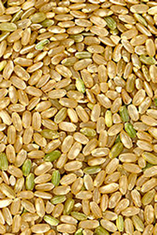
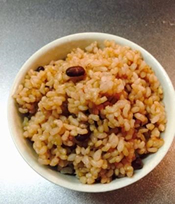
How to cook germinating brown rice

- INGREDIENTS -

4 cups, brown rice

50g, azuki beans (small reddish brown beans)

1 tsp, salt

*Salt neutralizes potassium contained in brown rice and softens the hull.
*Azuki beans contain polyphenol, effective in cell aging prevention.

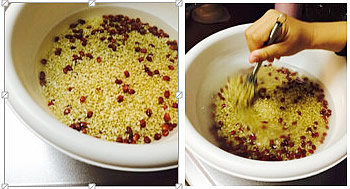
Measure the rice and azuki beans into a big bowl and fill with water.  Stir the rice a few times and drain.  Change water.  Use a whisk and stir the rice and beans.  Using a whisk can leave some scratches onto the hull of rice and skin of the beans to allow water to be absorbed well without smashing the grains.

Whisk for a few minutes until water becomes cloudy.  Change water for a few times.

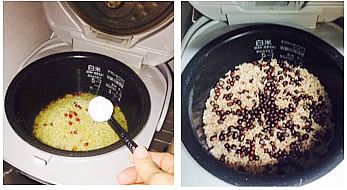
After rinsing, place the rice and beans in a rice cooker, add water to the appropriate graduated mark.  Add salt.  Soak the rice and beans for 3 to 5 hours at least, preferably for 8 hours if possible

If your rice cooker has a special cooking mode for brown rice, use it.  If not,, you can still cook it in a regular mode.  When it’s done cooking, stir up the rice from the bottom to break up clumps and release excess steam.

Once it’s done with cooking mode, your rice cooker will shift to the warming mode.  So do not turn off the rice cooker, but keep it on for the next 3 days.  Stir the rice upside down at least once a day.  

a1 a2

********

Compared to the typical white rice, cooking germinating brown rice takes longer time and requires preparations.  Brown rice and azuki beans cost relatively more than white rice.  The biggest disadvantage of cooking germinating brown rice, as you may be noticing by now, is that you cannot use the rice cooker for three days.  In another words, keeping brown rice in a rice cooker on a warm mode for 72 hours is costly.        

But still, I need to emphasize that once you taste the properly cooked germinating brown rice, you will fall in love with it.

After I clean up my kitchen after dinner, I usually prepare for the rice and beans.  I let them soak until the next morning.  I turn on the rice cooker before leaving for work.  Once I get home, I stir up the rice.  I repeat this for 2 days and on the third night, I serve the germinating brown rice for dinner.  I save the remaining rice in containers of sized for one-serving for the next three days until the next germinating brown rice is ready.

Here is my report on the effects after eating germinating brown rice.  In my case, I’ve taken one rice bowl of germinating brown rice for lunch and a half bowl for dinner for two weeks.  First of all, I noticed that my bowels act better.  It was very clear.  Also, I noticed that I don’t feel hungry between meals.  I used to eat cookies or candies during my work before lunch, but my appetite is much less.  Lastly, I feel that I can fall asleep and get up better.

My husband has been eating germinating brown rice for dinner for two weeks and he told me that he feels lively.  He used to be a big and fast eater.  He also has a sweet tongue and would eat some kind of sweets or a bag of potato chips even being full after dinner.  (He would make an excuse that it was because of being stressed out.)  But since we started eating germinating brown rice at least once a day, he stopped such unhealthy diets.

Neither my husband nor I disliked the taste of the regular brown rice; in fact, we did try having brown rice as our staple food.  But it didn’t last long because we, or I should say I didn’t find it worth spending so much time in preparing and money on buying the rice for that taste.  But now as both my husband and I have found it so good, I cannot help but devote myself for this healthy food.

a3
We prefer the rice and beans ratio with less azuki beans than the recipe.
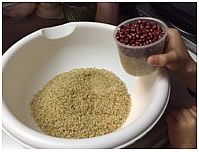
So we measure 3 cups of brown rice into a rinsing bowl first.  
Then fill 1/4 of the fourth cup with beans.
4 cups of water is still good for this ratio! 

Germinating Brown Rice, Effective Detox Diet!

a1Have you ever heard of “Germinating Brown Rice?”  Recently, Germinating Brown Rice has been in the spotlight as a healthy and an effective diet method.  Health benefits of germinating brown rice have been pointed out in many TV shows and magazines.  Also many famous actresses and fashion models introduce germinating brown rice in their web sites and blogs. So, many of you may have already heard of it or even have tried it.

What is germinating brown rice?  What makes it different from a regular brown rice?  Well, germinating brown rice is nothing but a regular steamed brown rice; except, it needs to be kept warm in a rice cooker for 3 days before being served for meals.  Being kept warm for that long time makes brown rice germinate, which eventually activates the enzymes that brown rice contain.  For that reason, germinating brown rice is also called “Enzyme Brown Rice” and it has gained lots of attention because of the functions of the enzymes.

One of the enzymes that germinating brown rice contains is GABA, Gamma Amino Butyric Acid.  GABA is one kind of natural amino acid that exists in plants, animals, and our human bodies.  GABA is found to be effective in preventing from being high blood pressure.  It can also control levels of cholesterol and neutral fat in blood, with which diabetes preventing effect is expected.  GABA also boosts our basal metabolism transforming our physical constitution more likely to lose weight.  Besides enzymes, brown rice are rich in fibers, the intestine purifiers, and many other nutrients. 

Brown rice also contains a substance called phytic acid.  This substance has powerful detoxication action and which is believed to be a bird-resistant feature that grains naturally possess.  Phytic acid was considered to bond with vitamins and minerals and leach out of our body.  But studies have found out that phytic acid has a significant impact on disease prevention.  It is high in antioxidants that suppress the growth of active oxygen causing cancers, arterioscierosis, or other serious diseases.  Detox function of phytic acid is also capable of inhibiting generation and breeding of cancer cells.  

In addition to its nutritional benefits, germinating brown rice, being kept warm, has distinct, but pleasant soft and chewy texture that you would not expect from the regular brown rice.  The stiff and dry texture of the regular brown rice is what causes some people not want to eat.  But you don’t have to worry about that with germinating brown rice.  You can tell by looking at the grains how they change day by day.

Although I said germinating brown rice is soft, chewing thoroughly is still required.  Some people may have constipations or diarrheas after eating brown rice.  Oftentimes, it is because the rice is not cooked soft enough (leading to stiff and dry texture).  This unfavorable texture can cause one to chew less, resulting in having dyspepsia.  With germinating brown rice, this will not be a major problem, but as it is widely recommended, we should take time when we eat.  The more you chew, the sweeter you’ll notice the germinating brown rice is.  The action of chewing stimulates the brain in the area where we sense fullness.  This is such a helpful tip to stop overeating.

Brown rice obviously contains much more nutrients than white rice, but did you know the intake calories in both brown and white rice are the same?  Rice, the carbohydrates are believed to be high in calories, which make us fat (in fact, some people like non-carbo diets.), but intake calories do not solely determines whether we will gain weight or not.  Rather, it depends on the fact whether we can metabolize the intake calories or not.  Proper metabolism function requires vitamins, minerals, fibers, and enzymes, with which brown rice is filled, but not white rice.  

a2Both white and brown rice are the energy source of human activities.  They generate heat to warm up our body to pump up our metabolism.  On the contrary, if you excessively decrease the amount of carbohydrate from your daily meals, you may be able to lose weight, but you would also end up in lacking energy in your body, leading to poor metabolism.  This shall result in rising the body fat rate.  To lead a healthy life, I recommend that you don’t exclude carbohydrate from your diet; why don’t you try for highly nutritious germinating brown rice that you may find lots of benefits of health and beauty.    


Protein linked to longevity and enhanced cognition protects against Alzheimer’s symptoms

Released on EurekAlert! on 10 FEB 2015
http://www.eurekalert.org/pub_releases/2015-02/gi-plt020515.php

Increasing klotho in Alzheimer mice improved their cognitive function in spite of disease-causing proteins in the brain

Scientists from the Gladstone Institutes and the University of California, San Francisco report in the Journal of Neuroscience that raising levels of the life-extending protein klotho can protect against learning and memory deficits in a mouse model of Alzheimer’s disease. Remarkably, this boost in cognition occurred despite the accumulation of Alzheimer-related toxins in the brain, such as amyloid-beta and tau.

Klotho decreases naturally with aging, which also leads to a decline in cognitive ability. An earlier study from these researchers revealed that having a genetic variant that increases klotho levels is associated with better cognition in normal, healthy individuals, and experimentally elevating klotho in mice enhances learning and memory. However, klotho’s influence in the face of aging-related cognitive disorders like Alzheimer’s disease was unclear.

To test klotho’s protective capacity, the scientists created a mouse model of Alzheimer’s disease that produced higher levels of this protein throughout the body. Ordinarily, Alzheimer’s-model mice have cognitive deficits, abnormal brain activity, and premature death, but raising klotho levels ameliorated these problems. The cognition-enhancing effects of the protein were powerful enough to counteract the effects of Alzheimer-related toxins, whose levels were unchanged.

“It’s remarkable that we can improve cognition in a diseased brain despite the fact that it’s riddled with toxins,” says lead author Dena Dubal, MD, PhD, an assistant professor of neurology and the David A. Coulter Endowed Chair in Aging and Neurodegenerative Disease at UCSF. “In addition to making healthy mice smarter, we can make the brain resistant to Alzheimer-related toxicity. Without having to target the complex disease itself, we can provide greater resilience and boost brain functions.”

Klotho’s benefits may be due to its effect on a certain type of neurotransmitter receptor in the brain, called NMDA, that is crucially involved in learning and memory. While Alzheimer’s impairs NMDA receptors, the mice with klotho elevation maintained normal receptor levels. In addition, these mice had more GluN2B–a subunit of NMDA–than control animals. This increase may have contributed to the protective effects of klotho, counteracting the detrimental impact of Alzheimer-related toxicity on the brain.

“The next step will be to identify and test drugs that can elevate klotho or mimic its effects on the brain,” says senior author Lennart Mucke, MD, director of the Gladstone Institute of Neurological Disease and the Joseph B. Martin Distinguished Professor of Neuroscience at UCSF. “We are encouraged in this regard by the strong similarities we found between klotho’s effects in humans and mice in our earlier study. We think this provides good support for pursuing klotho as a potential drug target to treat cognitive disorders in humans, including Alzheimer’s disease.”

###

Other researchers on the study from the Gladstone Institutes and UCSF include Lei Zhu, Pascal Sanchez, Kurtresha Worden, Lauren Broestl, Erik Johnson, Kaitlyn Ho, Gui-Qiu Yu, Daniel Kim, and Alexander Betourne. Makoto Kuro-o from the University of Texas Southwestern Medical Center, Eliezer Masliah from the University of California, San Diego, and Carmela Abraham from Boston University School of Medicine also took part in this research.

Funding was provided by the National Institute of Neurological Disorders and Stroke, the National Institute on Aging, the American Federation of Aging Research (AFAR), a MetLife/AFAR Award, and gifts from the S.D. Bechtel, Jr. Foundation, the Coulter-Weeks Foundation, and the Bakar Family Foundation.

Original Article released:
http://www.eurekalert.org/pub_releases/2015-02/gi-plt020515.php

Link Cited on: LINK de DIET
http://www.nutritio.net/linkdediet/news/FMPro?-db=NEWS.fp5&-Format=detail.htm&kibanID=47881&-lay=lay&-Find

Japanese Name for March

a1

The season has been changing warmer day by day so much to feel spring is just around the corner.  March is called “Yayoi” in Japanese names for months.  The Chinese character 「弥」 means “of the degree of something, to become enormous or extreme, and more and more.”  The name of “Yayoi” is also said to be originated from the seasonal descriptions such as that trees and grasses start blooming or rice plants being soaked in water start sprouting.  (Reference: Sanshodo Daijirin)

Though “Yayoi” is the word for March, the actual time frame is quite different in lunar calendar, which is one or two month behind the solar calendar.  So “Yayoi” expresses the time between the end of March and the beginning of May.  It certainly means the season of fresh green when warm and bright sunshine fills the world.

The pronunciation of “Yayoi” sounds soft and gentle which is why it is one of the famous girl’s names born in spring.

Added fructose is a principal driver of type 2 diabetes

Released on EurekAlert! on 29 Jan 2015
http://www.eurekalert.org/pub_releases/2015-01/ehs-afi012215.php

Clinical experts reporting in Mayo Clinic Proceedings urge drastic reductions in the consumption of foods and beverages containing added sugars, particularly added fructose

a3

Elsevier Health Sciences

Rochester, MN, January 29, 2015 – Recent studies have shown that added sugars, particularly those containing fructose, are a principal driver of diabetes and pre-diabetes, even more so than other carbohydrates. Clinical experts writing in Mayo Clinic Proceedings challenge current dietary guidelines that allow up to 25% of total daily calories as added sugars, and propose drastic reductions in the amount of added sugar, and especially added fructose, people consume.

Worldwide, approximately one in ten adults has type 2 diabetes, with the number of individuals afflicted by the disease across the globe more than doubling from 153 million in 1980 to 347 million in 2008. In the United States, 29 million adults (one in eleven) have type 2 diabetes and another 86 million (more than one in three) have pre-diabetes.

“At current levels, added-sugar consumption, and added-fructose consumption in particular, are fueling a worsening epidemic of type 2 diabetes,” said lead author James J. DiNicolantonio, PharmD, a cardiovascular research scientist at Saint Luke’s Mid America Heart Institute, Kansas City, MO. “Approximately 40% of U.S. adults already have some degree of insulin resistance with projections that nearly the same percentage will eventually develop frank diabetes.”

The net result of excess consumption of added fructose is derangement of both overall metabolism and global insulin resistance say the authors. Other dietary sugars not containing fructose seem to be less detrimental in these respects. Indeed, several clinical trials have shown that compared to glucose or starch, isocaloric exchange with fructose or sucrose leads to increases in fasting insulin, fasting glucose, and the insulin/glucose responses to a sucrose load. “This suggests that sucrose (in particular the fructose component) is more harmful compared to other carbohydrates,” added Dr. DiNicolantonio. Dr. DiNicolantonio and his co-authors, James H O’Keefe, MD, Saint Luke’s Mid America Heart Institute, Kansas City, MO, and Sean C. Lucan, MD, MPH, MS, a family physician at Montefiore Medical Center, Albert Einstein College of Medicine, Bronx, NY, examined animal experiments and human studies to come to their conclusions.

Data from recent trials suggest that replacing glucose-only starch with fructose-containing table sugar (sucrose) results in significant adverse metabolic effects. Adverse effects are broader with increasing baseline insulin resistance and more profound with greater proportions of added fructose in the diet.

The totality of the evidence is compelling to suggest that added sugar, and especially added fructose (usually in the form of high-fructose corn syrup and table sugar), are a serious and growing public health problem, according to the authors.

The 2010 Dietary Guidelines for Americans say it is acceptable for some people to consume up to 19% of calories from added sugars, and the Institute of Medicine permits up to 25% of total calories from added sugars. In contrast, the World Health Organization recommends that added sugars should make up no more than 10% of an entire day’s caloric intake, with a proposal to lower this level to 5% or less for optimal health. Such levels would be more in line with what the authors would recommend and similarly restrictive to existing American Heart Association (AHA) recommendations–to consume no more than six teaspoons (24 grams) of sugar per day for women and no more than nine teaspoons (36 grams) of sugar per day for men.

While fructose is found naturally in some whole foods like fruits and vegetables, consuming these foods poses no problem for human health. Indeed, consuming fruits and vegetables is likely protective against diabetes and broader cardiometabolic dysfunction, explained DiNicolantonio and colleagues. The authors propose that dietary guidelines should be modified to encourage individuals to replace processed foods, laden with added sugars and fructose, with whole foods like fruits and vegetables. “Most existing guidelines fall short of this mark at the potential cost of worsening rates of diabetes and related cardiovascular and other consequences,” they wrote.

The authors also think there should be incentives for industry to add less sugars, especially fructose-containing varieties, to food-and-beverage products. And they conclude that at “an individual level, limiting consumption of foods and beverages that contain added sugars, particularly added fructose, may be one of the single most effective strategies for ensuring one’s robust future health.”

Original Article released:
http://www.eurekalert.org/pub_releases/2015-01/ehs-afi012215.php

Link Cited on: LINK de DIET
http://www.nutritio.net/linkdediet/news/FMPro?-db=NEWS.fp5&-Format=detail.htm&kibanID=47874&-lay=lay&-Find